
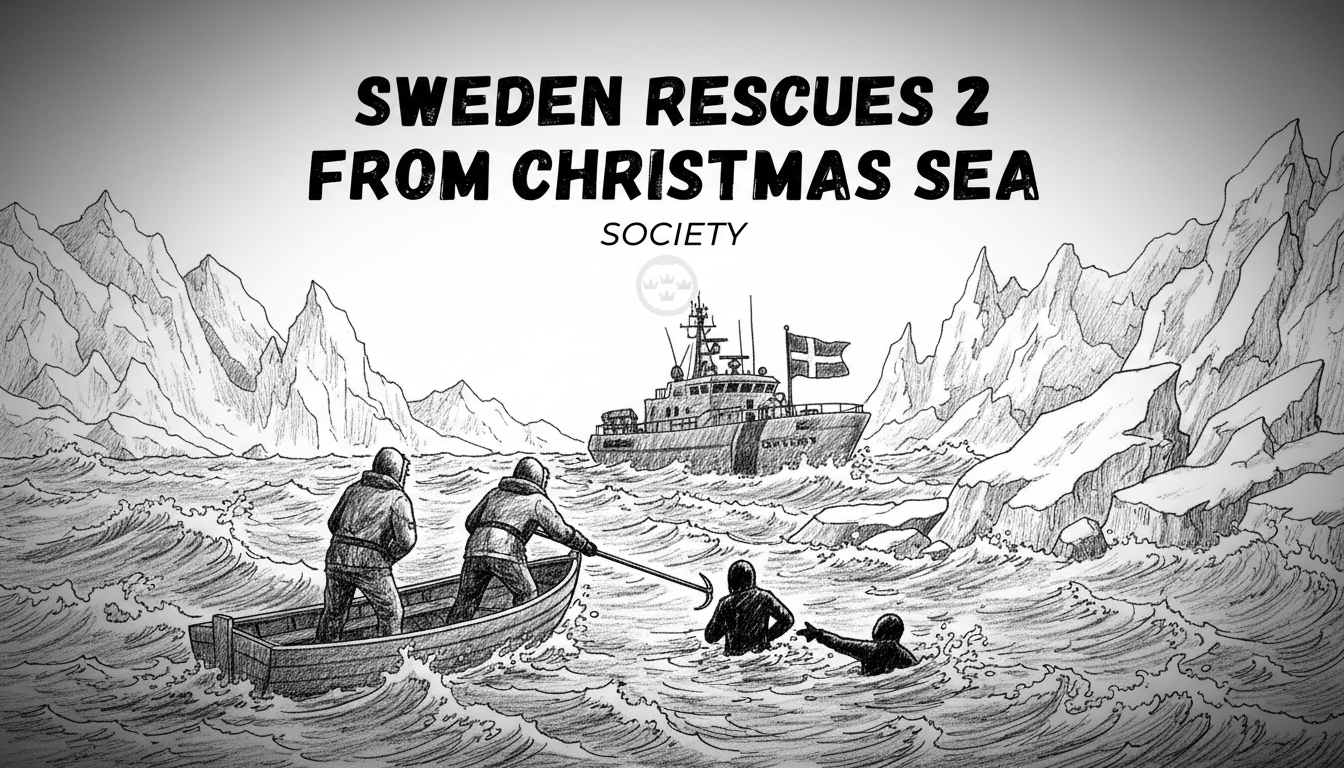
Sweden's maritime rescue services launched a major operation on Christmas Day after two people went missing in a fishing boat near Oxelösund. The festive evening turned critical as darkness fell over the Södermanland archipelago. A large search effort, involving volunteers and professionals, ended with both individuals pulled from the cold water. This incident highlights the risks of winter boating and the robust rescue network that defines Swedish coastal life.
A Festive Night Turns Critical
Christmas Day in Sweden is typically a time for family, julbord feasts, and cozy gatherings. In Oxelösund, a port town known for its industrial heartbeat, the quiet of the holiday was shattered by concern. Two individuals had ventured out in a small fishing boat during the late afternoon. As night approached and they failed to return, alarms were raised. The Swedish tradition of peace on Christmas was interrupted by urgent calls to SOS Alarm. Families across the region were settling in for kvällsfika, but rescue teams were mobilizing. The winter sea, with temperatures near freezing, posed a grave threat. This scene contrasts sharply with the usual festive glow of Stockholm's Gamla Stan or the lively skansen markets.
Mobilizing the Rescue Network
Within hours, a coordinated search swept the archipelago. The Swedish Sea Rescue Society, a volunteer organization, dispatched boats. Their crews left their own holiday celebrations to answer the call. The Swedish Coast Guard, a government agency, joined with patrol vessels. Dykare and police units converged on the area. This rapid response is standard in Sweden, where maritime safety is a priority. The Coast Guard patrols over 2,700 kilometers of coastline. In 2022, the Sea Rescue Society responded to over 3,000 incidents. Such statistics underscore a culture of preparedness. Local resident Erik Lund, a fisherman from nearby Nyköping, noted the community's reliance on these services. 'We all know the sea can be unforgiving, especially in December,' he said. 'Seeing everyone come together on a holiday doesn't surprise me. It's the Swedish way.'
From Search to Salvation
As the clock approached 23:00, hope was wearing thin. Then, a breakthrough. SOS Alarm confirmed the two missing persons had been located in the water. They were conscious but suffering from cold exposure. Ambulances rushed to the scene, and the individuals were taken for medical care. The rescue was successful, but it left many questions. Why were they out on such a day? Maritime safety experts point to common pitfalls. 'Winter boating requires extra caution,' says Anna Bergström, a safety instructor with the Swedish Maritime Administration. 'Short daylight hours, unpredictable weather, and cold water increase risks. Proper equipment like life jackets and communication devices is non-negotiable.' This incident serves as a stark reminder. In Sweden, where leisure boating is popular, such messages are continually reinforced through public campaigns.
The Unsung Heroes of Sweden's Coast
The rescue operation showcased the synergy between volunteer and state agencies. The Swedish Sea Rescue Society, founded in 1907, relies on donations and unpaid dedication. Its members train rigorously for scenarios like this. On Christmas, they exemplified the Swedish concept of 'duktighet' – a blend of competence and duty. The Coast Guard provides legal authority and resources. Together, they form a safety net that is admired internationally. This network is a point of pride in Swedish society, reflecting values of collective responsibility. In Stockholm, events like the annual Sail Stockholm festival celebrate maritime culture, but the real heroes are often unseen. As Bergström adds, 'These rescuers don't seek recognition. They see it as a natural part of community service.'
Cultural Reflections and Safety Lessons
This near-tragedy resonates beyond Oxelösund. It touches on Swedish relationships with nature and risk. The right of public access allows freedom to explore, but it comes with responsibility. Winter activities, from ice skating on frozen lakes to boating, are ingrained in the lifestyle. Yet, accidents prompt reflection. Society trends show growing interest in outdoor safety apps and courses. In cities like Stockholm, organizations offer winter survival workshops. The incident also highlights regional disparities. Coastal communities have direct access to rescue services, while remote areas might face longer response times. However, Sweden's infrastructure aims for equity. The rescue operation was efficient, thanks to well-established protocols and technology.
Looking Ahead: A Call for Vigilance
As the rescued individuals recover, the broader conversation continues. Swedish authorities may use this case to promote safety initiatives. For visitors and locals alike, the message is clear: respect the Nordic environment. Prepare thoroughly for adventures, especially during holidays when services are stretched. The Swedish model of rescue, blending volunteerism and state support, offers lessons in civic engagement. It's a system built on trust and competence. This Christmas rescue will likely be remembered not just for its outcome, but for the collective effort it inspired. In a world where crises often dominate headlines, stories like this reaffirm the human capacity for care and action. How will Sweden continue to safeguard its maritime enthusiasts in an era of changing climates and busier waters?