
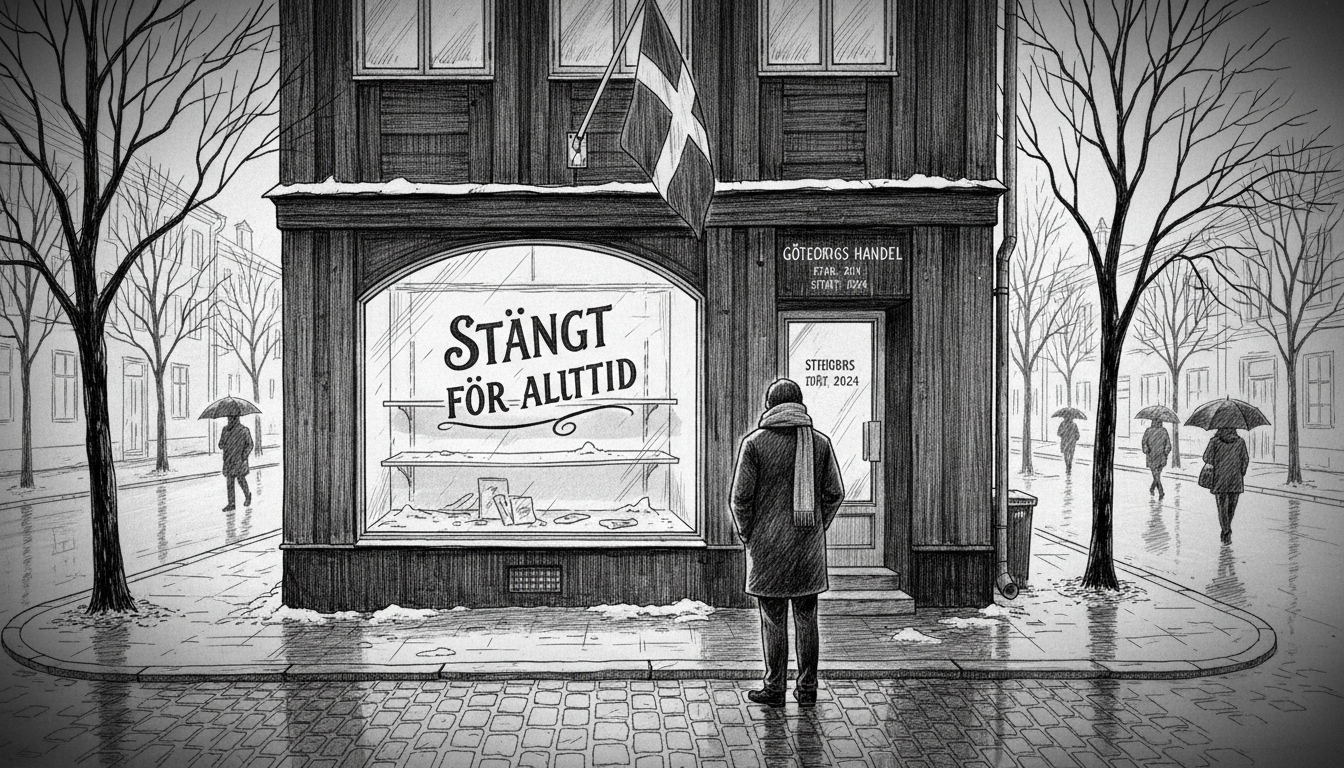
Sweden retail closures have claimed another long-standing business, as Gothenburg's Wos accessories and jewelry store shut its doors for good. The shop on Magasinsgatan closed after a decade, a victim of what its owners simply called 'bristande lönsamhet' – a lack of profitability. For regular customers like Elin Karlsson, the closure felt personal. 'It was my go-to place for unique gifts and little treats for myself,' she said, standing outside the now-empty storefront. 'It had character. You can't replace that with a click online.'
Her sentiment echoes across Sweden's second city, where shifting shopping habits and economic pressures are reshaping neighborhoods. The closure of Wos Göteborg is not an isolated event but part of a wider trend affecting brick-and-mortar stores specializing in non-essential goods. Retail experts point to a perfect storm of high rents, fierce online competition, and cautious consumer spending.
The Changing Face of Magasinsgatan
Magasinsgatan, once a bustling artery for independent boutiques, reflects the broader challenges. While some cafes and restaurants thrive, retail spaces face constant turnover. 'The rent here has increased significantly over the past five years,' explained Lars Bengtsson, a commercial property agent in the area who asked not to name his firm. 'For a store selling jewelry and accessories, the margin for error is very small. Foot traffic is not what it was, and when people do come, they are often just looking, comparing prices on their phones.'
This environment makes it difficult for smaller businesses to survive. Wos, which offered curated, mid-range accessories, occupied a challenging middle ground. It wasn't a fast-fashion giant like H&M, nor a luxury boutique. Its appeal was in its selection and service—a model increasingly under pressure. Anna Pettersson, a retail analyst based in Stockholm, notes the specific vulnerability of accessory stores. 'Items like jewelry and bags are highly visual and easy to sell online,' she said. 'Consumers have become comfortable making these purchases without touching the product. For a physical store, that means you must offer an exceptional in-person experience or unique stock to justify the overhead.'
The Human Cost of a 'Lack of Profitability'
Behind the term 'bristande lönsamhet' are real people. While the owners of Wos Göteborg were unavailable for comment, the closure likely affected a small team of employees. In Swedish business culture, there's often a quiet dignity in these endings, a reluctance to dramatize failure. But for the staff and loyal customers, the loss is tangible. It represents the disappearance of a familiar place, a personal connection, and a piece of the local commercial fabric.
Mikael Söderlund, who runs a nearby menswear store that has survived for 15 years, sees the struggle firsthand. 'You have to adapt constantly,' he told me over a coffee. 'We now host small events, focus intensely on customer relationships, and have a very strong online presence that drives people here. It's not just about having a shop anymore. You are a community space, a showroom, and a logistics hub all at once. If you stand still, you disappear.' His store's survival strategy highlights the new multi-channel reality for retailers.
Sweden's Retail Landscape at a Crossroads
The situation in Gothenburg mirrors trends in Stockholm and Malmö. Consumer spending on discretionary items has tightened amid broader economic uncertainty and high inflation. According to recent data from Statistics Sweden (SCB), retail sales for non-durable goods have been weak, with households prioritizing essentials. This puts immediate pressure on stores selling items like fashion accessories.
Furthermore, the rise of e-commerce giants and international fast-fashion retailers, with their vast online inventories and aggressive marketing, squeezes local players. A customer can now browse thousands of necklaces from a global marketplace at midnight, a convenience that local shops cannot match on scale or price. The challenge for stores like Wos is to offer something the algorithm cannot: expert curation, personal service, and a tangible sense of discovery.
What Does the Future Hold for Independent Shops?
So, is there a future for the independent accessory store in Swedish cities? Analysts like Anna Pettersson believe there is, but the model must evolve. 'Success will belong to those who create destinations,' she argues. 'This means integrating with the local culture—stocking local designers, collaborating with other businesses, and using the physical space for more than just transactions. The store must tell a story that resonates with the community.'
Some neighborhoods in Stockholm, like Södermalm or Vasastan, show this adaptive spirit with thriving niche boutiques. They become part of the area's identity. For Gothenburg, known for its laid-back charm and strong sense of local pride, this community-centric approach could be key. The city's residents often express a desire to support local businesses, but that goodwill must be met with a compelling reason to leave the house and open their wallets.
The closure of Wos after ten years is a small story in the grand scheme. No jobs report will note it. No economic indicator will budge. But it is a significant marker on the street where it stood. It speaks to the quiet, ongoing transformation of how Swedes shop and what they value in a city center. As the paper is peeled from the windows on Magasinsgatan, the space awaits its next occupant. Will it be another retailer brave enough to face the new reality, or will it become another cafe, service outlet, or even an empty unit—a silent testament to a tougher era for Swedish retail? The answer will depend on whether the unique human experience of discovery in a real shop can withstand the relentless convenience of a digital cart.