
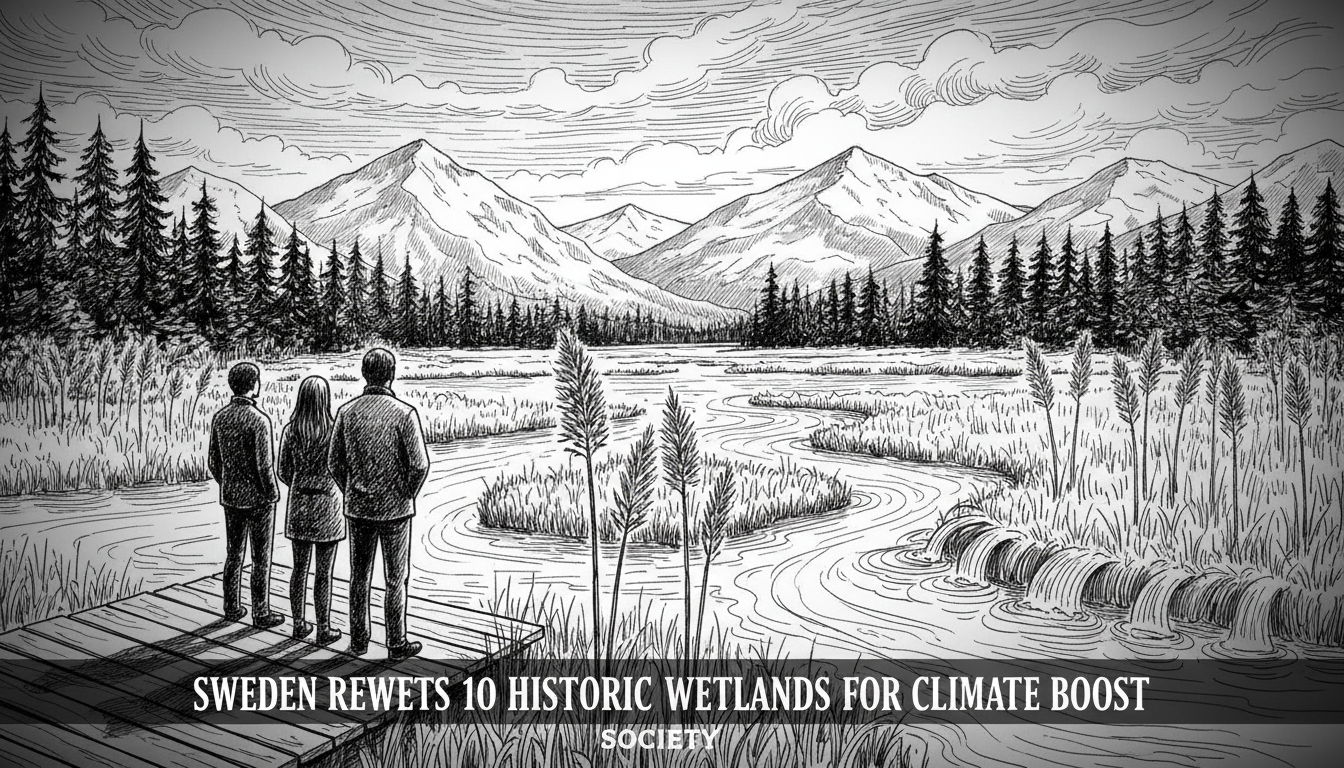
Sweden is reversing a century of agricultural drainage by rewetting over 90% of its lost wetlands. At the scenic Bogesundslandet estate north of Stockholm, Statens fastighetsverket (SFV) has identified ten specific wetlands slated for restoration. This project in Vaxholm municipality represents a national shift. It prioritizes biodiversity and carbon capture over former farmland.
“It will be very exciting to follow the SFV's work on Bogesundslandet,” says Filippa Smeds, who works on water issues for Vaxholm municipality. Her enthusiasm reflects a growing public recognition. Swedes are re-evaluating landscapes once seen merely as troublesome bogs. These areas, known locally as träsk, sumpmark, mosse, kärr och myr, are now climate heroes.
From Farming Fields to Climate Sponges
For generations, Swedish farmers battled waterlogged soil. They saw wetlands as obstacles to food production. Throughout the 1900s, massive drainage projects transformed these ecosystems. The goal was to create arable land and boost forestry yields. This effort was a national undertaking. It reflected the era's drive to master nature and ensure self-sufficiency.
The success was tangible. Fields replaced marshes. Forests grew where peatlands once lay. But the ecological cost remained hidden for decades. An estimated 90% of Sweden's original wetlands were lost or degraded. The country gained farmland but sacrificed natural water filters, wildlife nurseries, and massive carbon stores.
“Our grandparents worked hard to dry this land out for a reason,” says Lars Bengtsson, 68, whose family has lived near Bogesundslandet for generations. “It’s strange to think we’re now deliberately putting the water back. But I understand the science. The world has changed.”
The Multifaceted Power of a Wetland
The modern case for wetlands is robust. Experts cite three primary, interconnected benefits. First, they are biodiversity powerhouses. They provide critical habitats for birds, amphibians, insects, and unique plant life. Many species threatened in Sweden depend entirely on these damp environments.
Second, wetlands are nature's water treatment plants. They act as sponges and filters. They slow down runoff, reduce flooding risks, and trap sediments and pollutants. This process protects downstream water quality in lakes and the Baltic Sea.
The third benefit is gaining the most attention: climate mitigation. Healthy peatlands are incredible carbon sinks. When drained, the exposed peat decomposes and releases centuries of stored carbon dioxide back into the atmosphere. Rewetting stops this emission. It can eventually restore the land's ability to sequester carbon.
Navigating the Practical Challenges
Restoration is more complex than just blocking old drainage ditches. It requires careful hydrology studies. Planners must understand soil types and water flow. The goal is to recreate a functioning, self-sustaining ecosystem. Sometimes, specific native vegetation needs to be reintroduced.
There can also be tensions. Returning land to a wetland can conflict with current agricultural or forestry use. The SFV's project on state-owned land at Bogesundslandet simplifies this. Yet it highlights a national conversation about land-use priorities. Sweden's environmental objectives now include specific targets for wetland area and function. This legally mandates such restoration work.
“It’s a fascinating process,” explains Karin Lundberg, an ecologist consulting on wetland projects. “We're not just creating a pond. We're restarting an entire ecological engine that was paused for 80 years. The speed at which insects, birds, and plants return is often the most rewarding part.”
A Cultural Shift in the Swedish Landscape
This movement signifies a deeper cultural change. The Swedish relationship with nature, always strong, is evolving. There's a growing appreciation for ecosystems that don't have immediate utilitarian value. The allemansrätt (right of public access) means Swedes will experience these changing landscapes firsthand. Hikers and berry pickers on Bogesundslandet will witness the transformation.
“I walk here every weekend,” says Mira Petrović, a Stockholm resident who frequents the area. “First, it was fields and forests. Soon, there will be new ponds and marshy areas. It will be different, but it feels good. It feels like we are helping nature heal itself.”
Local municipalities like Vaxholm often become key partners. They handle public information and monitor regional environmental benefits. Projects like this can also boost “nature tourism,” attracting birdwatchers and school groups.
The Road Ahead for Sweden's Wetlands
The Bogesundslandet project is one piece of a national puzzle. Similar initiatives are underway from Skåne in the south to Norrland's vast peatlands. The EU's agricultural and environmental policies also provide funding frameworks for this work. The challenge is scaling up while managing competing interests for Sweden's land.
The ultimate goal is a rebalanced landscape. It's a blend of productive agriculture, sustainable forestry, and restored, functioning natural ecosystems. The humble wetland, long dismissed, is now a central player in Sweden's climate adaptation strategy. Its return represents a profound policy correction. It acknowledges that our grandparents' solutions for one set of problems created new ones for our generation.
As the machinery moves into Bogesundslandet to carefully reshape the land, a question hangs in the damp air. Are we merely correcting a past mistake, or are we building essential climate resilience for the future? The answer, much like the water in these recovering marshes, will slowly become clear.