
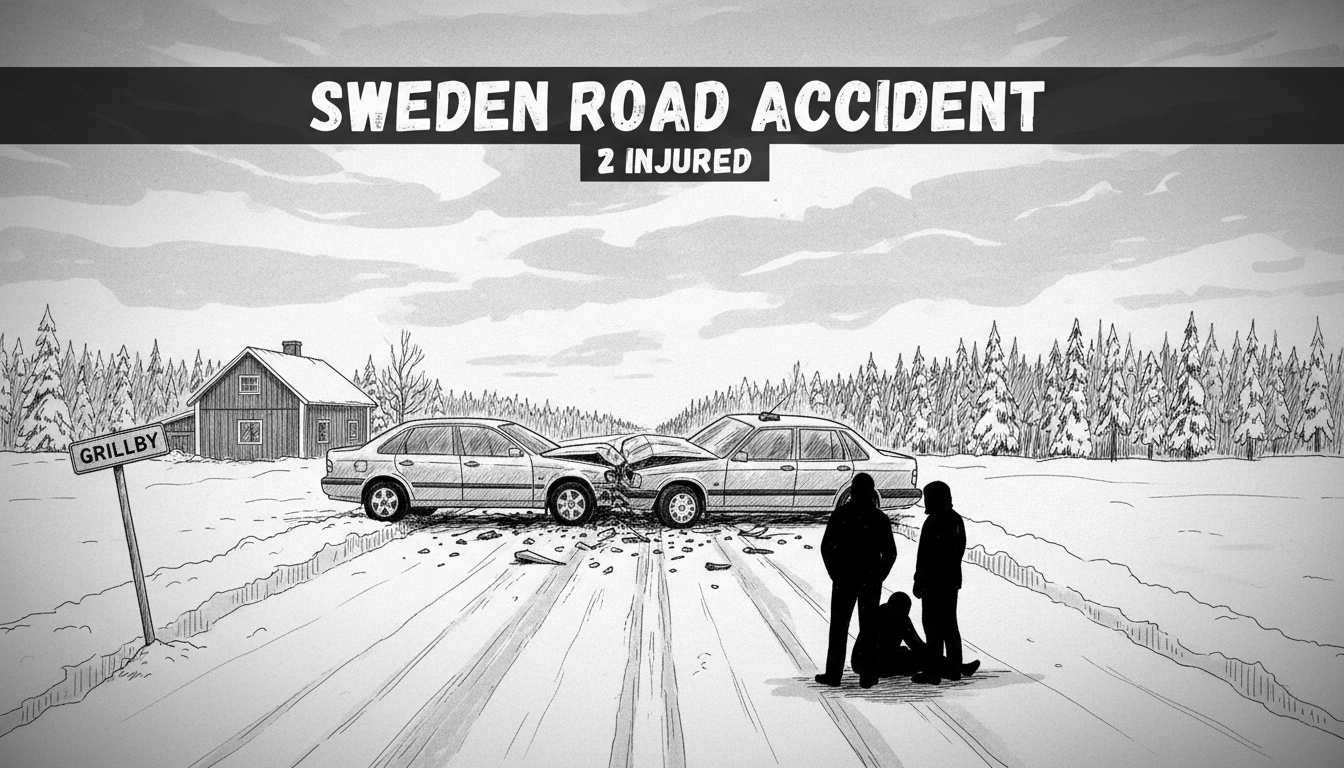
Sweden road safety is under scrutiny again after a serious car crash in Grillby, Enköping Municipality. A single vehicle left the road and collided with a tree just after noon on Monday. Emergency services, including an ambulance helicopter, worked at the scene to treat two injured individuals. Police have stated there is currently no suspicion of a crime.
A Quiet Road, A Sudden Impact
The accident occurred in Grillby, a small locality within the pastoral landscapes of Enköping Municipality in Uppsala County. This area, typically known for its quiet roads connecting communities, became the focus of a major emergency response. Witnesses reported seeing a car off the roadway, its front end damaged against a sturdy tree. The swift arrival of both ground ambulances and an air ambulance highlighted the seriousness of the situation. For residents, the sight of the helicopter landing in a field was a jarring disruption to an ordinary Monday.
“They are working at full capacity, the patrols there,” said police press spokesperson Magnus Jansson Klarin for the central region, describing the scene. His brief statement underscored the urgent, all-hands effort to provide critical care. The specific condition of the two individuals involved has not been publicly released, a common practice in Sweden that prioritizes patient privacy and family notification. The road was likely closed for several hours for investigation and cleanup, a small but significant disruption illustrating how quickly normalcy can shatter.
The Swedish Safety Paradox
This incident in Grillby touches a national nerve. Sweden is globally renowned for its Vision Zero policy and consistently boasts one of the world's lowest rates of road fatalities per capita. In 2022, 266 people lost their lives in traffic, with another 1,430 seriously injured, according to Transportstyrelsen, the Swedish Transport Agency. While these numbers are low by international standards, each one represents a profound personal and community tragedy. The national target is to reduce fatalities and serious injuries even further, making every accident a point of analysis and reflection.
“We must never become complacent,” says Lena Andersson, a road safety researcher based in Stockholm, who is not connected to the Grillby case. “Our high safety standards are the result of continuous work—better road design, strict enforcement on alcohol and speeding, and public trust in the system. A single-vehicle accident like this will prompt questions about road conditions, vehicle safety, and driver attention.” The E18 highway, a major arterial route carrying significant traffic between Stockholm and Oslo, runs near Enköping, but this crash occurred on a smaller local road, reminding us that risk exists everywhere.
Beyond the Crash Barrier: The Human Cost
While the immediate focus is on medical care and the technical cause of the crash, the ripple effects are just beginning. The two injured people face uncertain journeys of recovery. Their families and friends are thrust into a world of hospital visits and anxiety. In a close-knit community like Grillby, such an event is felt collectively. Neighbors talk, offer help, and are reminded of their own vulnerability every time they or their loved ones get behind the wheel.
This human impact is what fuels Sweden's relentless drive for safer roads. It’s not just about statistics beating other countries; it’s a societal ethos rooted in a profound respect for life. The investment in helicopter ambulances, strategically placed across the country to reach remote areas quickly, is a tangible expression of this value. It ensures that a person in Grillby has a fighting chance, with specialist care potentially only a helicopter ride away from a major trauma center.
A Culture of Safety Under the Microscope
Swedish traffic safety is deeply woven into the cultural fabric. It’s in the ubiquitous reflective vests worn by pedestrians on dark winter evenings. It’s in the near-universal compliance with seatbelt laws and the social stigma against driving after even one drink. It’s in the systematic, forgiving road design that separates opposing traffic and uses roundabouts to slow speeds at intersections. Every accident is treated as a system failure, prompting investigations that look at road surface, signage, and vehicle technology, not just driver error.
As the investigation into the Grillby crash proceeds, these are the factors authorities will consider. Was the road surface slippery? Was the driver distracted or fatigued? Did the vehicle’s safety systems perform as intended? The police have ruled out criminal suspicion for now, which typically means no evidence of intoxication or reckless intent at this stage. But the search for a definitive cause will be thorough. The data gathered will feed into national databases, informing future safety campaigns and infrastructure spending.
The Long Road to Recovery
For the two individuals in the hospital, the immediate crisis is medical. Sweden’s healthcare system will now envelop them, offering world-class treatment. But recovery from serious traffic injuries is often a marathon, not a sprint. It can involve lengthy physical rehabilitation, psychological support for trauma, and a challenging reintegration into daily life. Their story, though private, is a stark chapter in Sweden’s ongoing narrative about mobility and risk.
The quiet road in Grillby will be repaired. The skid marks will fade. But for those involved and their community, Monday’s crash will leave a lasting mark. It serves as a somber, real-world checkpoint on Sweden’s journey toward Vision Zero—a reminder that despite leading the world, the goal of eliminating death and serious injury on the roads remains just that, a goal. The work, as the safety experts stress, is never truly done. As the helicopter lifted off from that field, it carried not just patients, but the collective hope of a nation that believes every life on the road is worth saving.