
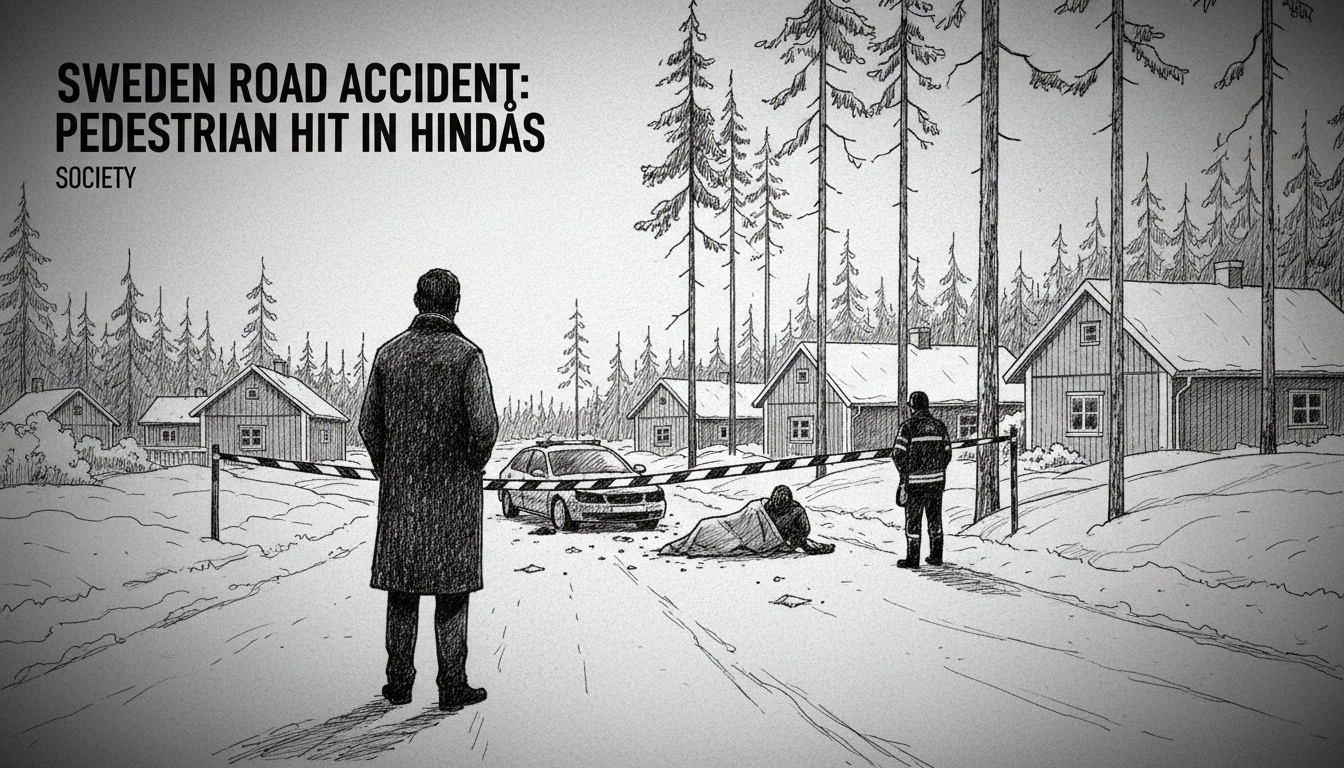
Sweden road accident on Väg 156 in Hindås has left a young pedestrian hospitalized. Police, ambulance, and rescue services rushed to the scene in Härryda municipality after an emergency call at 6:41 PM. A passenger car and a pedestrian were involved. The pedestrian, a man in his 20s, was conscious and talking when an ambulance took him to the hospital. His exact condition remains unclear. This incident on a regional road west of Gothenburg highlights ongoing traffic safety challenges across Sweden.
A Quiet Evening Interrupted
The accident happened on Väg 156, a road connecting communities in Västra Götaland County. Hindås is a locality where local roads often see a mix of through traffic and residents walking or cycling. The twilight hour when the crash occurred—just before 7 PM—is a time experts flag as particularly risky. Visibility decreases rapidly, creating a dangerous transition for both drivers and pedestrians. “The pedestrian is being assessed by ambulance right now,” police press spokesperson Adam Samara said initially. The swift response from multiple emergency services underscores the seriousness with which such incidents are treated.
Sweden's Road Safety Landscape
This Gothenburg traffic incident is one data point in a national story. In 2022, 274 people died in road traffic accidents across Sweden, according to Transportstyrelsen, the Swedish Transport Agency. Each statistic represents a personal tragedy and a community affected. Sweden has long been a global leader in road safety, pioneering the Vision Zero policy which aims to eliminate traffic fatalities and serious injuries. Yet, the work is never finished. The national goal is to reduce road traffic fatalities to 220 by 2030, a target set by Trafikverket, the Swedish Transport Administration. Every accident investigation feeds into this broader mission, analyzing causes to improve infrastructure, vehicle safety, and public behavior.
The Human Factor in Härryda
Behind the police report from Härryda car accident is a young man whose evening took a sudden, violent turn. Being “awake and communicative” is a positive sign, but the journey from the roadside to the hospital is fraught with anxiety for victims and families. These moments send ripples through small communities. Neighbors talk, local Facebook groups light up with concern, and there’s a collective pause. For the driver involved, it’s also a traumatic event. Road safety isn't just about engineering; it's about the people using the roads every day. Their attention, their choices, and their vulnerability.
Twilight: A Dangerous Time on the Roads
Road safety experts consistently point to low-light conditions as a major risk factor. “Visibility is paramount, especially during dusk,” says a traffic safety analyst familiar with Swedish conditions. “Pedestrians in dark clothing can become virtually invisible to drivers. Conversely, drivers must adjust their speed to the conditions and ensure their headlights are on.” The Hindås traffic accident will likely be scrutinized for these elements. Were streetlights adequate? Was the pedestrian using a designated crossing? Was the driver’s speed appropriate for the area? Answers to these questions help prevent the next accident.
From Incident to Prevention
The response to this accident is systematic. Police will document the scene, take statements, and possibly reconstruct events. Their findings contribute to a vast pool of data used by planners and policymakers. Perhaps this stretch of Väg 156 needs better lighting, a lower speed limit, or a more prominent pedestrian crossing. Maybe it highlights a need for renewed public awareness campaigns as the dark autumn months approach in Sweden. Every crash site is also a learning site. The goal is to move from reactive response to proactive prevention, ensuring that roads in Hindås, Gothenburg, and across the country are forgiving of human error.
A Community's Resilience
While the immediate focus is on the injured man’s recovery, the incident reminds us of the community’s role. Do locals feel safe walking? Are there safe pathways separated from traffic? In Swedish society, the freedom to move safely—whether by car, bike, or foot—is deeply valued. It’s woven into the fabric of daily life, from letting children walk to school to enjoying an evening stroll. An accident like this momentarily frays that fabric. The repair comes through careful investigation, community dialogue, and a shared commitment to safety. It’s a Swedish principle: protecting the individual protects the whole.
The Road Ahead for Safety
As the young man from the Hindås accident receives treatment, the broader work continues. Sweden’s approach to road safety is comprehensive, but it relies on constant vigilance. Drivers must be alert, especially in residential areas and at night. Pedestrians can increase their own safety with reflective gear. Municipalities must maintain and improve infrastructure. The statistics from 2022 show progress is possible, but also that the margin for error is slim. Each life lost or injured is one too many. The question that hangs over this evening’s events is not just ‘what happened?’ but ‘what can we learn to make sure it doesn’t happen again?’ That is the enduring challenge of Vision Zero, a goal that remains as urgent as ever on Sweden’s roads.