
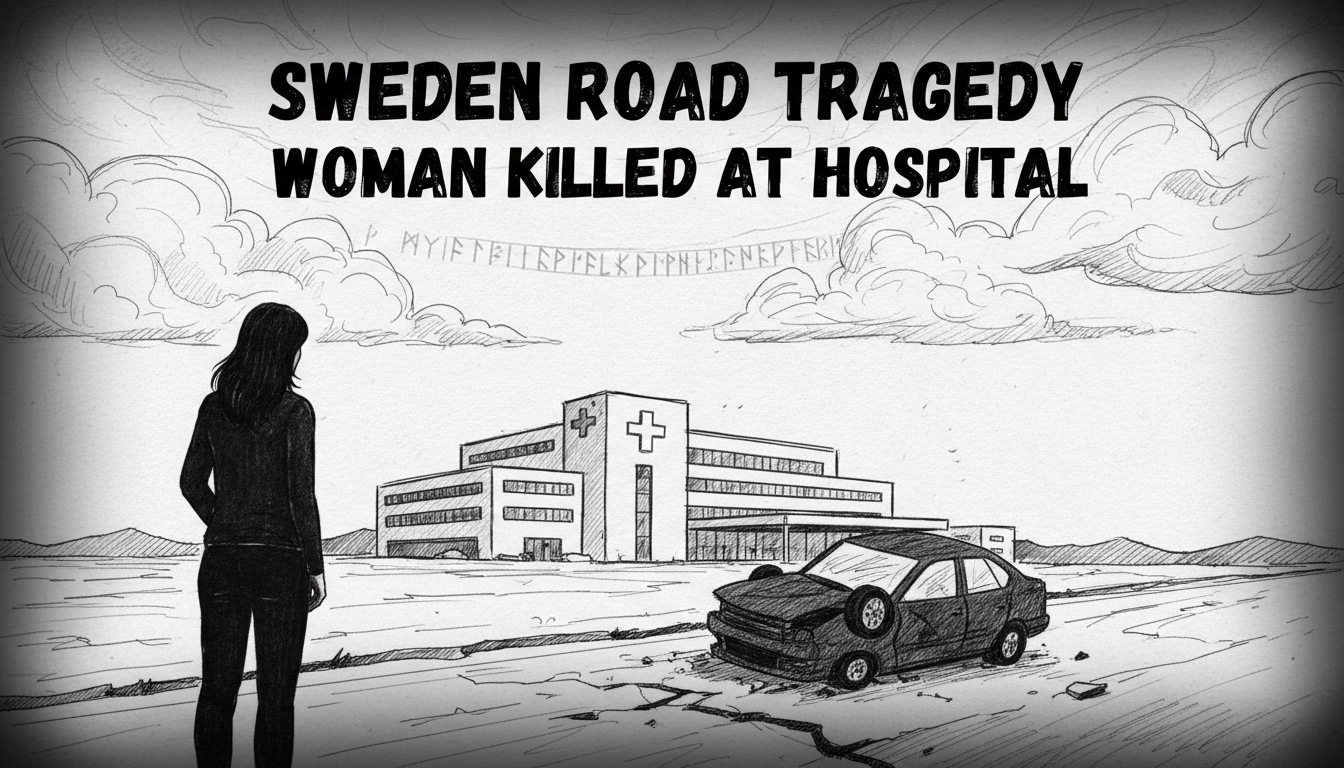
Sweden's Vision Zero safety promise faced a tragic test when a woman was killed on hospital grounds in Gothenburg. The 68-year-old was walking to Sahlgrenska University Hospital to visit her husband. A reversing vehicle struck her in the parking area. She suffered fatal injuries. The driver, a man in his 70s, has been charged with causing another’s death. “I am very remorseful. You must be vigilant when reversing,” the driver said in police interviews. This incident cuts to the heart of Swedish societal trust and safety ambitions.
A Visit That Ended in Tragedy
On an ordinary afternoon, she set out for a routine hospital visit. Her husband was a patient inside one of the Nordic region's largest medical complexes. The sprawling Sahlgrenska campus in western Gothenburg is a city within a city. It sees thousands of patients, visitors, and staff daily. Its roads and parking lots are constantly active. According to preliminary reports, the woman was on foot within the hospital zone when the accident occurred. The driver of the vehicle was reversing. The collision caused such severe trauma that she later died from her injuries. For families across Sweden, the hospital visit is a common ritual of care. This story has turned that ritual into a source of profound anxiety.
The Human Cost Behind the Headline
The immediate human impact is staggering. A husband awaiting his wife's company now mourns her loss. A family's world has been upended in the most cruel and ironic of places: a haven of healing. “It is a shocking and deeply tragic event,” a police spokesperson said. The driver’s statement reveals a personal devastation that mirrors the familial one. His admission of remorse highlights a moment’s lapse with eternal consequences. In Swedish culture, where lagom (moderation) and collective safety are prized, such events ripple through the community. They prompt uncomfortable questions. Are our safest spaces truly safe? This accident occurred not on a high-speed motorway, but in a low-speed, pedestrian-rich environment. That fact alone challenges core assumptions about risk.
Vision Zero and the Reality of Risk
Sweden pioneered the Vision Zero road safety policy. It aims to eliminate traffic fatalities and serious injuries. The policy has been lauded globally and has drastically reduced deaths over decades. It shifts responsibility from individual road users to system designers. The idea is simple: people make mistakes, but the system should not let those mistakes be fatal. This tragedy poses a difficult question. How does Vision Zero apply to a hospital car park? Experts note that low-speed zones and crowded, complex environments present unique challenges. “Vigilance when reversing is paramount, especially where pedestrians, including those who may be elderly or unwell, are moving,” says a road safety analyst familiar with Swedish policy. “Technology like rear-view cameras and sensors are part of the systemic solution. But ultimately, the human factor remains.”
The Gothenburg Community Reacts
In Gothenburg, Sweden’s second city, the news has resonated deeply. Sahlgrenska is a local landmark and a point of pride. Conversations in coffee shops in neighborhoods like Haga and Majorna touch on the fragility of life. Many express a shared sense of vulnerability. “You think you’re safe once you’re off the main road,” says Erik, a Gothenburg resident. “It makes you look twice in every parking lot.” The local administration has announced an immediate review of traffic safety procedures on all hospital property. This will likely include assessing signage, pedestrian pathways, and vehicle flow. For Swedes, such a systemic review is the expected response. It aligns with the Vision Zero philosophy of continuous improvement after any failure.
A Look at the Legal Process
The driver now faces legal proceedings. In Sweden, causing another’s death in traffic typically leads to a fine or imprisonment for up to two years. The courts will consider his statement, the circumstances, and his driving record. The process will be thorough but likely private, respecting both the victim’s family and the accused. Swedish law balances accountability with rehabilitation. The case underscores the serious legal ramifications of a momentary lapse in attention. It serves as a stark reminder to all drivers, regardless of age or experience.
When Safety Systems Fail
This incident is a paradox. It happened within the confines of an institution dedicated to saving lives. It occurred in a nation obsessed with creating a fail-safe traffic environment. The conversation it sparks is crucial for Swedish society. It moves beyond statistics to the very design of our everyday spaces. Are pedestrian and vehicle zones clearly separated in these complex areas? Is the design intuitive for both drivers who may be stressed and visitors who may be distracted? The pursuit of zero fatalities is noble. It requires examining not just highways, but every meter of pavement where people and vehicles meet. As Sweden moves forward, this tragic case will likely become a reference point. It will be used in safety seminars and planning meetings. The woman’s story will fuel the ongoing mission to protect life. But for her family, that is a cold comfort. Their loss is a permanent reminder of the distance between a visionary goal and a heartbreaking reality. Can any system ever be truly foolproof in a world of human error?