
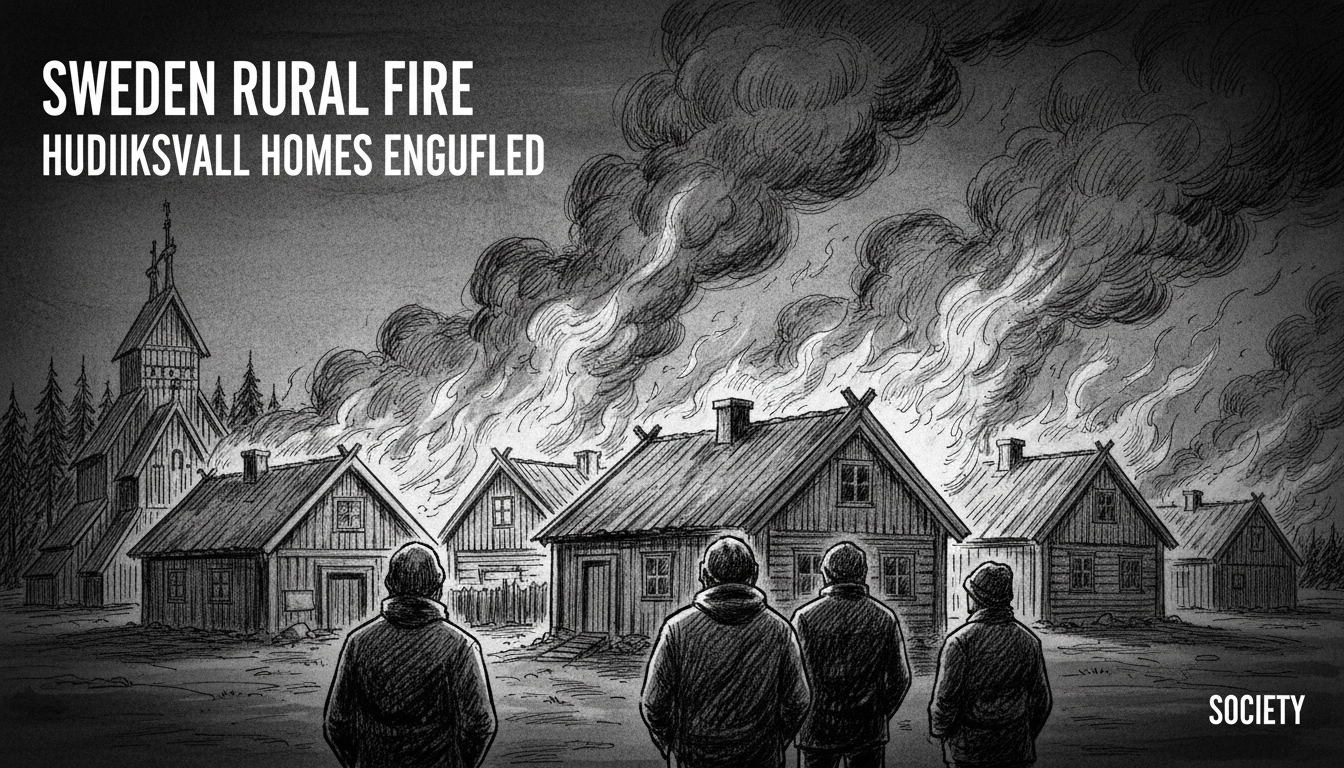
Sweden's emergency services are battling a major fire at a farm in Forsa, west of Hudiksvall, with multiple buildings fully engulfed in flames. Rescue services, police, and ambulances were dispatched to the scene, though it remains unclear if anyone was inside the properties. The blaze highlights the persistent vulnerability of Sweden's rural communities to destructive fires.
A Challenging Rural Response
The fire erupted on a farm property in Forsa, a locality within Hudiksvall Municipality in Gävleborg County. The region's landscape, a mix of dense inland forests and coastal areas, presents unique logistical hurdles for emergency responders. Distances between properties and fire stations are often significant, and many older buildings are constructed primarily of wood. These factors can allow fires to gain a devastating foothold before crews can arrive and establish control. The full scale of the damage and the cause of the ignition are subjects of an ongoing investigation by local authorities.
Local residents reported seeing thick, dark smoke billowing into the sky late Tuesday afternoon. The sight of multiple structures alight simultaneously suggests a rapid spread, potentially fueled by outbuildings, stored materials, or the construction of the homes themselves. The psychological impact on a small community witnessing such an event is profound, representing not just property loss but a rupture in the local fabric.
The Persistent Threat of Rural Fires
This incident is not an isolated event but part of a recurring pattern across the Swedish countryside. Fire safety experts consistently point to the heightened risks in agricultural and remote residential areas. Older electrical systems in historic farmhouses, the storage of hay and other flammable materials, and the use of wood-burning stoves and heaters are common contributing factors. Once a fire takes hold in a wooden structure, it can become an uncontrollable inferno in a matter of minutes.
"Prevention is the most critical tool we have in rural areas, where response times are inherently longer," explained a fire safety consultant familiar with the region. "This means regular, professional checks of electrical installations, conscious management of flammable goods, and ensuring properties have accessible fire extinguishers and water sources. For centuries-old farmsteads, which are part of our cultural heritage, retrofitting with modern alarms and sprinkler systems, where possible, is a worthwhile investment."
The challenges extend beyond prevention to the firefighting effort itself. Access for large fire engines down narrow country lanes can be difficult. Mains water is often unavailable, forcing crews to rely on tanker trucks or nearby ponds and lakes, requiring additional time and equipment to establish water supply lines. These operational delays can be the difference between containing a fire to one building and watching it consume an entire property.
Community and Aftermath
While the immediate focus is on extinguishing the blaze, the aftermath will present a different set of challenges for the affected property owners and the Forsa community. Losing multiple buildings on a farm likely means the destruction of not just a home but also tools, equipment, and possibly livestock or harvested crops. The financial and emotional toll is immense, often requiring long-term support from municipal social services and community networks.
Swedish municipalities, including Hudiksvall, have protocols for supporting residents displaced by fires, offering temporary housing and coordinating with insurance agencies. However, the process of rebuilding, especially for historically significant or uniquely constructed rural buildings, can be a years-long endeavor. The loss also raises questions about the long-term sustainability and safety of living in remote areas as public resources are stretched and populations age.
Neighbors and local volunteer organizations often play a crucial role in the days and weeks following a disaster. From providing meals and clothing to assisting with clearing debris, the community response in rural Sweden is frequently a testament to collective resilience. This solidarity becomes a necessary component of recovery when professional resources are focused on the immediate crisis.
A National Conversation on Safety
Incidents like the Forsa fire inevitably prompt a broader discussion about national fire safety strategies. While Swedish building codes for new constructions are stringent, a vast portion of the national housing stock, particularly in picturesque rural areas, predates modern regulations. Government agencies like the Swedish Civil Contingencies Agency (MSB) run public awareness campaigns, but reaching every isolated homeowner with effective prevention messages remains a challenge.
Some experts advocate for targeted subsidy programs to help owners of older properties implement safety upgrades. Others call for increased investment in rural fire stations and volunteer brigades, ensuring they have the most modern equipment to combat fires in challenging environments. The debate often centers on the balance between personal responsibility, the role of the state, and the economic realities of maintaining services in sparsely populated regions.
Every major fire serves as a tragic case study, offering lessons that can be applied nationwide. Investigators will meticulously determine the origin and cause of the Forsa blaze. Their findings, while specific to one property, will contribute to the broader understanding of risk factors in rural Sweden, potentially informing future policy and public advice.
Looking Forward from the Ashes
As the smoke clears over Forsa, the process of assessment and recovery begins. For the families involved, the path ahead is daunting, marked by insurance assessments, bureaucratic procedures, and the profound task of rebuilding a life. For the community, it is a sobering reminder of shared vulnerability and the importance of neighborly bonds. For the nation, it is another data point in the ongoing effort to protect its citizens and its heritage from a timeless and formidable threat.
The image of a burning homestead strikes a deep chord in the Swedish psyche, connected to the nation's agrarian history and its relationship with a sometimes-harsh natural environment. The question that lingers after the last ember is extinguished is not just about how this fire started, but what can be done—by individuals, communities, and the state—to prevent the next one. The answer will require not only resources and regulations but a sustained commitment to valuing safety in every corner of the country, from the busiest city block to the most remote farm in Hälsingland.