
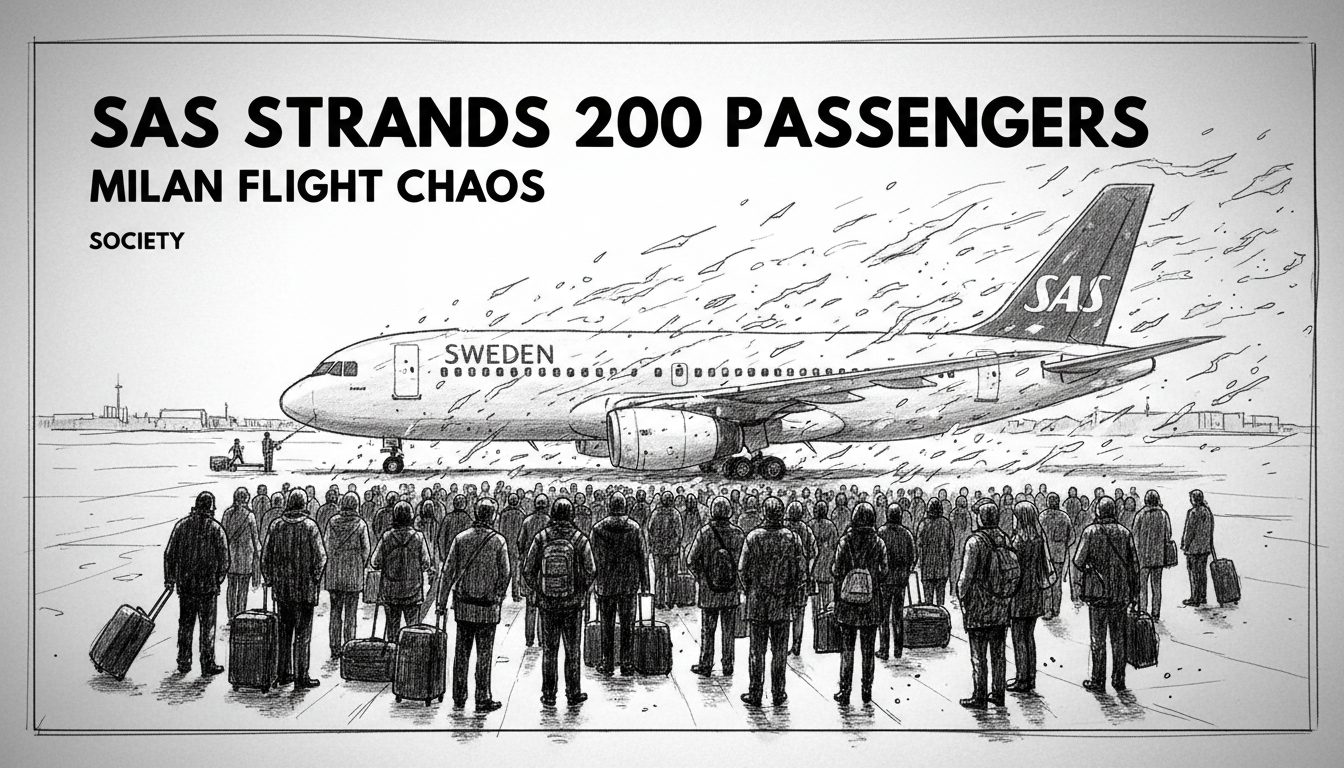
Sweden's SAS airline left hundreds of passengers stranded at Milan Malpensa Airport after a sudden flight cancellation. The SAS flight SK682, scheduled to depart for Stockholm at 22:10, was abruptly cancelled due to weather conditions. Passengers, many of them Swedish families and business travelers, endured hours of confusion with minimal support from airline staff. This incident highlights ongoing challenges for the historic carrier as it navigates financial restructuring and intense competition.
One frustrated passenger described the chaotic scene. "They must have known earlier it would be cancelled," she said. "Instead of us waiting for hours for a decision, they led us onto buses to the plane, only to turn us back to the terminal." The lack of clear communication became a central complaint. Passengers reported being directed to a lounge where ground staff had no information about rebooking or accommodation. "No one knows what we should do," another passenger explained. "They said they would give information and arrange hotels, but no one is saying anything. It's terribly handled by SAS."
A Night of Confusion at Malpensa
The ordeal began with repeated delays. Passengers received SMS updates pushing back the departure time before the final cancellation announcement. EU Regulation 261/2004 mandates that airlines provide care—including meals, refreshments, and hotel accommodation—during significant delays and cancellations when they are at fault. However, passengers reported a stark gap between regulation and reality. "We have to arrange everything ourselves," one traveler noted, capturing the feeling of abandonment many felt.
Malpensa Airport, Italy's second-busiest international hub, became an unwelcome overnight stop. Travelers scrambled to find last-minute hotels in Milan, a costly and difficult task. For families with children and elderly passengers, the situation was particularly stressful. The incident raises questions about SAS's operational preparedness and crisis communication protocols, especially at foreign airports where it may rely on third-party ground handlers.
The Heavy Cost of Airline Disruption
For SAS, which carried around 20 million passengers in 2023, such disruptions carry a double cost. First, there is the direct financial impact. Under EU rules, passengers on cancelled flights are entitled to compensation of up to €600, depending on the flight distance and delay length, unless the cause is an "extraordinary circumstance" like severe weather. Airlines must also cover reasonable accommodation and meal costs. Second, and potentially more damaging, is the cost to reputation and customer loyalty.
"Communication and customer service are absolutely critical during disruptions," says aviation analyst Lars Jensen, who has followed SAS for years. "Airlines that fail on this front don't just pay compensation; they lose trust. For an airline like SAS, which is rebuilding its brand and business, every passenger's experience counts double." The airline's handling of this event will be closely watched by customers and industry observers alike.
SAS Forward Meets Ground Reality
This disruption occurs as SAS is implementing its ambitious 'SAS Forward' restructuring plan. The strategy aims to secure the airline's long-term future after it filed for Chapter 11 bankruptcy protection in the United States in 2022. The plan involves reducing costs, renewing its fleet, and transitioning to a new ownership structure. While such corporate overhauls focus on financials and fleet plans, operational reliability and customer service remain the frontline of any airline's brand.
Passenger rights in Europe are among the world's strongest, but they only work if airlines have the systems and staff to implement them effectively. The scene at Malpensa—where confused passengers received little guidance—suggests a breakdown in that execution. It is a stark reminder that corporate restructuring must translate into better service at the gate and in moments of crisis, or the recovery plan remains incomplete.
What Stranded Passengers Should Do Next
For the passengers finally returning to Sweden, the process is not over. They should keep all receipts for extra expenses incurred—taxi fares, hotel bills, and meal costs. They must formally apply to SAS for reimbursement of these costs under EU law. They should also submit a claim for cancellation compensation via the SAS website. The key is to document everything: boarding passes, cancellation notices, SMS messages, and receipts.
Swedish consumer agencies, like Konsumentverket, offer guides on how to claim this compensation. The process can be slow, and airlines sometimes reject initial claims. However, the regulations are clear on passenger rights. Persistence pays. For many, the frustration is not just about the money but the principle. "It's about being treated with basic respect and care," said one returning passenger at Stockholm Arlanda. "We weren't."
The Bigger Picture for Scandinavian Travel
This incident is not isolated. Flight delays and cancellations across Europe have increased in recent years. Factors include air traffic control strikes, lingering staff shortages from the pandemic, and more frequent extreme weather events. For Scandinavian travelers, known for valuing efficiency and reliability, such unpredictability is particularly grating. It challenges the very notion of smooth, functional travel that the region prides itself on.
SAS, as a flagship carrier, has historically embodied that Nordic ideal of dependable service. Moments of failure, therefore, resonate deeply. They become stories told over coffee in Stockholm offices and shared widely on social media. They chip away at a legacy built over decades. As SAS charts its new course forward, it must remember that its future depends not just on new investors and aircraft, but on every single passenger it brings home.
Will the lessons from a chaotic night in Milan lead to tangible improvements, or will they be lost in the complexities of corporate restructuring? For the passengers who slept on airport chairs or paid for last-minute hotels, the answer will determine whether they ever fly SAS again.