
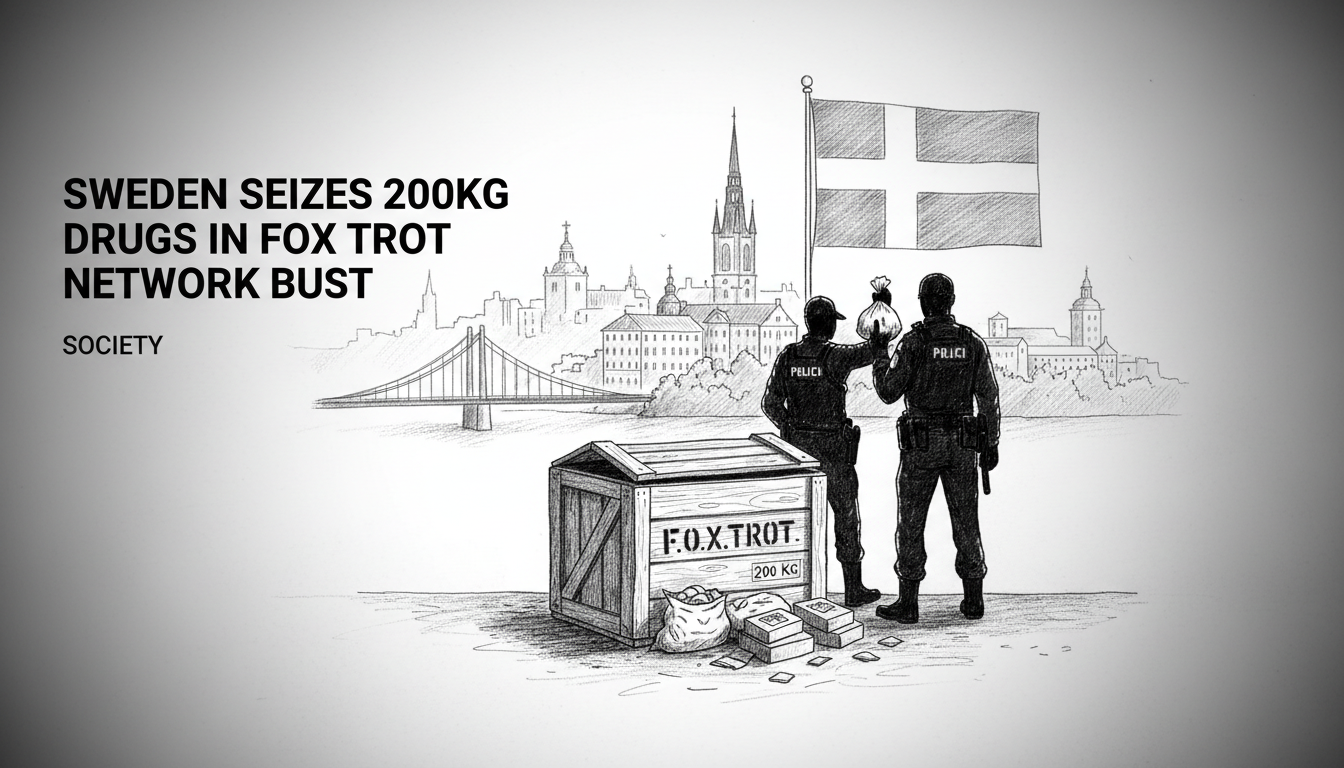
Sweden's police have confirmed a massive drug seizure directly linked to the notorious Foxtrot criminal network. At least 200 kilograms of narcotics, suspected to be amphetamine and cocaine, were confiscated in Nykvarn, southwest of Stockholm, on Friday. The haul is one of the largest in recent years connected to a single organized crime group.
"We connect this seizure to the Foxtrot network, where the main leader is located abroad," said Erik Guteson, section chief for international and serious organized crime in the West region. The operation highlights the ongoing battle against gangs whose operations stretch across borders, challenging Swedish authorities.
A Seizure in the Stockholm Archipelago
The bust occurred in Nykvarn, a municipality in the picturesque Stockholm archipelago more commonly associated with summer cottages and sailing than international drug trafficking. This location choice by criminals is not random. The archipelago's countless islands and inlets have long provided cover for smuggling operations, a dark counterpoint to the region's idyllic reputation. For locals, the news is a jarring reminder that organized crime permeates beyond city limits.
"You hear about these things in Malmö or parts of Stockholm, but not here," said Anna, a long-time Nykvarn resident who preferred not to give her full name. "It's unsettling. It makes you wonder what else is happening that we don't see." This sentiment echoes across many Swedish communities where gang violence and drug trade have shifted from abstract headlines to local realities.
The Foxtrot Network's Shadow
The Foxtrot network is a key player in Sweden's criminal landscape. Known for drug trafficking and extreme violence, its operations exemplify the modern, decentralized structure of Swedish gangs. Unlike traditional hierarchical mafias, these networks often consist of loose alliances and subcontractors, making them harder to dismantle. The fact that its alleged leader operates from abroad is a common and frustrating theme for police.
"This seizure of 200 kilos is significant. It shows the scale of distribution they control," explains Professor Amir Rostami, a criminologist at Stockholm University and an expert on organized crime. "These networks are businesses. A seizure this large hits their inventory and cash flow, but the structure remains. The leader abroad insulates the core. It's a strategic challenge."
Police analysis of the seized substances is ongoing. The mention of amphetamine and cocaine points to a dual-market strategy. Amphetamine has a strong domestic market in Sweden, while cocaine caters to a more international, high-end clientele in major cities. Controlling both signifies broad market ambition.
The Human Cost of the Trade
Behind the kilos and police statements lies a deeper societal issue. Drug-related crimes are a major driver of Sweden's prison population. Gang recruitment often targets vulnerable young people in marginalized suburbs, creating cycles of violence and alienation. The profits from shipments like the one seized in Nykvarn fuel this ecosystem.
In neighborhoods like Rinkeby, Tensta, or parts of Malmö, community workers see the daily impact. "The gangs offer money, status, and a sense of belonging that society fails to provide for some of these kids," says Leila Mohammed, a youth mentor in Botkyrka. "Every big seizure is important, but until we address the recruitment ground, the networks will find new soldiers." This perspective is crucial. Policing alone is a reactive measure in a complex social equation.
A Pattern of Escalation
The Nykvarn seizure fits a pattern of escalating gang conflict in Sweden. 2023 saw a significant increase in gang-related violence, including bombings and shootings, often in public places. This violence is frequently tied to territorial disputes over drug distribution rights. A seizure this large can disrupt the balance of power, potentially sparking retaliatory violence as rival networks sense weakness or opportunity.
"Large seizures can have a destabilizing effect in the short term," Professor Rostami notes. "They create debt, disrupt supply to lower-level dealers, and can lead to internal conflicts or attacks on rivals blamed for the loss. It's a double-edged sword for public safety."
Police efforts have intensified, with increased resources for gang interception and closer international cooperation. Yet, the transnational nature of the trade, with leaders in Turkey, the Balkans, or the UAE, complicates prosecutions. The Swedish legal system struggles to reach those who orchestrate crimes from outside the country.
Looking Beyond the Bust
While Friday's operation is a clear tactical win for law enforcement, experts urge a broader view. The fundamental demand for narcotics in Sweden persists. The high profitability of the trade ensures that new networks will emerge to fill any vacuum created by police action. The Foxtrot network itself may adapt, shift routes, or temporarily lie low.
Some analysts point to potential policy discussions this seizure might reignite. Sweden has maintained a strict zero-tolerance "narkotikapolitik" (drug policy) focused on prevention and law enforcement. While popular, some voices in public health and academia question whether this approach adequately reduces harm or market size, especially as violence escalates.
For the average Swede, the news reinforces a sense of unease. It's a story about a crime network, but also about a changing society. The conversation in coffee shops and on social media often swings between support for tougher police measures and deep concern about root causes: segregation, inequality, and failed integration.
As the analysis of the 200 kilograms continues in police labs, the real-world analysis continues on the streets. The drugs are off the market, but the market itself remains. The challenge for Sweden is not just intercepting shipments, but changing the calculus that makes such a massive shipment worthwhile in the first place. Can a society built on trust and consensus find a way to dismantle the economies of violence thriving in its shadows? The answer will define the next chapter more than any single seizure.