
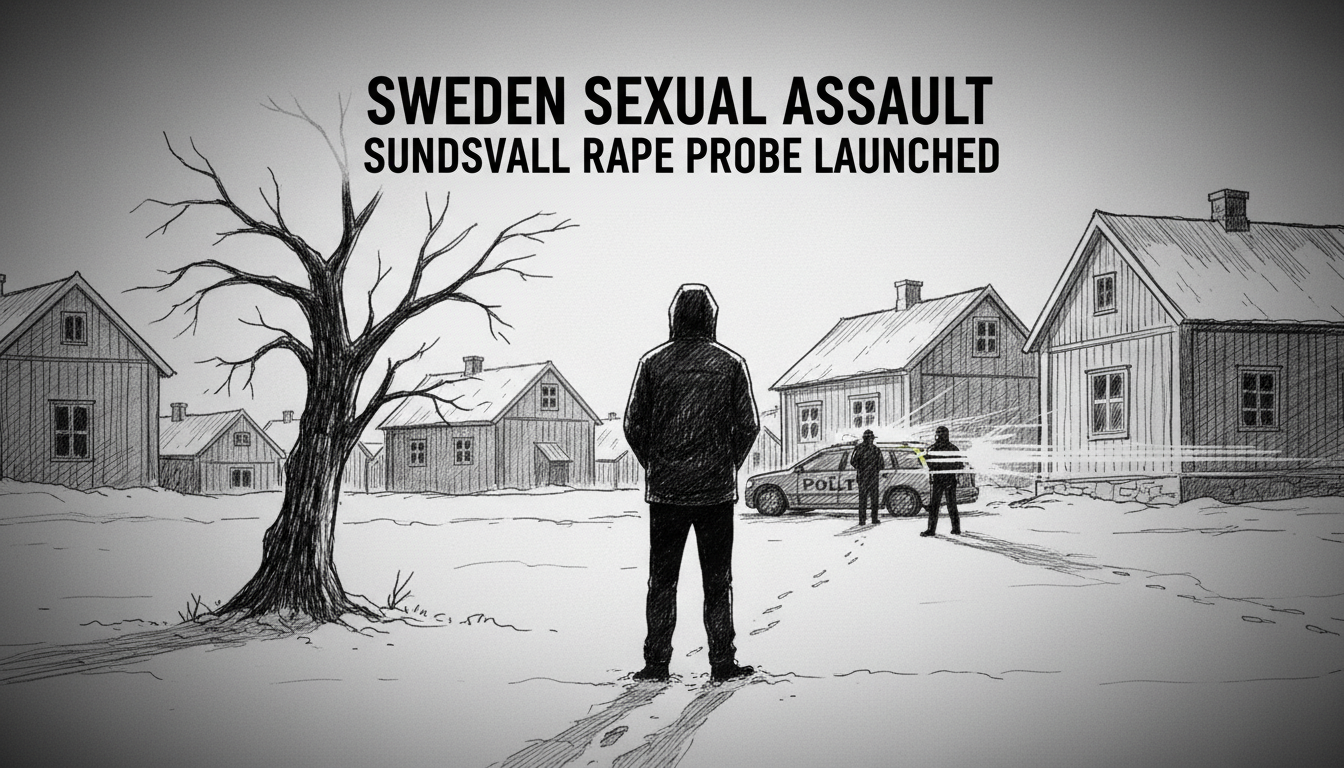
Swedish police are investigating a reported rape in Sundsvall after a nighttime assault. Officers received a report of a sexual offense occurring outdoors just before midnight. No arrests have been made, and authorities are appealing for public information. "It could be if someone has observed people or if they heard something during the night," police press spokesperson Marie Andersson said. She declined to provide further details about the incident, which remains under active investigation.
A Crime Under the Midnight Sun
The alleged assault in Sundsvall, a coastal city in central Sweden, occurred during the region's extended summer twilight. This outdoor setting presents particular challenges for investigators. Police must now piece together events from witness accounts and forensic evidence collected in a public space. The timing—just before midnight—suggests the area might have had reduced visibility and fewer potential witnesses. Swedish law enforcement typically treats such reports with immediate priority, deploying specialized investigators from the National Operations Department (NOA) when necessary.
Sweden's legal framework defines rape strictly as sexual intercourse without consent. Any sexual act where a person does not explicitly and freely consent constitutes a criminal offense under Chapter 6 of the Swedish Penal Code (Brottsbalken). The law requires active, voluntary agreement, moving beyond mere absence of resistance. This consent-based model, strengthened through legislative amendments in 2018, places Sweden among European nations with the most stringent legal definitions of sexual violence.
The Complex Landscape of Reporting and Statistics
Reported rape cases in Sweden have shown fluctuation over the past decade. According to the Swedish National Council for Crime Prevention (Brå), 9,360 rapes were reported to authorities in 2022. Experts consistently note that reported figures do not directly reflect actual incidence rates. Increased reporting often signals greater public awareness and reduced stigma rather than a surge in crimes. The #MeToo movement significantly impacted Swedish society, leading to more open discussion and potentially higher reporting rates for historical and recent assaults.
"We must distinguish between statistical trends and lived reality," explains Professor Anna Kaldal, a legal scholar specializing in procedural law at Stockholm University. "Higher reporting rates can indicate both positive societal change and persistent underlying problems. The challenge lies in ensuring the justice system can respond effectively to each report with thorough investigation and support for the complainant." Victim support organizations like Terrafem and Unizon provide crucial assistance throughout legal proceedings, which survivors often describe as grueling.
Investigative Hurdles and Legal Thresholds
The Sundsvall investigation will confront common evidentiary challenges in sexual offense cases. Proving lack of consent beyond reasonable doubt remains difficult, particularly without physical witnesses or immediate forensic evidence. Swedish courts evaluate the totality of circumstances, including victim testimony, psychological evaluations, and any corroborating evidence. Sentences for rape vary significantly based on severity, ranging from probation for less aggravated cases to several years imprisonment. Particularly aggravated rape, involving violence or exploitation of vulnerability, carries a minimum four-year sentence.
Police methodology has evolved to focus on trauma-informed interviewing techniques. The goal is to gather accurate accounts without re-traumatizing the complainant. "Every investigation is unique, but our approach must always center on the victim's rights and dignity," states Erik Wennerström, a superintendent with the Swedish Police Authority. "This includes immediate medical and psychological support, alongside a meticulous forensic investigation." The absence of an arrest in Sundsvall suggests police are still identifying a suspect, a process that can involve reviewing CCTV, conducting forensic analysis, and interviewing potential witnesses.
Societal Reckoning and Systemic Response
Sweden's approach to sexual crimes reflects broader Nordic values of gender equality and individual bodily autonomy. Recent years have seen intense public debate about sentencing guidelines and victim protection. Some critics argue the justice system remains too lenient, while others highlight the low conviction rates compared to reporting figures. The government has responded with increased funding for specialized prosecution units and victim support services. These units work exclusively with sexual and violent crimes, developing specific expertise.
Public appeals for information, like the one issued in Sundsvall, are standard procedure. They aim to activate community knowledge that might not initially seem relevant to potential witnesses. "Sometimes people hear or see something unusual but don't connect it to a crime until we ask," notes spokesperson Marie Andersson. This community-oriented policing relies on public trust in law enforcement institutions—a relationship constantly evaluated in Sweden's transparent media environment.
The Path Forward for Survivors and Justice
As the Sundsvall investigation continues, the case enters Sweden's complex judicial machinery. If a suspect is identified, the prosecutor must decide whether evidence meets the requirement for prosecution. The Swedish principle of mandatory prosecution applies to rape cases, meaning charges must be filed if there is sufficient evidence and no legal obstacle exists. The process from report to potential trial can take many months, during which survivors often experience significant stress.
The ultimate test lies in the system's ability to deliver both justice for individuals and deterrence for society. Each case puts Sweden's legal principles and social values under scrutiny. Can a system built on consent-based definitions provide clarity in ambiguous situations? Does the support infrastructure adequately protect survivors through lengthy proceedings? The answers to these questions develop case by case, in courtrooms and police stations across the country. For now in Sundsvall, the search for answers and accountability continues under the Nordic summer sky.