
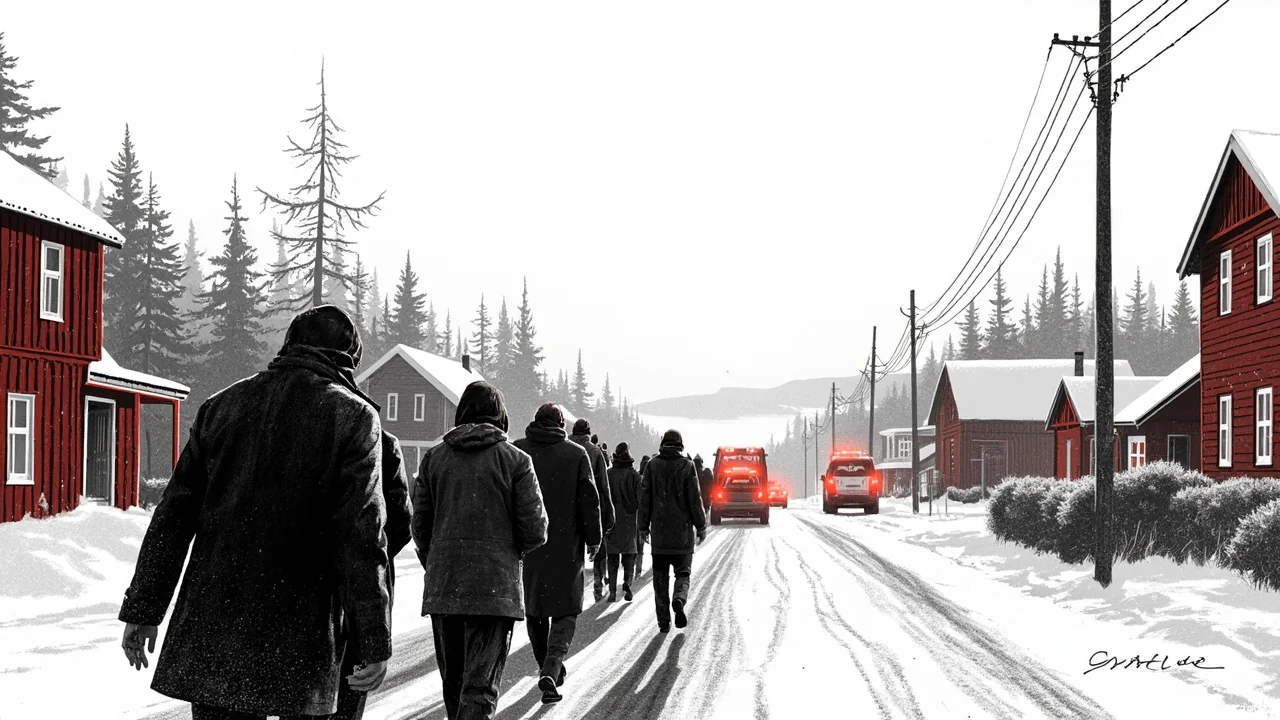
Sweden police are responding to a shooting incident in Osby, Skåne, where a man fired shots from a villa on Brunnströms väg. The alarm reached police at 12:51 PM on Saturday, prompting an immediate response and the evacuation of nearby homes in the Högstagården area.
Residents were initially told to stay indoors, away from windows and doors. Police spokesperson Evelina Olsson confirmed the situation. "It is a person who is in a villa who has fired from the villa," Olsson said. "We do not know if there are more people in the villa." At least one shot was fired. There were no initial reports of injuries. More police resources were dispatched to the scene.
This incident in a quiet residential neighborhood highlights a persistent challenge for Swedish society. While violent crime rates in smaller towns like Osby remain lower than in major cities, isolated shootings disrupt the sense of security many associate with Swedish life. The police response, moving swiftly from shelter-in-place orders to evacuation, shows a standardized protocol for such threats.
A Quiet Saturday Shattered
For residents of Högstagården, a typical Saturday was abruptly overturned. The area, characterized by single-family homes and green spaces, is not known for violent disturbances. The sudden presence of police, the urgent warnings, and the evacuation order created a scene of tension far removed from the calm weekend atmosphere. Such events force a community to confront vulnerabilities it rarely considers.
"We heard the police loudspeakers first," said a neighbor who wished to remain anonymous, speaking from a safe location after being evacuated. "They told everyone to stay inside. Then officers came to the door and said we had to leave. You don't expect this here. You see it on the news from other places, but not on your own street." This sentiment is common in communities rocked by sudden violence. The psychological impact extends beyond the immediate danger zone, eroding trust in the immediate environment.
The Police Response and Evolving Situation
Police strategy in such incidents prioritizes containment and public safety. The initial shelter-in-place order is a standard measure to protect residents from potential stray gunfire and to keep streets clear for emergency vehicles. The subsequent decision to evacuate nearby houses indicates an assessment of an ongoing threat, suggesting the armed individual may have been barricaded or uncooperative.
Evelina Olsson's statements were careful, releasing only confirmed details. The lack of information about other potential occupants in the villa is a significant factor for police tactics. It transforms a potential single-person incident into a scenario with unknowns, requiring greater caution. The deployment of additional resources points to a prepared response plan for armed threats, even in smaller municipalities.
These protocols have been refined in recent years. Sweden's police have invested in specialized negotiator teams and rapid response units to handle crises that once seemed confined to crime fiction. The goal is always de-escalation and a peaceful resolution, but the presence of a firearm dramatically raises the stakes for everyone involved.
Community Safety in Focus
Incidents like the Osby shooting inevitably spark conversations about community safety and gun violence in Sweden. While the vast majority of firearm violence is linked to criminal gang conflicts, often in metropolitan areas, an event in a residential villa in Skåne touches a different nerve. It brings the issue closer to home for people who feel disconnected from gang-related headlines.
Swedish law on gun ownership for civilians is strict, primarily allowing firearms for hunting or sport under rigorous licensing. The presence of any illicit firearm, therefore, represents a serious breach of security. Each illegal gun seized is a priority for police, but as this event shows, the ones that remain in circulation can create public terror.
Local politicians often face pressure to increase visible police patrols after such events, even if they are isolated. The demand is for reassurance as much as for prevention. The challenge for authorities is balancing the efficient use of resources with the very real fear that follows a shooting, regardless of its context or motive.
The Human Cost Beyond the Headlines
Beyond the police blotter details lies a community dealing with shock. For the evacuated families, Saturday became a day of disruption and fear. Children were hurried from their homes, weekend plans were abandoned, and the safety of their own neighborhood was momentarily shattered. The return home is often accompanied by anxiety, a feeling that the familiar streets have changed.
Neighbors will talk about it for weeks. The villa on Brunnströms väg will become a local landmark of infamy. Studies on the aftermath of community violence show that even those not directly threatened can experience heightened anxiety and stress. The sense of collective safety, once broken, is slow to rebuild.
In Swedish culture, which highly values trygghet (security/safety) and orderly living, such violations feel particularly acute. They contradict a national self-image of peace and stability. This is why, even when no one is physically injured, the event is traumatic. It's an assault on the community's perceived normalcy.
Looking Ahead: Resolution and Reflection
As the police operation in Osby continued, the immediate focus was on resolving the standoff without harm. The longer-term focus will shift to understanding the why. Was this a domestic crisis spilling over? A mental health emergency? Or something tied to broader criminal networks? The motive will shape the community's understanding and the official response.
Local social services may offer support to affected residents, particularly children who witnessed the police activity and evacuation. Community leaders might organize a meeting with police to answer questions and address concerns. This process of official communication and community dialogue is crucial for healing.
For Sweden, each incident contributes to an ongoing national conversation about safety, resources for police and social services, and the roots of violence. While Osby is not Malmö or Stockholm, its experience reminds the country that no community is entirely insulated. The search for trygghet continues, demanding vigilance, resources, and a commitment to addressing the complex causes behind a single gunshot on a Saturday afternoon.
The final measure of this incident's impact won't be in the police report. It will be in whether parents feel comfortable letting their children play outside next weekend, or if neighbors still pause and listen when an unfamiliar car slows down on Brunnströms väg. The true resolution comes when the memory of fear is replaced, once again, by the quiet rhythm of everyday life.