
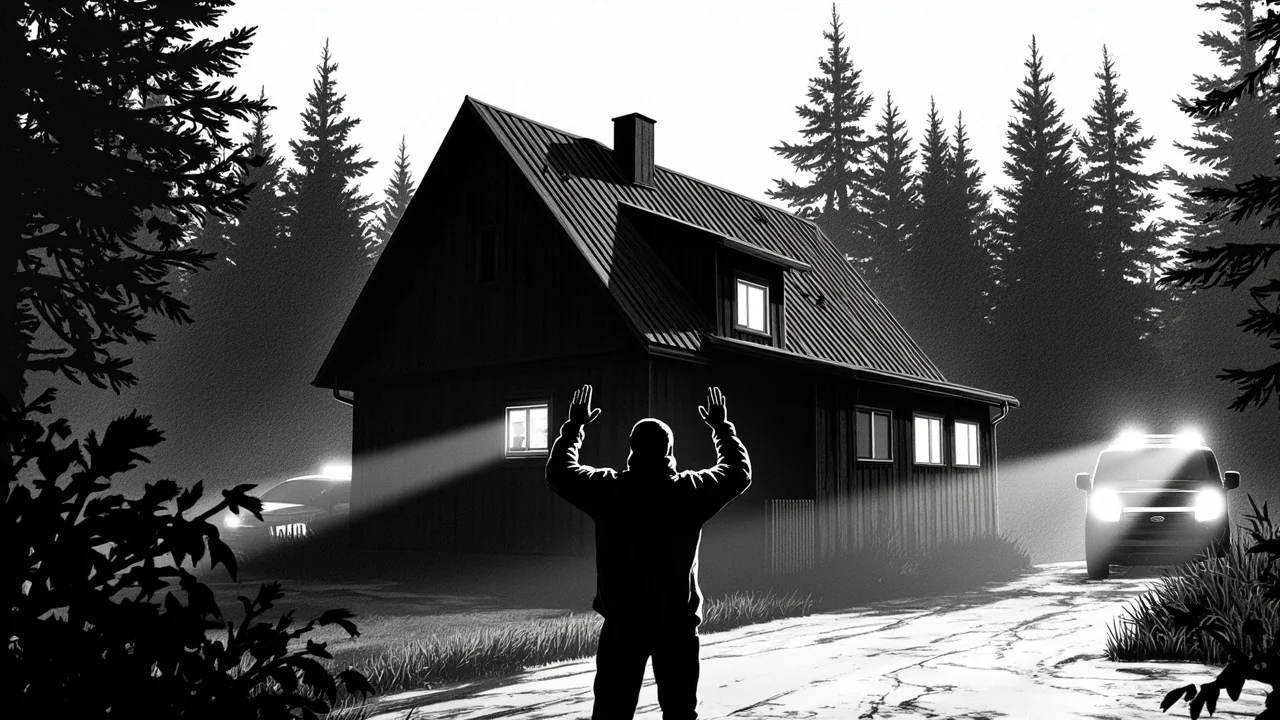
Sweden's southern town of Osby became the scene of a tense police siege Thursday afternoon. A man opened fire from a villa in the Högstagården area, sending shockwaves through the quiet residential neighborhood. Police evacuated nearby homes and urged residents to stay indoors as a major operation unfolded.
"It is a man who is in a villa. He has fired at least one shot out from the house," police spokesperson Evelina Olsson said in a statement. The call came in around 12:30 PM. By 1:30 PM, roughly an hour later, police described the situation as "frozen." Multiple police units were on site, surrounding the property while awaiting reinforcements. "We are on site, the man is still inside and we are awaiting reinforcements," Olsson confirmed.
For residents of Högstagården, a Thursday meant for routine was shattered. The sound of a gunshot is profoundly alien in a Swedish residential area. This is not a high-crime neighborhood. It's a place of family homes, trimmed hedges, and the quiet rhythm of suburban life. The sudden evacuation order, the sight of armed police, and the instruction to lock doors created a surreal atmosphere of fear in broad daylight.
A Community in Lockdown
The immediate police response focused on containment and public safety. Evacuating adjacent houses was a precautionary measure to create a secure perimeter. Telling everyone else to stay indoors was a directive to prevent any accidental movement into a potential line of fire. This protocol, while standard for police, is deeply unsettling for civilians. It transforms a familiar street into a potential danger zone, confining people to their living rooms with only speculation and worry for company.
Osby, with a population of around 7,000, is located in northeastern Skåne. It's known for its glassworks history and its forests, not for armed sieges. The incident immediately dominated local conversation, spreading rapidly through word of mouth and community social media groups. The disconnect between the town's peaceful self-image and the violent reality of the afternoon was jarring. "You hear about these things in Malmö or Stockholm, not here," one resident, who asked not to be named, told me over the phone. "This is where you feel safe."
The Psychology of a 'Frozen' Standoff
Police terminology is precise. Describing the situation as "frozen" indicates a deliberate tactical pause. The armed man is contained within the villa. Police have the location surrounded. There is no immediate, active threat to the public beyond the perimeter, but the situation remains volatile and unresolved. The decision to await reinforcements suggests a strategy of de-escalation and patience, preferring negotiation and time over a swift, forceful entry.
This "wait-it-out" approach is common in Swedish police handling of barricade situations. The priority is to avoid loss of life, including that of the suspect. Specialized negotiators and the national task force, Piketen, are often called in for such scenarios. The goal is to turn a hot, violent moment into a cold, managed process. For the community, however, this freeze creates an agonizing limbo. Life stops. You wait. You watch the news. You wonder about the man inside the villa and what brought him to this point.
Beyond the Headlines: Strain and Society
While the specific motives in Osby remain unknown, such incidents never occur in a vacuum. They spark difficult conversations about mental health support, social isolation, and access to firearms in Sweden. Gun ownership here is high by European standards, primarily for hunting and sport, but illegal weapons also circulate. Every shooting, whether gang-related or an isolated domestic incident, puts pressure on the national debate about violence.
For a small town, the aftermath is as important as the event itself. The trauma is collective. Children will have questions. Neighbors will replay the events. The villa at the center will become a local landmark of infamy. Community trust, once fractured, takes time to rebuild. Local officials and social services will likely need to offer support long after the police tape is gone.
The Swedish Context of Sudden Violence
Swedes pride themselves on a society built on consensus and safety. The Allemansrätt—the right of public access—symbolizes a fundamental trust in people and the environment. An event like the Osby siege violently punctures that trust. It exposes the vulnerability that exists even in the most orderly places. It forces a confrontation with the fact that crisis can emerge from any home, on any street.
There is also a cultural dimension to the response. The Swedish approach is systematic, calm, and mediated. The police communicate clearly but sparingly. The community reacts with concern but rarely public hysterics. There is an unspoken understanding that the system—the police, the social workers, the authorities—will handle it. This faith is both a strength and a vulnerability. It provides stability, but the shock is profound when the system is tested so close to home.
Looking Ahead: The Thaw and Its Aftermath
As of this writing, the standoff in Osby remains unresolved. The coming hours will determine the outcome. Will there be a peaceful surrender? A negotiated conclusion? The hope of every resident and officer on scene is for an end without further violence. Once the immediate situation is over, the process of understanding begins. Police will investigate the circumstances leading to the gunfire. Was it a domestic dispute? A mental health crisis? A combination of factors?
The town of Osby will eventually return to normal. Children will play outside again. Neighbors will chat over fences. But the memory of this frozen Thursday afternoon will linger. It serves as a stark reminder that the geography of fear is not limited to big-city headlines. It can manifest anywhere, turning a quiet villa in Skåne into the center of a national news story, and a peaceful community into a place of waiting and dread. The ultimate question for Osby, and for Sweden, is how we care for the isolated individuals among us before they reach a breaking point that shatters not just their own windows, but an entire community's peace.