
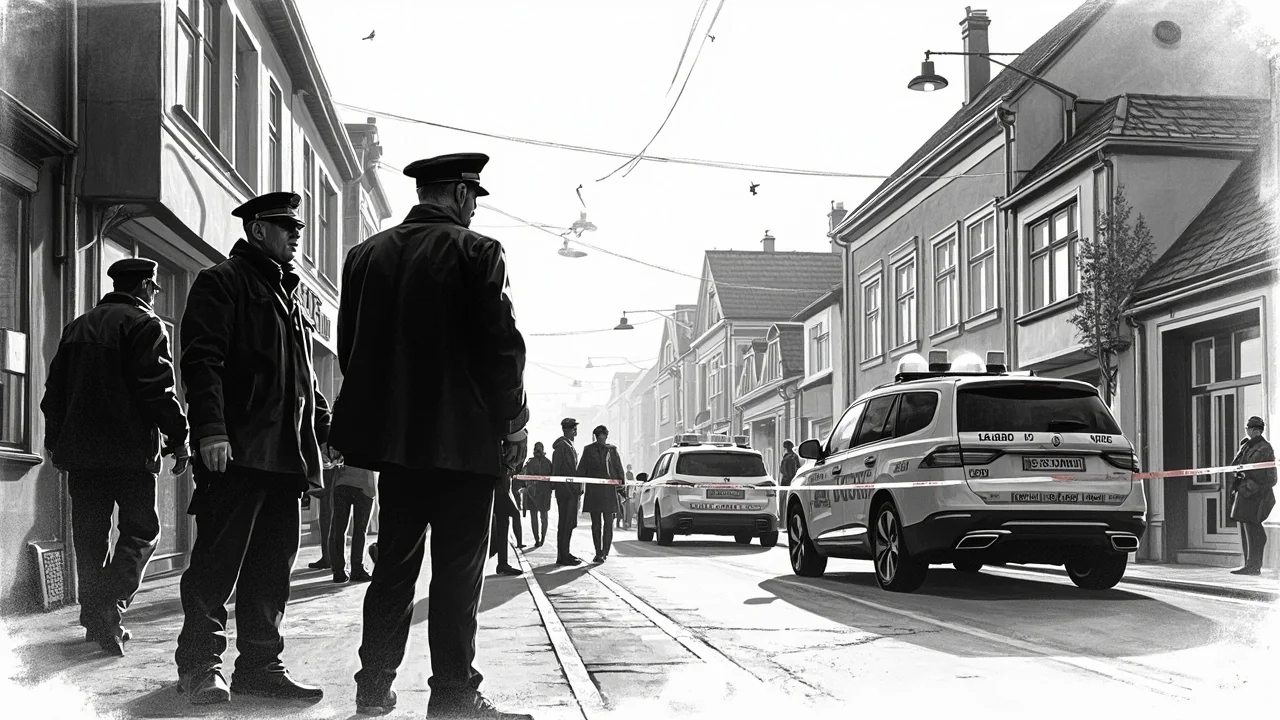
Swedish police ordered residents of the Högstagården area in Osby to stay indoors following a suspected shooting incident. The alert, issued on Tuesday, created immediate lockdown conditions in the southern Swedish municipality. Officers from the local police district in Osby, part of the broader Skåne County command, responded to reports of gunfire. This event adds to a growing national tally of firearm-related violence that continues to challenge law enforcement and government policy in Sweden.
Immediate Police Response and Public Alert
Authorities issued a clear directive for people to remain inside their homes. The police statement did not specify the exact time or potential casualties from the incident in Osby. Standard procedure for such alerts involves securing the perimeter and initiating a preliminary investigation. Residents reported seeing a significant police presence, including marked and unmarked vehicles, converging on the Högstagården neighborhood. The operational response is coordinated from the regional command center in Kristianstad.
This incident follows a familiar pattern of police responses to gun violence in suburban areas. The Swedish Police Authority has developed specific protocols for these situations over recent years. Their primary goals are to secure the scene, ensure public safety, and gather forensic evidence. The Osby event will now trigger a multi-stage investigation involving local detectives and possibly national resources.
The Broader Context of Swedish Gun Violence
Gun violence in Sweden has become a persistent focus for the government and the Riksdag. Official statistics from the Swedish National Council for Crime Prevention (Brå) show a concerning trend. While overall crime rates have seen fluctuations, shootings and explosive attacks have captured significant political attention. The Swedish government, led by Prime Minister Ulf Kristersson, has repeatedly labeled gang violence a national security threat.
Interior Minister Gunnar Strömmer frequently addresses Parliament on this issue. He has stated that organized crime is undermining the very fabric of Swedish society. Government policy in Sweden now heavily emphasizes tougher sentencing and expanded police powers. Several legislative packages have passed through the Riksdag building in Stockholm aimed at this crisis. These include laws allowing for secret surveillance and enhanced witness protection programs.
Political Reactions and Policy Directions
The shooting in Osby will inevitably renew political debate in Stockholm. Opposition parties often critique the government's approach as overly punitive. They argue for greater investment in social prevention programs in vulnerable areas. Government ministers counter that a strong judicial response is necessary to break the cycle of violence. Justice Minister Gunnar Strömmer is expected to reference such incidents when arguing for further legal reforms.
Riksdag decisions on crime are often contentious, reflecting deep ideological divides. The governing coalition holds a slim majority, making every vote critical. Policy proposals must navigate committee reviews and intense floor debates. The Swedish Parliament's role in shaping national security strategy has expanded considerably. Many sessions now focus on the operational challenges faced by police in towns like Osby.
Analyzing the Local Impact in Osby
Osby, a municipality of approximately 13,000 residents, now joins a list of towns grappling with public gun violence. Such events have profound local effects beyond the immediate danger. They damage community cohesion and create a climate of fear. Local business owners express concern about economic impacts and safety. Municipal leaders must balance support for police operations with maintaining public trust.
The psychological impact on residents, particularly children, is a serious concern for social services. Schools in the area may implement lockdown drills or safety discussions following the incident. Community policing efforts, which aim to build relationships between officers and citizens, face a severe test. Restoring a sense of normalcy and security becomes the immediate post-crisis task for local officials.
The National Security Strategy and Law Enforcement
Sweden's national police strategy has shifted towards a more centralized, intelligence-led model. The National Operations Department (NOA) coordinates responses to serious crime across county borders. Incidents like the Osby shooting feed into national threat assessments. These assessments inform budget allocations and tactical priorities decided in Stockholm.
Police resources have increased in recent government budgets, but recruitment and retention remain challenges. Officers face complex threats, including sophisticated criminal networks and widespread illegal firearms. The government has also moved to strengthen border controls to intercept weapon smuggling. Collaboration with neighboring Nordic countries on intelligence sharing has intensified, though operational details are often classified.
Looking Ahead: Prevention and Prosecution
The immediate aftermath in Osby will focus on investigation and apprehension. Long-term solutions, however, dominate the political discourse. The Swedish government's strategy combines intensified law enforcement with preventive social measures. This dual approach is debated constantly in policy circles. Its effectiveness is measured in crime statistics and, more importantly, in public sentiment.
Prosecuting gun crimes relies on witness testimony and forensic evidence, both of which can be difficult to obtain. The Swedish legal system requires high standards of proof for convictions. This creates a tension between rapid police action and the meticulous demands of the courts. Upcoming Riksdag decisions may further adjust the balance between procedural rights and investigative powers.
A Community and a Nation at a Crossroads
Events in places like Högstagården in Osby are not isolated. They are symptoms of a deeper national challenge. The dialogue in Rosenbad, the government offices, and in the Riksdag building reflects this understanding. Solutions are neither simple nor quick, requiring sustained effort across administrative levels.
The true test for Stockholm politics will be translating high-level strategy into tangible safety for every neighborhood. Can government policy in Sweden stem the flow of weapons and break the recruitment chains of criminal gangs? The answer will be written not only in legislation but in the daily reality of communities across the country. The lockdown in Osby has ended, but the questions it raises for the nation remain firmly in place.