
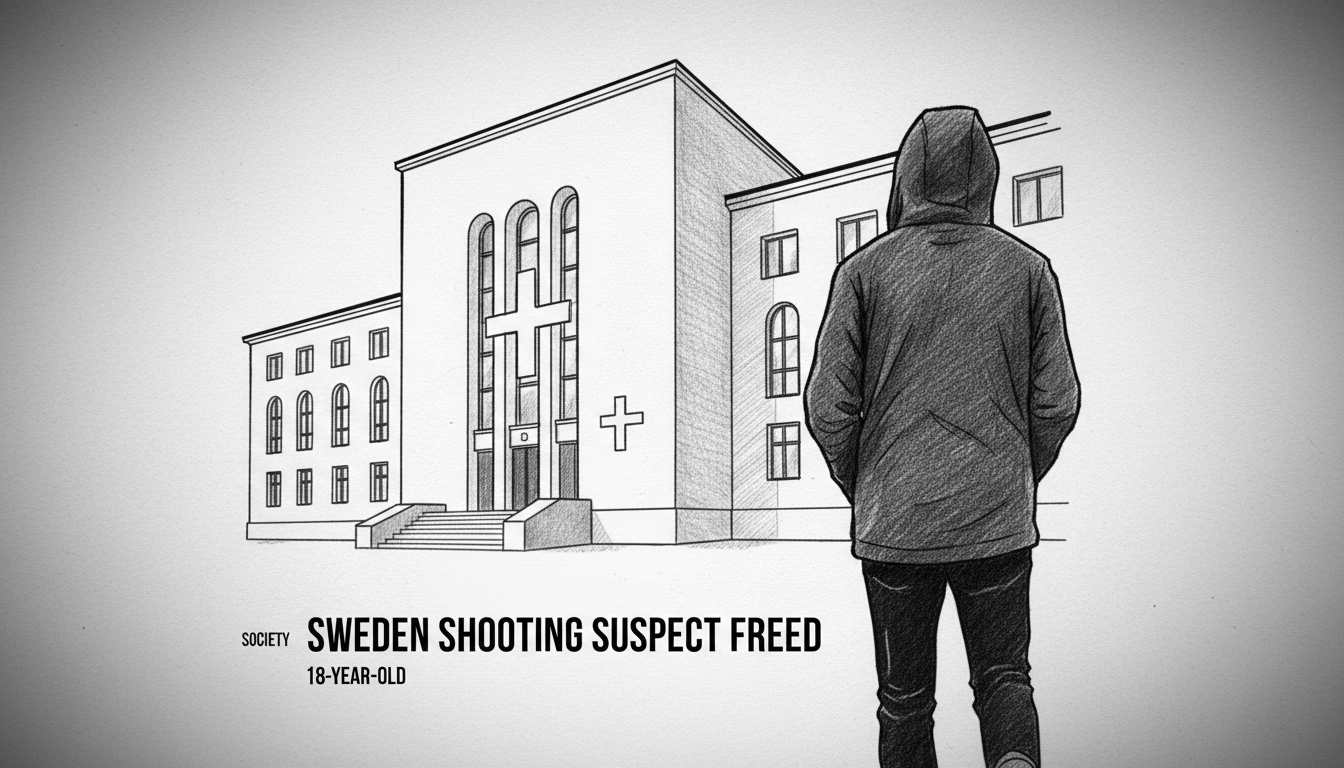
Sweden gang violence incidents frequently involve individuals under 25, and a Wednesday night shooting in Kallhäll added two more young men to that statistic. A 21-year-old victim was shot in the shoulder just before 9 PM, leading to the arrest of an 18-year-old suspect for attempted murder. Within a day, the Stockholm District Court authorized the suspect's release due to insufficient evidence for continued detention. This rapid turn of events underscores the complex challenges Swedish authorities face in curbing street-level crime.
A Night of Violence in Järfälla
Police received alerts of gunfire in the Kallhäll district of Järfälla municipality shortly before 21:00 on Wednesday. Officers found a 21-year-old man with a gunshot wound to his shoulder. Emergency services transported him to a hospital for treatment; his injuries were not life-threatening. The immediate police response included a house search in the area, which led to the apprehension of an 18-year-old man overnight. He was formally arrested on suspicion of attempted murder, a severe charge under Swedish law.
The arrest represented a swift initial response from the Järfälla police force. Public bus routes 570 and 579 were temporarily diverted away from the central bus terminal near Ragvaldsbovägen as forensic teams worked. Such disruptions are a common, tangible consequence of violent crimes in Stockholm's suburbs. They highlight the immediate impact on daily life beyond the direct victims of the violence.
Legal Process and Sudden Release
By Thursday, the legal landscape shifted dramatically. The suspect was brought before the Stockholm District Court for a custody hearing. Prosecutor Mattias Tarrodi, who led the preliminary investigation, presented the case for continued detention. The court, however, ruled that the current evidence did not meet the high threshold required to remand the 18-year-old in custody. "The person who was previously detained is no longer deprived of his liberty," Tarrodi confirmed in a statement.
This decision is not an acquittal but reflects the stringent legal standards in the Swedish justice system. Suspects can only be held pre-trial if there is a strong risk of flight, obstruction of justice, or recurrence of crime. The release indicates investigators must now continue their work without the suspect in custody. It places pressure on the Swedish Prosecution Authority to build a stronger case, often a difficult task in gang-related shootings where witness cooperation is low.
The Persistent Shadow of Gang Violence
The Kallhäll incident is a microcosm of a national crisis. Sweden has experienced a marked rise in gang-related violence over the past five years, particularly in metropolitan areas like Stockholm, Gothenburg, and Malmö. These conflicts are primarily driven by organized criminal networks battling over drug distribution territories and social status. Young men, often from socio-economically vulnerable suburbs, are both the primary perpetrators and victims.
Data from the Swedish National Council for Crime Prevention (Brå) shows a significant increase in firearm-related homicides and injuries. While the government does not publish real-time dashboards, annual reports consistently chart an upward trend. This violence creates a climate of fear in affected communities and strains police resources. Each shooting demands a substantial investigative effort, diverting attention from preventive patrols and community policing initiatives.
Government Strategy and Riksdag Decisions
The Swedish government, operating from the Rosenbad complex, has made combating gang violence a top priority. A multi-pronged strategy involves tougher legislation, increased police funding, and enhanced social interventions. Key Riksdag decisions in recent years have granted law enforcement greater surveillance powers and harsher penalties for serious weapons offenses. The current government policy emphasizes a "penal scale shift" to deter recruitment into criminal gangs.
Interior Minister Gunnar Strömmer frequently articulates this hardline approach in statements from the Riksdag building. His ministry oversees the national police authority and has pushed for more coordinated operations against criminal networks. Critics argue that while necessary, punitive measures alone are insufficient. They point to the need for parallel investments in schools, youth programs, and job creation in marginalized suburbs to address root causes.
Expert Analysis on Systemic Challenges
Criminologists and sociologists highlight several intertwined factors fueling the violence. "We are seeing the consequences of deep socio-economic segregation, combined with the potent business model of illicit drug sales," explains a professor from Stockholm University. Integration challenges for immigrant communities, high youth unemployment in certain suburbs, and the allure of fast money from crime create a volatile mix. Criminal networks exploit these conditions, offering a sense of belonging and income where legitimate avenues seem limited.
Policing strategies are also under scrutiny. Experts debate the efficacy of large-scale, intelligence-led operations versus sustained, localized community policing. The quick release of the Kallhäll suspect may reflect the inherent difficulty of gathering concrete evidence in a closed, fear-governed environment. Witness protection programs are costly and logistically complex, often leaving investigators with circumstantial cases that struggle to hold up in court.
Local Impact in Kallhäll and Järfälla
For residents of Kallhäll, the shooting is another alarming event in a suburb otherwise known for its residential calm. Järfälla Municipality officials often promote the area's family-friendly environment and green spaces. Incidents of severe violence disrupt this image and fuel anxiety. Local politicians face pressure to demand more police patrols and municipal security measures, while also supporting social cohesion projects.
The immediate rerouting of bus lines served as a practical reminder of how crime disrupts public infrastructure. Such disruptions affect commuting workers, students, and the elderly, embedding the cost of violence into the everyday routines of innocent citizens. Community trust in authorities can erode with each unresolved case, creating a cycle of silence that hinders future investigations.
A Path Forward for Swedish Security
The Kallhäll case leaves more questions than answers. Can the Swedish police and judiciary develop more effective methods to secure convictions in gang-related cases? Will the government's policy mix of enforcement and prevention yield measurable results in the coming years? The released 18-year-old suspect is now part of a broader statistic: individuals touched by the justice system but not permanently removed from the streets. His future, and that of the 21-year-old victim, will depend heavily on the social and legal ecosystems surrounding them.
Success requires sustained effort across multiple domains—from the legislative halls of the Riksdag to the neighborhood streets of Järfälla. The coming months will test whether new policies from Stockholm politics can translate into safer communities. For now, the echo of gunfire in Kallhäll remains a stark reminder of the work ahead.