
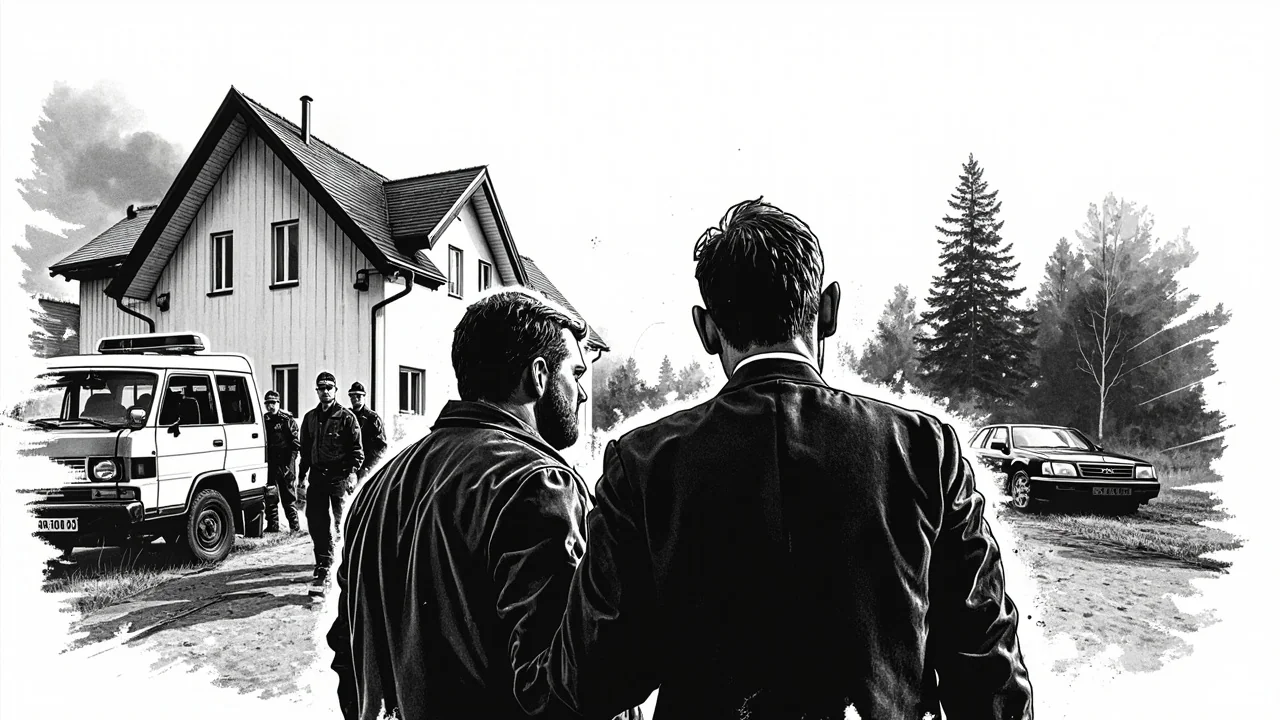
Swedish police responded to a shooting incident in Osby, northern Skåne, on Tuesday afternoon. Officers secured two men after reports of at least one gunshot fired from a villa in the Högstagården area. No injuries were reported, but residents were told to stay indoors and avoid windows and doors during the police operation.
The call came in just before 2 PM. The initial police statement was stark. "A man with a weapon is in a villa. At least one shot has been fired from the villa. It is unclear if more people than the man are in the residence," authorities wrote online. For the residents of this quiet neighborhood in Osby, a municipality of around 18,000 people, the message that followed was unsettling. They were instructed to stay inside, away from their doors and windows, as the situation unfolded.
Within an hour, the scene was under control. "Two men are secured. No personal injuries," police updated. The swift resolution brought relief, but the questions lingered. What happened inside that villa on an ordinary Tuesday? Why did a domestic or personal dispute, which these incidents often are, escalate to the point of a firearm being discharged?
A Quiet Community on Edge
Osby is not a place that makes national headlines often. It's known for its lake, its glassworks history, and its location amidst the forests of northern Skåne. The Högstagården area, like many Swedish residential neighborhoods, is typically characterized by single-family homes and a sense of quiet routine. A shooting here disrupts a fundamental sense of security. It feels out of place, which makes it all the more frightening for those nearby.
"When you hear the police helicopter and see the armed response units on your street, your whole world view shifts for a moment," says Karl, a long-time Osby resident who asked us not to use his full name. He lives a few blocks from the incident. "You think about your kids playing outside, your evening walk. For a few hours, that normalcy is just gone, replaced by a police cordon and a lot of worry." This personal disruption is the immediate human cost, even when no physical injuries occur.
The Broader Context of Firearms and Fear
While this specific incident ended without harm, it taps into a persistent national anxiety. Sweden has been grappling with a rise in gun violence linked to gang conflicts, primarily in major urban areas. That context shapes the public reaction to any shooting, even one in a smaller town that may be unrelated to organized crime. The sight of police in tactical gear, the lockdown orders—these are images Swedes have become increasingly familiar with through news reports from Stockholm, Malmö, and Gothenburg.
"Every incident like this, regardless of its nature, erodes public confidence," notes security analyst, Mina Farsi. "It reinforces a feeling that violence is spreading, that nowhere is entirely immune. The police work quickly and professionally, as they did in Osby, but the emotional impact on the community lasts long after the scene is cleared." The challenge for police is not just resolving the immediate threat, but also managing that public fear and providing clear communication.
Life Returns, But Questions Remain
By late afternoon, the police presence in Högstagården had scaled down. The forensic investigation began. The two detained men were taken for questioning. For neighbors, the process of returning to normalcy started. Children could play outside again. People felt safe to look out their windows.
Yet, the incident leaves a mark. It becomes a story told over coffee, a point of reference. "Remember that Tuesday when the police blocked the street?" It enters the local folklore, a brief rupture in the everyday life of a Swedish town. The investigation will now seek to establish the precise circumstances: the relationship between the individuals, the origin of the firearm, and the sequence of events that led to a gunshot being fired.
When the Extraordinary Hits Home
What happened in Osby is a stark reminder that societal issues are not confined to postcodes or city limits. The availability of illegal firearms, conflicts that spiral out of control, and the profound fear they generate can surface anywhere. The Swedish response is typically methodical—contain, secure, investigate. The system worked as intended to prevent tragedy.
But for the people who live there, the abstract statistics of gun violence became a tangible reality for one tense afternoon. Their homes became their shelters. Their quiet street became a crime scene. The real measure of this incident's impact won't be found in the police report's conclusion, but in how long it takes for the residents of Högstagården to feel that their neighborhood is entirely theirs again. The sound of a single gunshot, now silent, echoes in the memory of a community forced to briefly lock its doors against the outside world.