
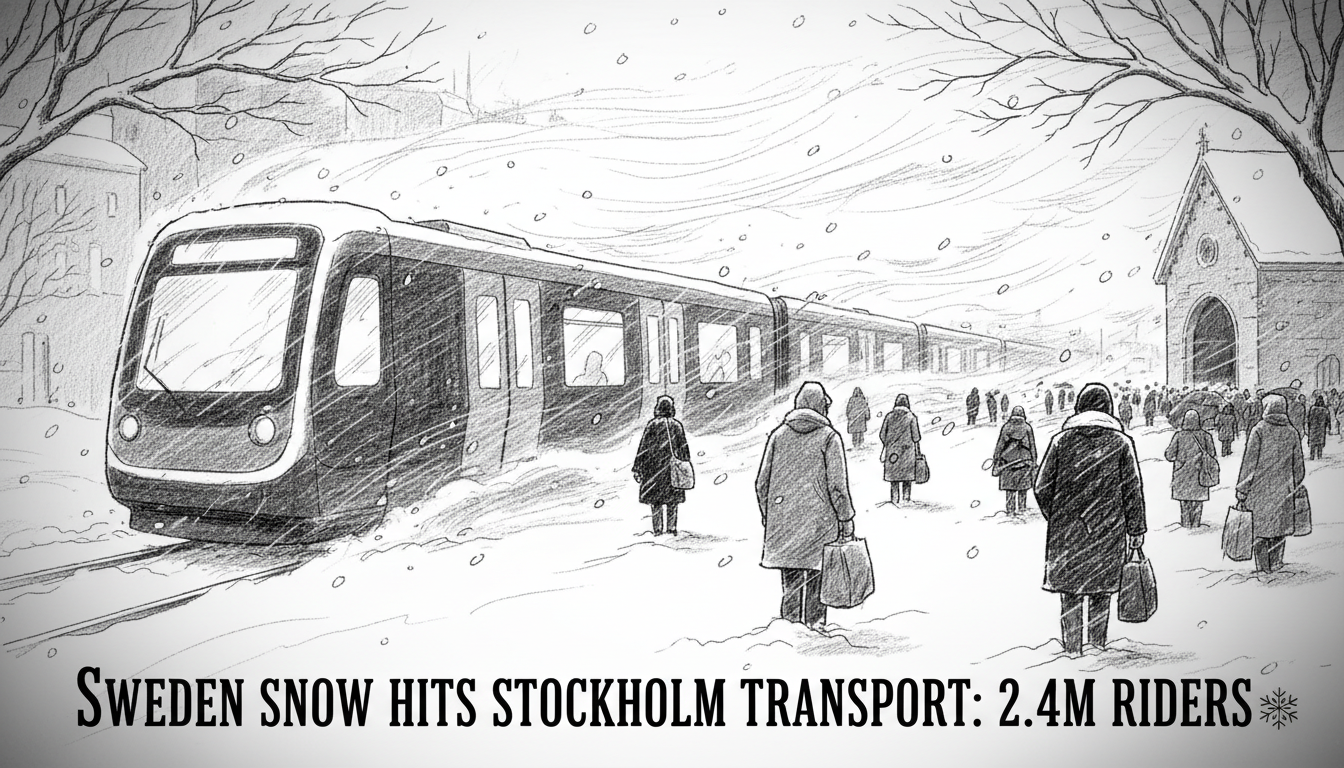
Stockholm's public transport system, vital for 2.4 million daily commuters, faced widespread disruptions Tuesday. Heavy snow blanketed the city, leading to canceled buses, commuter trains, and regional services. The advisory from SL, Stockholm's transit authority, was clear: leave early and expect changes. For a city reliant on its efficient networks, the winter weather tested routines and patience.
Morning commuters in neighborhoods like Södermalm and Vasastan found bus stops unusually crowded. Subway platforms buzzed with uncertainty as announcements echoed about delays. The snow, while picturesque over Gamla Stan's cobblestones, meant chaos for many trying to reach work or school. SL press officer Aleksander Krajisnik urged caution. 'You need to be out in good time and prepared for canceled departures,' he said. 'If a bus stop isn't plowed or salted, and it's not safe to drive, the stop or route might be withdrawn.'
Transport Networks Under Pressure
Trafikverket, the national transport agency, reduced train traffic to allow for snow clearance on tracks. Daniel Mossberg, a press communicator, explained the necessity. 'That's why we're forced to have reduced traffic,' he said. Key services like SJ's long-distance trains and Mälartåg's regional routes saw cancellations. Stockholm Central Station became a hub of anxious travelers checking boards. The disruptions highlighted the fragility of even well-prepared systems. With 2.4 million passengers daily, SL's decisions impact nearly the entire metropolitan area.
Stockholm's geography spreads across islands and mainland, making snow removal a logistical challenge. Buses on outer suburban routes in areas like Nacka and Bromma were among the first affected. The city's famed tunnelbana (subway) ran slower than usual, with staff working to keep entrances clear. This isn't just about inconvenience. It's about a city of 1.6 million people, plus suburbs, grinding to a slower pace. Winter is no stranger here, but each snowfall demands a fresh response.
Commuters Adapt to Winter's Whims
At Medborgarplatsen in Södermalm, Emma Lindgren, a teacher, waited for a delayed bus. 'I planned an extra hour, but it's still stressful,' she said. 'You dress warm, you have good boots—it's Swedish culture to be prepared. But the transport uncertainty gets to you.' Her sentiment echoed across social media, where residents shared tips and frustrations. Another commuter, Karl Bergström from Östermalm, noted the irony. 'We live in a Nordic country. Snow shouldn't surprise us, yet here we are,' he mused. These personal stories underline the human impact beyond official statements.
SL's communication strategy included real-time updates via apps and signs. However, some passengers felt information lagged. In a society that values punctuality and planning, such delays fray daily rhythms. The concept of 'försiktighetsprincipen' (the precautionary principle) often guides Swedish public life. Today, it meant erring on the side of safety, even if it caused cancellations. For visitors unfamiliar with Swedish winters, the disruptions offered a crash course in local resilience. Many swapped stories in cafes, embracing 'fika' culture to wait out the storm.
Infrastructure and Expert Insights
Transportation experts emphasize winter preparedness as a continuous effort. Professor Lena Ström, a urban mobility researcher at KTH Royal Institute of Technology, provided context. 'Stockholm has strong protocols for snow, but intense weather tests limits,' she said. 'Investments in plowing equipment and flexible scheduling are crucial. Communication is key—people need clear, timely updates.' She pointed to how Scandinavian cities often design systems for cold climates. Yet, climate change may bring more volatile weather, requiring adaptation.
The economic ripple effects are significant. Delays cost productivity and strain businesses. For instance, retail in central Stockholm saw fewer footfalls. Events like winter festivals or concerts at venues like Globen might see lower attendance. However, Swedes often take such challenges in stride. The tradition of 'mys' (coziness) encourages making the best of harsh weather. From heated bus shelters to well-insulated homes, infrastructure supports comfort. Still, when public transport stutters, the city feels the chill.
Cultural Threads in a Snowy Tapestry
Swedish culture intertwines with winter through events like the upcoming Luciadagen (St. Lucia's Day) and Christmas markets. This snowstorm, while disruptive, is part of the seasonal fabric. In past years, similar disruptions have sparked debates about funding and maintenance. Some argue for more underground rail lines, while others advocate for better bus prioritization. The balance between cost and reliability is perennial. For now, SL focuses on immediate response. Crews worked through the night, salting roads and clearing tracks.
Neighborhoods with cultural hubs, like the museums on Djurgården, saw quieter days. The snow, however, added charm to historic sites. It's a reminder of Sweden's relationship with nature—both beautiful and formidable. As the day progressed, some services resumed. But SL warned that further cancellations were possible as snow continued. The agency's advice remained: check your journey before leaving, use alternative routes if needed, and bundle up. This practical approach reflects a societal value on collective responsibility and safety.
Looking Ahead: Winter's Lasting Impact
Weather forecasts suggest more snow may come this week. SL and Trafikverket are monitoring closely. Long-term, this event may influence policy discussions on climate resilience. With Stockholm growing, pressure on transport networks increases. The city's ambition to be fossil-free by 2040 includes enhancing public transit. Disruptions like today's underscore the need for reliable, all-weather systems. For commuters, the memory of this snowy Tuesday will linger. It's a test of patience, but also of the community spirit that defines Swedish society.
As night fell over Stockholm, lights twinkled against the snow. The city slowed but didn't stop. Commuters made it home, sharing tales of delays over warm drinks. In the end, it's about adaptation—a skill Swedes have honed for generations. How will Stockholm evolve to meet future winters? That question hangs in the crisp air, as essential as the snow itself.