
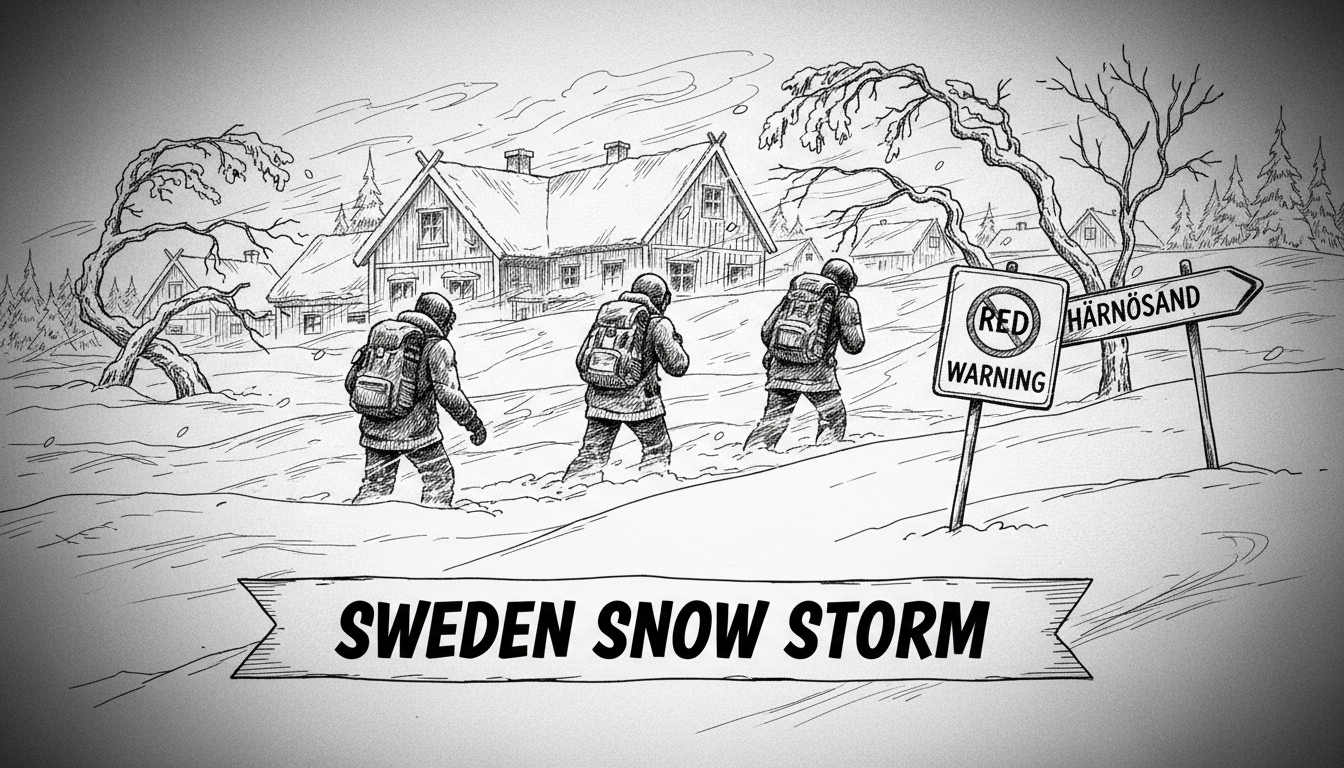
Sweden snow storm warnings turned red over Härnösand, painting the coastal city white under a sudden, heavy blanket. For residents like Malin Strömberg, the severe weather alert from the Swedish Meteorological and Hydrological Institute (SMHI) meant a reluctant lunch walk with her chihuahua. "This is no weather for a chihuahua," she said, summing up a day where wonder mixed with worry. The scene in Härnösand captures a classic Nordic winter paradox. People welcome the snow after an unusually green Christmas, yet they respect the serious disruption it can bring.
A City Under a White Siege
Härnösand, a city of about 18,000 on the Bothnian Sea coast, is no stranger to snow. Winters here are typically long and white. But a red warning changes everything. It is the highest alert level SMHI issues, reserved for conditions posing a high risk to life and property. This wasn't just a snowfall; it was an event. "It all came at once," Malin Strömberg observed during her brief outing. The speed and intensity of the snowfall quickly shifted the mood from festive to cautious. Streets that were clear in the morning became impassable by afternoon. The primary concern for many, beyond the sheer amount, was mobility. Could emergency vehicles get through if needed? Would plows keep up? This practical anxiety underpinned the day's events.
The Mechanics of a Red Warning
Understanding a red warning is key to understanding the day's tension. SMHI's color-coded system escalates from green (no particular weather) to yellow, orange, and finally red. A red warning is not a suggestion; it is a clear signal of dangerous conditions. For snowfall, the criteria include expected accumulation rates and total amounts that will severely hinder society. The institute bases these alerts on complex models and historical data. When one is issued, it triggers a cascade of preparedness actions. Municipalities deploy snow-clearing teams on priority routes. Emergency services adjust their staffing and vehicle readiness. The public is advised to avoid all non-essential travel. It’s a full societal response to a predictable, yet potent, natural force.
Life in the Slow Lane
The immediate impact of the Härnösand snow storm was on daily rhythm. Buses ran late or were cancelled. Schools and workplaces grappled with whether to stay open. The simple act of walking the dog, as Malin found, became an expedition. For parents, it meant calculating the safety of the school run. For business owners, it involved checking if staff and deliveries could make it. This is where Swedish vinterberedskap (winter preparedness) meets reality. Society is built for this, but a red warning tests those systems. Snowplows, often seen as heroes in Nordic winters, worked round the clock. Yet their progress could be quickly undone by relentless, wind-driven snow. The community's self-reliance also came to the fore. Neighbors checked on elderly residents. People with four-wheel-drive vehicles offered help to those without.
The Cultural Embrace of Winter
Despite the disruption, there remains a fundamental cultural acceptance of winter in Sweden. After a December with little snow—a "grön jul" or green Christmas—many in Härnösand genuinely welcomed the change. Snow transforms the landscape, brings light to the dark winter months, and enables classic Scandinavian pastimes like skiing and sledding. This creates a complex emotional response. There is concern, but also a touch of relief. The world looks as it should in January. This duality is very Swedish: a pragmatic focus on safety and order, coexisting with a deep, almost romantic, connection to nature and the seasons. The snow is both a logistical problem and a source of beauty and identity.
Expert Perspective on Preparedness
Emergency management experts stress that the effectiveness of the response hinges on coordination. "A red warning is a clear message to all actors—from the national agency to the individual citizen," says a Stockholm-based crisis preparedness consultant. "The goal is to minimize the 'surprise' factor even when the weather itself is extreme." In Sweden, this responsibility is shared. SMHI provides the forecast. The Swedish Transport Administration manages major roads. Local municipalities handle city streets and public services. Residents are expected to take personal responsibility: stocking essentials, planning travel, and heeding official advice. The Härnösand event shows this system in action. The warning was issued, services mobilized, and the public largely complied with guidance, creating a layered defense against the storm's worst effects.
Looking Beyond the Immediate Flurry
The aftermath of such a storm involves more than just clearing roads. Engineers assess the load of snow on roofs and structures. Power companies inspect lines for damage. The true test often comes with a thaw, which can lead to flooding if drainage systems are blocked by ice and snow. For Härnösand, a coastal city, the interaction between snow, temperature, and sea adds another layer. Could milder air turn the snow to rain and slush? Could coastal winds create dangerous drifts? These are the next questions for local authorities. Furthermore, these events feed into broader discussions about climate resilience. While cold and snow are intrinsic to Sweden, some research suggests winter precipitation patterns may become more variable, with potential for more intense snowfall events alongside warmer average temperatures.
A Community Weathers the Storm
By evening in Härnösand, the snowfall began to ease. The red warning would eventually be downgraded. The city, now cloaked in deep white, began the process of digging out. Children likely rejoiced at the prospect of sledding hills. Adults assessed the shoveling ahead. The shared experience of the storm, from the shared listen to the weather forecast to the shared struggle with a snowy driveway, reinforces community bonds. It’s a reminder that in places like Sweden, winter is not just a season you survive, but a force you learn to live with, respect, and even cherish—provided you are prepared. The final word might again go to Malin Strömberg and her chihuahua, representing the very human scale of a large weather event. The walk was difficult, the weather was severe, but life, adapted and resilient, went on. The snow will melt, but the lessons in preparedness and community response remain, ready for the next time the sky turns white and the warnings flash red.