
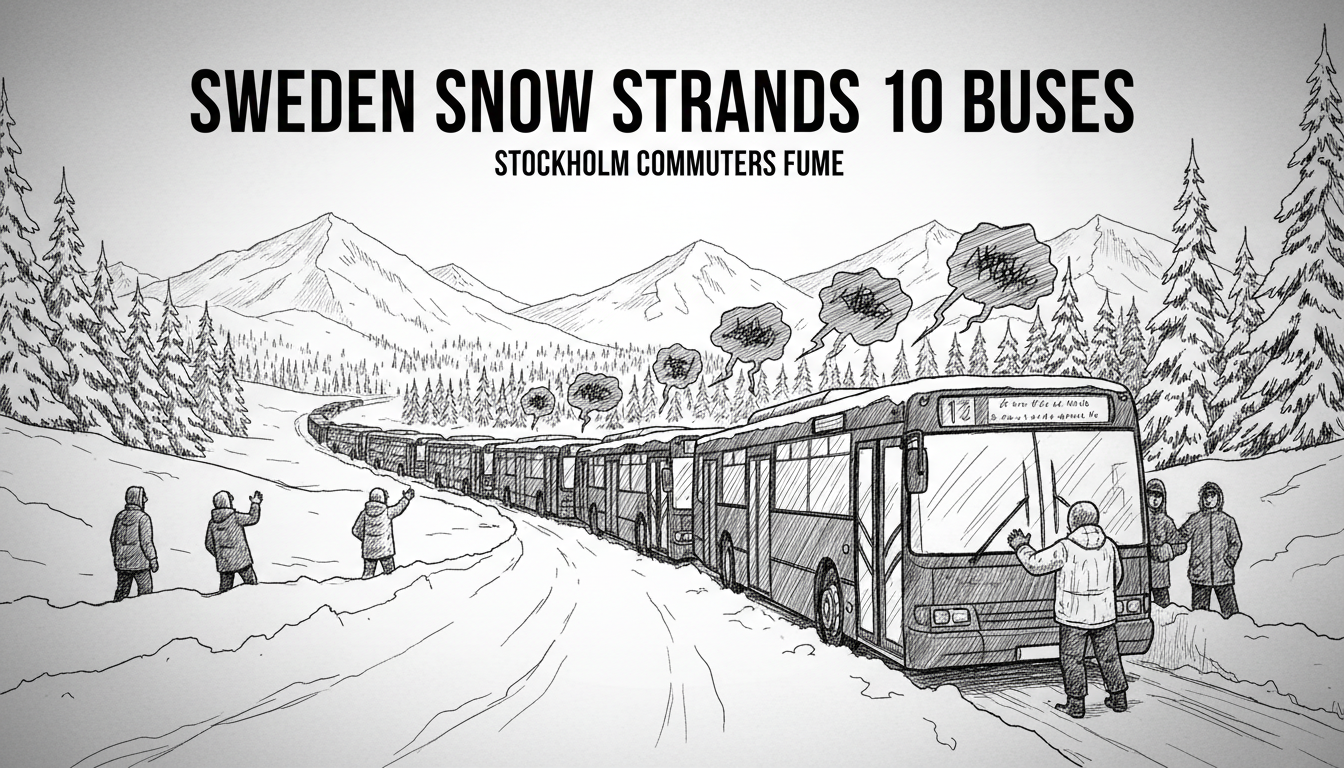
Sweden's weekend snowstorm paralyzed a key suburban bus network, leaving ten vehicles stranded in a Stockholm suburb and trapping residents in their homes. The chaotic scene in Tullinge saw buses stuck from noon until 10 PM, blocking driveways and turning a quiet neighborhood into an impromptu depot of immobilized public transport. For locals, it was a frustrating spectacle that raised serious questions about winter readiness in a nation famed for coping with snow.
A Sunday of Gridlock in Tullinge
The trouble started around midday on Sunday. As heavy snow continued to fall, the first bus attempting to navigate the hilly, residential streets of Tullinge lost traction and ground to a halt. Mattias Ammenberg, a resident, watched the situation unfold. “The first bus got stuck around 12 PM and the last one around 10 PM,” he said. Instead of halting service, more buses arrived, each meeting the same fate on the slippery inclines. One by one, they joined a growing line of stranded vehicles. The buses, operated by private contractor Nobina on behalf of Stockholm's public transport authority SL, were unable to move forward or reverse. Their positions were particularly problematic. Several blocked private driveways, meaning residents could not get their own cars out. The snow that promised a picturesque winter scene instead delivered a full-day lockdown for some households.
Local criticism quickly focused on the operator's decision-making. Many residents questioned why Nobina did not stop sending buses into the area after the first few became stuck. “It was crazy,” one resident remarked, summarizing the community's sentiment. The situation highlighted a stark gap between official protocol and on-the-ground reality. SL later stated that Nobina had issued an internal message about the conditions. Yet, on the streets of Tullinge, the buses kept coming.
The Mechanics of a Meltdown
Public transport in Stockholm is a delegated system. Storstockholms Lokaltrafik (SL) plans the network and owns the infrastructure, but private companies like Nobina win contracts to operate the buses, trains, and ferries. Nobina is a giant in the Nordic transport sector and a major player in the Stockholm region. This model is designed for efficiency, but Sunday's events tested its resilience. When extreme weather hits, the chain of communication and rapid response is critical. SL acknowledged the situation was "not ideal." A spokesperson explained that high demand for tow trucks across the broader region in recent days had created a shortage. With recovery resources stretched thin, the buses in Tullinge had to wait. SL expressed hope they would be removed by Monday, leaving a neighborhood to endure a disrupted Sunday.
This incident is not an isolated one in Swedish winters. While the country is well-equipped for snow, intense, rapid snowfall can overwhelm local resources. Bus routes in suburban and semi-rural areas, with their hills and narrower roads, are especially vulnerable. The timing mattered too. A weekend snowfall can mean reduced staffing or slower escalation procedures compared to a weekday rush hour crisis. Experts note that preparedness involves not just plows and salt, but also real-time data analysis and the operational flexibility to cancel or reroute services. On Sunday in Tullinge, that flexibility appeared to be missing.
The Human Cost of Winter
Beyond the logistical failure, the story is about disrupted lives. Imagine planning a quiet Sunday, only to find a city bus parked across your driveway. Your plans to visit family, go to the store, or simply have the freedom to leave are gone. For the elderly or those with urgent appointments, the situation moves from inconvenience to genuine hardship. This human impact is the core of any public service failure. Stockholm’s suburbs are designed around public transport. Many families rely on it exclusively. When it fails, their connection to the city snaps. The stranded buses became symbols of that broken promise.
Swedish culture has a deep-rooted concept of vinterberedskap—winter preparedness. It’s a point of national pride. From studded tires to meticulous municipal plowing schedules, Sweden is supposed to handle this. Events like the Tullinge gridlock chip away at that confidence. They prompt public debates about funding, contractor accountability, and climate change. Are today's infrastructure and protocols sufficient for tomorrow's more erratic winter storms? The incident also touches on the social contract in a high-tax welfare state. Residents expect a basic level of functionality, especially for essential services like transport, in return for their contributions.
Looking Ahead: A Recurring Winter Story?
As climate patterns shift, Sweden may face more frequent episodes of intense, disruptive snowfall alongside milder periods. This places new demands on infrastructure and planning. The Tullinge bus saga is a case study. It shows where the system's weak points are: communication between contractor and authority, resource allocation for recovery, and the critical judgment calls made by dispatchers in real time. For SL and Nobina, the coming days will likely involve a review. They will examine how the decision to continue service was made and how recovery can be faster. For the residents of Tullinge, the hope is that lessons are learned before the next big snow hits.
Ultimately, the image of ten buses sitting helplessly in the snow is a powerful one. It’s a reminder that even in the most prepared nations, nature can still bring progress to a standstill. The test is not just weathering the storm, but learning from it. As Stockholm brushed off the snow on Monday morning, commuters were left wondering: Is the system truly ready for winter, or are we just hoping for a mild one? The answer will determine if scenes like Tullinge's remain a rare mishap or become a regular headline each winter.