
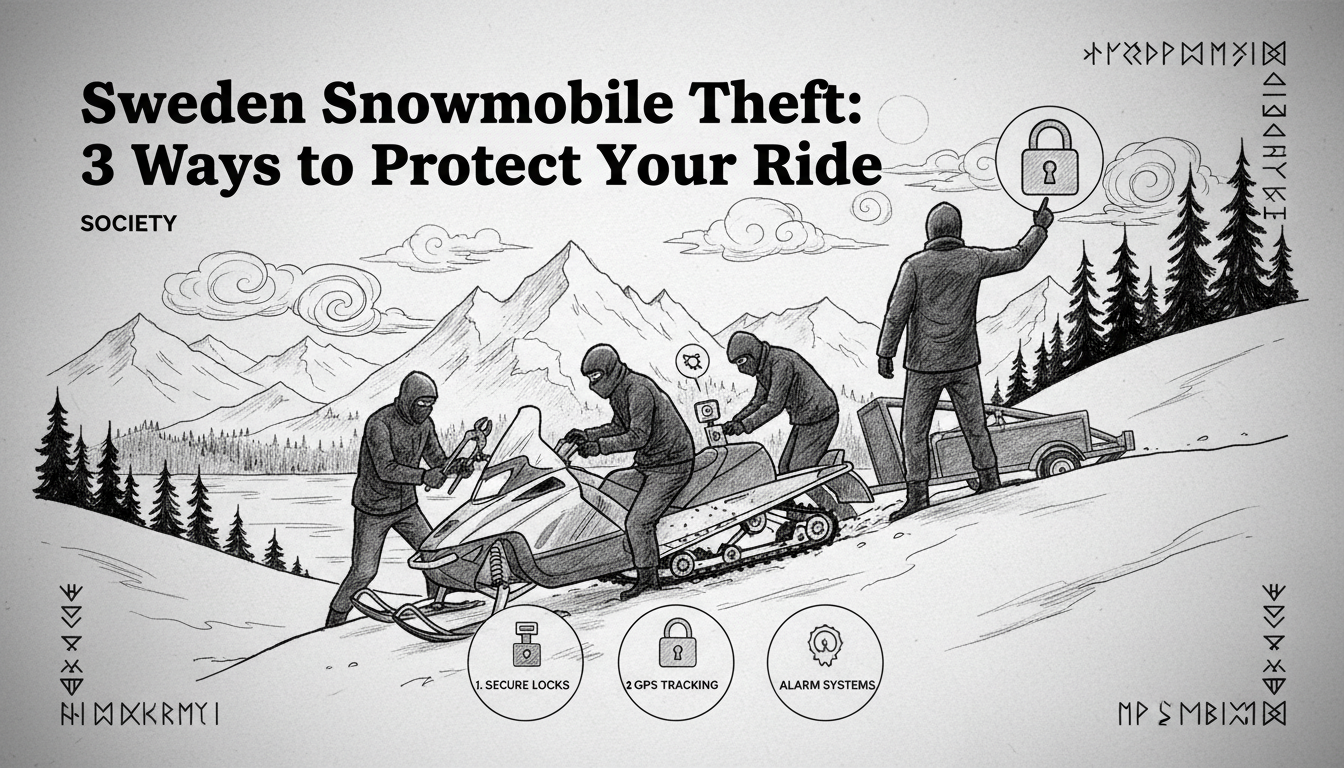
Snowmobile theft in Sweden spikes every winter, leaving owners in northern regions frustrated and police scrambling. The problem is particularly acute in Jämtland County, where the number of reported thefts of motorized vehicles—a category that includes snowmobiles—rises sharply during the winter months. For many Swedes, the snowmobile is not just a recreational vehicle but a vital tool for transportation and work in the deep snow. Losing one is a significant financial and practical blow.
"During the snowmobile season, the snowmobiles come out, but thieves also tend to thaw out during the winter," says area police officer Johnny Jonsson, based in Jämtland. His colleague, Björn Svanberg, agrees. They see a clear pattern each year. Theft reports flood in not because thieves become more skilled, but because owners often leave their expensive machines vulnerable. Jonsson states bluntly that most thefts happen simply because people don't store their snowmobile in a smart or theft-proof way.
A Seasonal Crime Wave on Snow
The statistics from the Swedish National Council for Crime Prevention (Brottsförebyggande rådet) tell a clear story. In Jämtland County, the winter half of the year brings more reports of snowmobile theft than the summer. This isn't surprising when you consider the culture. From Kiruna in the far north to the forests of Dalarna, the first solid snowfall signals the start of 'skotersäsong'. Trails open, families plan weekend trips, and the familiar buzz of engines becomes the soundtrack to the season.
Yet this seasonal activity creates a seasonal opportunity for crime. A modern snowmobile can cost anywhere from 80,000 to over 200,000 SEK. They are powerful, portable, and, if not secured, relatively easy to steal. Police note that thefts often occur from open yards, unlocked sheds, or even from trailers parked overnight. The darkness of the Nordic winter provides ample cover. In smaller communities, thieves may even come from outside the region, targeting areas where they are less likely to be recognized.
The Police Prescription: Lock It, Hide It, Secure It
So, what can owners do? The advice from Officers Svanberg and Jonsson is straightforward but requires a shift from convenience to security. Their first recommendation is physical security. A high-quality, hardened steel lock for the skis or track is a basic deterrent. Steering column locks are also effective. "Think of it like your car," says Jonsson. "You wouldn't leave it unlocked with the keys in the ignition. A snowmobile is no different."
The second, and perhaps most critical, layer is storage. A locked garage is ideal, but not everyone has one. If you must store it outside, police advise using a sturdy, anchored snowmobile cover. This makes it less visible and adds another obstacle for a thief. If you keep it on a trailer, use a wheel clamp and park the trailer in a well-lit area, preferably with the hitch facing a wall or another immovable object. Never leave the keys anywhere near the machine.
Beyond the Lock: Tech and Community Watch
Modern problems sometimes require modern solutions. Security experts in Sweden increasingly recommend GPS trackers designed for vehicles. These small devices can be hidden on the snowmobile and provide real-time location data. If a theft does occur, this gives police a crucial advantage in recovery. Some insurance companies now offer discounts for owners who install approved tracking systems, recognizing their effectiveness.
Community vigilance remains a timeless tool. The Swedish concept of 'grannsamverkan'—neighborly cooperation—applies here. In villages and suburbs, residents are encouraged to look out for each other's property. Reporting suspicious activity, like unfamiliar trucks or vans slowly cruising streets at night, is vital. "A thief wants an easy target and no witnesses," Svanberg explains. "A community that pays attention is a powerful deterrent."
The Cost of Complacency
The consequences of a theft extend beyond the financial loss. For a family in Åre or Östersund, a snowmobile might be the primary way to reach a remote summer cabin in winter, or for parents to transport children to activities when roads are impassable. It's central to a lifestyle. Filing a police report and an insurance claim is a lengthy process, and replacement can take months, effectively ending a winter's worth of plans.
Insurance is mandatory, but policies have deductibles, and premiums can rise after a claim. More importantly, recovery rates for stolen snowmobiles, especially if they are quickly disassembled for parts, are not high. Prevention is unequivocally better than the cure. The police message is clear: investing 1,000 SEK in a good lock and taking ten minutes to secure your vehicle can save you tens of thousands of SEK and immense hassle.
Embracing a Culture of Security
As the days shorten and the temperature drops, the excitement for winter grows. The focus is on checking the machine's engine, preparing the gear, and studying trail maps. Security expert Lars Mikaelsson, who consults for forestry and tourism companies in Norrland, argues that a 'safety check' should be as routine as an oil change. "We have a safety culture around wearing helmets and riding responsibly," he says. "We need to extend that culture to protecting the machine itself when it's not in use. It's about changing a habit."
This shift requires seeing the snowmobile through a thief's eyes. Is it visible from the road? Is it behind a flimsy shed door? Could someone quickly load it onto a trailer? By asking these questions, owners can identify weaknesses. Mikaelsson recommends a layered approach: a physical lock, secure storage, a tracking device, and good insurance. No single measure is perfect, but together they create a formidable barrier.
Will this winter see a drop in snowmobile thefts? That depends on thousands of individual decisions made in driveways and yards across northern Sweden. The police have delivered their annual warning. The statistics from Jämtland present a stark reality. Now, it's over to the owners. As the first major snowfall blankets the landscape, the question remains: will this be the season where convenience finally loses out to common-sense security?