
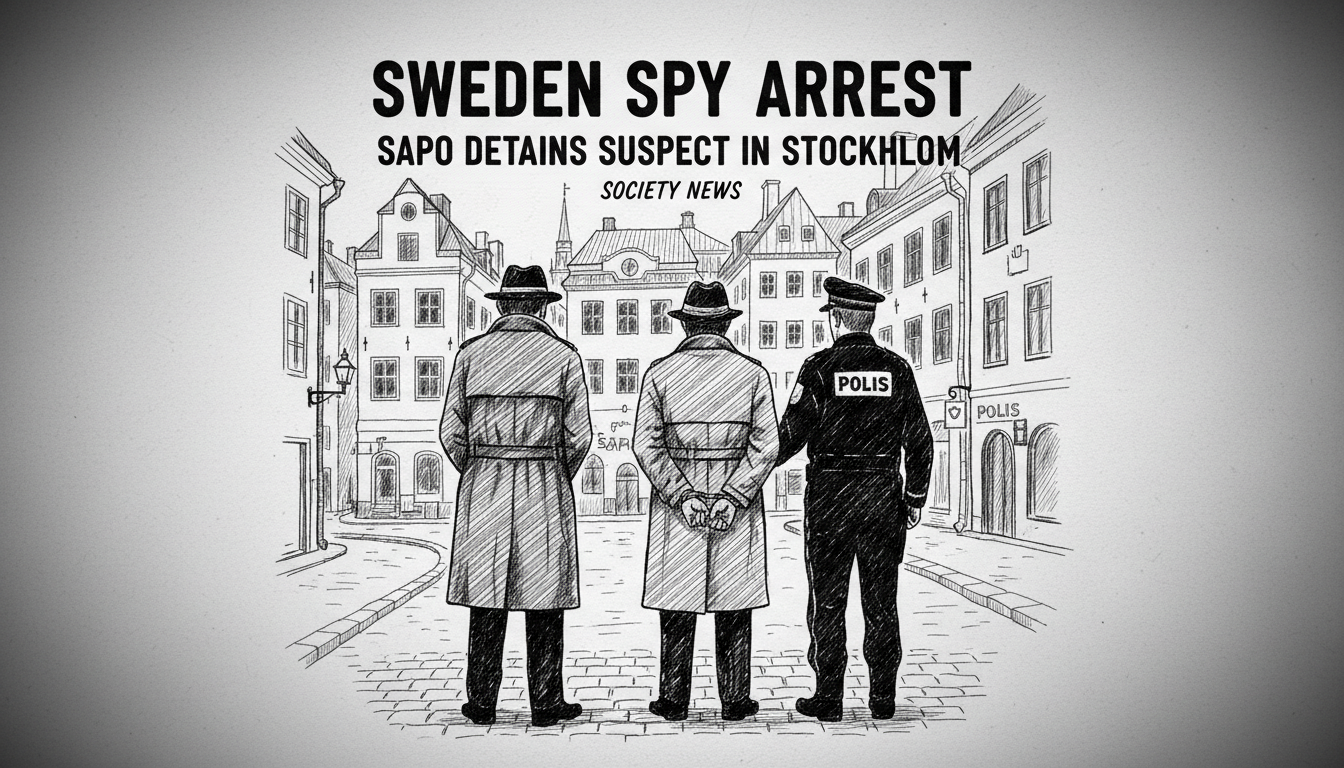
Sweden's Security Service, Sapo, has arrested a person in Stockholm on suspicion of espionage. The arrest occurred on Sunday, marking a significant move in an investigation that has been ongoing for some time. According to documents in the case, the alleged criminal activity is believed to have spanned from 2022 until the suspect's apprehension. This arrest cuts through the quiet of a Swedish autumn, a stark reminder that the world of intelligence gathering is active on Stockholm's streets.
"It is a preliminary investigation that Sapo is conducting and we have been working on this for a while," said Gabriel Wernstedt, press spokesperson for Sapo, in a statement. The suspect has been assigned a public defender. While details remain tightly guarded under Sweden's strict secrecy laws, the arrest points to a persistent threat that security officials have long warned about.
A Capital Under a Different Kind of Scrutiny
Stockholm is a city of open doors and transparent governance. Yet beneath that surface, a silent contest plays out. The arrest, likely in an unremarkable apartment in areas like Hägersten or a business hub in Kista, underscores this duality. For residents, it's a jarring notion. Espionage is something for spy novels, not for their neighborhood grocery store or local park. This case pulls back the curtain on a reality where diplomatic pouches, academic exchanges, and business meetings can serve as fronts for intelligence collection.
Sweden's historical policy of neutrality created a unique environment. It was a hub for dialogue, but also a potential playground for foreign intelligence services. That legacy lingers. The country's advanced technology sector, particularly in telecommunications, clean tech, and defense, holds valuable secrets. Its strategic location in the Baltic Sea, a region of heightened NATO and Russian activity, adds a critical geopolitical layer. An arrest like this confirms what analysts have stated for years: Sweden is a high-priority target.
The Evolving Shadow Over Swedish Security
The timeline of the alleged espionage, from 2022 onward, is particularly telling. This period coincides with Sweden's seismic shift in foreign policy following Russia's full-scale invasion of Ukraine. The decision to abandon generations of military non-alignment and seek NATO membership changed Sweden's global posture overnight. It transformed the country from a neutral observer to a front-line state in a new European security architecture. Such a profound shift rarely happens without attracting intensified intelligence attention.
"Increased international tensions almost always lead to a spike in espionage activities," explains a Stockholm-based security analyst who spoke on condition of anonymity due to the sensitivity of the topic. "Foreign powers want to understand the decision-making processes, the internal debates, and the military capabilities of a new NATO ally. The period leading up to and following the NATO application would be a peak time for intelligence gathering." The suspect's activities, therefore, may have been focused on collecting information related to Sweden's NATO integration, its defense collaborations, or the political climate surrounding this historic change.
Sapo's Silent War
The Swedish Security Service operates largely out of public view. Its headquarters, a secure complex in Solna, is the nerve center for countering threats to the nation's fundamental systems. Espionage investigations are among their most delicate tasks. They require patience, extensive surveillance, and a careful weighing of when to act. Moving too early can compromise a wider network; moving too late can mean the loss of vital secrets.
Gabriel Wernstedt's comment that Sapo has "been working on this for a while" is a standard but meaningful formulation. It suggests a methodical operation, likely involving digital forensics, physical surveillance, and analysis of the suspect's contacts and movements. The arrest itself is not the end, but a new phase. The questioning of the suspect and the examination of seized materials will now seek to answer crucial questions: Who was the information for? What specific secrets were targeted? Was the suspect acting alone or as part of a cell?
Life in a Gray Zone
Who is the person behind the suspicion? The public may never know. Swedish secrecy laws in national security cases are formidable, designed to protect methods and sources. The individual could be a Swedish citizen or a foreign national. They might have been motivated by ideology, money, or coercion. In the past, espionage cases in Sweden have involved individuals with access to government agencies, research institutions, or defense contractors.
The human story here is one of hidden allegiances. It is about a person leading a double life, possibly for years. Their neighbors, colleagues, or even family might have noticed nothing unusual. This is the essence of modern espionage—it thrives on normalcy. It exploits the openness of Swedish society, using it as camouflage. The arrest shatters that normalcy, leaving a community to wonder about the person they thought they knew.
A Nordic Pattern of Intrigue
Sweden is not alone in facing this challenge. Across the Nordic region, security services have reported increased espionage and influence operations. Neighboring Norway has expelled Russian diplomats accused of intelligence gathering. Finland, now also a NATO member, has long contended with aggressive operations across its long border with Russia. Denmark has uncovered spy cases related to its energy sector. This regional pattern confirms that the Nordic countries, with their stable societies and advanced economies, are in a sustained campaign of intelligence pressure.
The methods are evolving. While classic human intelligence—a recruited agent—remains a threat, cyber espionage is a dominant tool. However, the arrest in Stockholm suggests a human element was deemed necessary or valuable. Some information is still best gathered through personal trust, through whispered conversations in cafes near Sergels Torg, or documents passed in the sterile corridors of a government office. This case is a reminder that even in a digital age, the human factor remains pivotal.
What This Means for Sweden Moving Forward
For the average Swede, this arrest is a distant drama. Life continues in Stockholm's vibrant neighborhoods—the autumn markets are setting up, and cafes in Södermalm are filled with people. Yet, the incident has concrete implications. It will likely lead to tightened security protocols within certain government departments and companies. It may prompt a review of vetting procedures for personnel in sensitive positions. For policymakers, it reinforces the necessity of robust funding and legal tools for Sapo and military intelligence.
It also serves as a public lesson in vigilance. Swedish culture values trust and transparency, but this case illustrates that a degree of healthy skepticism is a national security asset. It underscores why reporting suspicious contacts or potential attempts at recruitment is critical. The first line of defense is often an alert citizen who senses that something is not right.
The road ahead involves lengthy legal proceedings, most of which will occur behind closed doors. The suspect will face a trial where much of the evidence will be classified. A conviction for espionage in Sweden carries a severe penalty, potentially up to life imprisonment in the most serious cases, though sentences typically range from a few years to a decade.
This arrest is a single data point in a long, ongoing struggle. It does not signify that the threat has been neutralized, but that one thread in a complex web has been pulled. As Sweden settles into its new role within NATO, the interest from foreign intelligence services will not diminish; it will adapt. The quiet work of Sapo and the awareness of every citizen become the essential counterweights. The story that began with an arrest in Stockholm is far from over—it is merely the chapter that has come to light.