
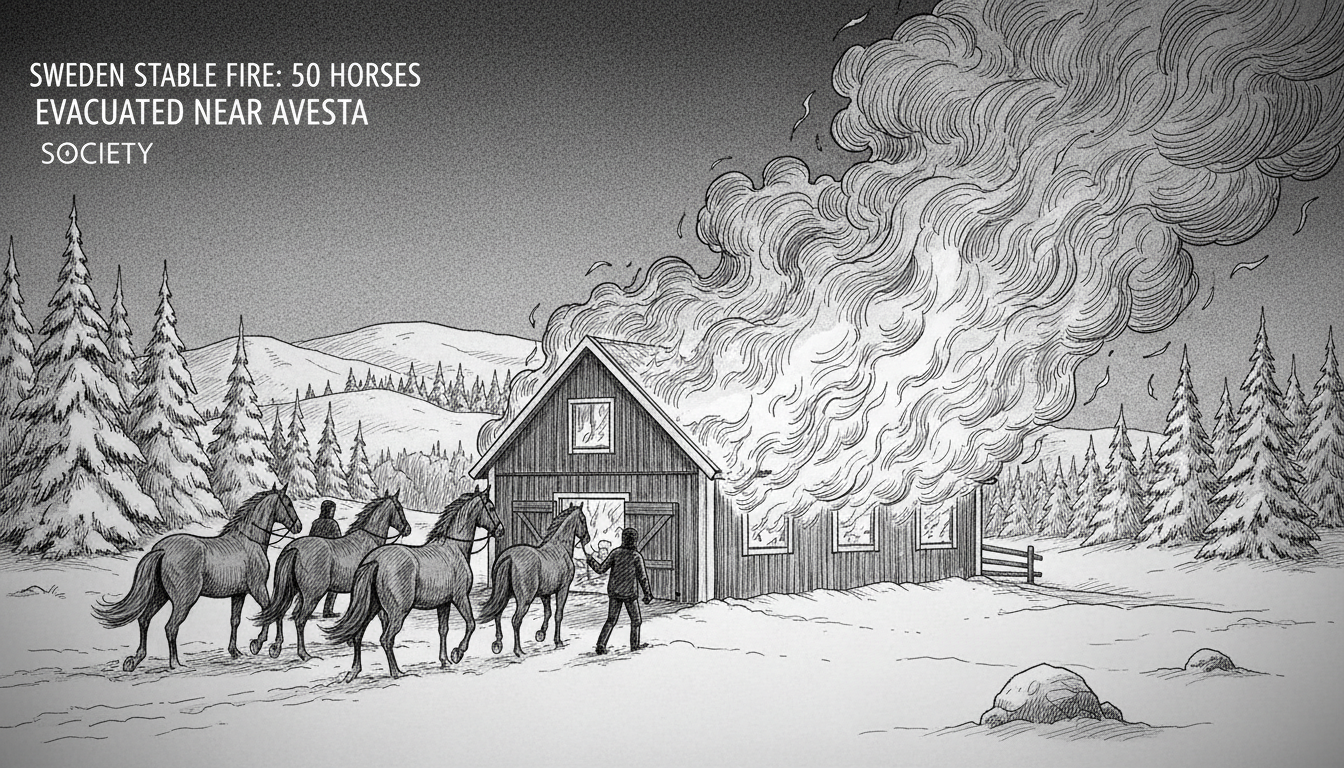
Sweden's emergency services and riding school staff worked through the night to evacuate approximately 50 horses from a burning stable outside Avesta. The fire, which broke out in the early hours of Wednesday morning, fully engulfed the building at a local riding school. No human injuries have been reported, focusing immediate concern on the welfare of the animals caught in the blaze.
For the staff and volunteers at the scene, the priority was clear and urgent. "We are getting help from the staff to get all the horses out," an emergency services spokesperson confirmed. The collaborative effort in the dark, smoky chaos likely prevented a tragedy. This incident highlights the deep bond within Sweden's equestrian community and the very real dangers faced by rural businesses.
A Community Rallies in the Dark
The fire represents a profound fear for any stable owner. Horses are large, easily panicked animals, and evacuating them from a smoke-filled, unfamiliarly dangerous environment is incredibly difficult. Quick thinking and established procedures are vital. In this case, the riding school's own personnel played a crucial role, knowing the layout of the stable and the temperament of individual horses. Their local knowledge, combined with the professional response from firefighters, created the best possible chance for a full evacuation.
Sweden has a strong culture of horse riding, with activities spanning competitive sports, leisure riding, and therapeutic programs. A riding school is often a community hub, especially in smaller towns and rural areas like those outside Avesta. It’s a place where children learn responsibility, adults find recreation, and the well-being of the animals is paramount. A fire here doesn't just destroy property; it threatens a local institution and the safety of creatures that are often considered part of the family.
The Challenges of Rural Fire Response
Fires in the Swedish countryside present unique logistical hurdles. Response times can be longer due to distance from fire stations. The structures themselves, often traditional wooden buildings like stables, can burn rapidly and intensely. Furthermore, access to sufficient water for firefighting can be a problem in remote locations. These factors make prevention and early detection systems critically important for farms, stables, and other rural enterprises.
Animal welfare is taken extremely seriously in Swedish law and society. Regulations governing the housing and care of livestock, including horses, are strict. This incident will inevitably lead to an investigation by both fire safety analysts and possibly animal welfare authorities. They will work to determine the fire's cause, which could range from electrical faults to heating equipment or other accidental sources. They will also assess the stable's compliance with fire safety and animal housing regulations.
The Fragile Trust of a Spooked Horse
Equine experts stress that horses are particularly vulnerable in fires. Their primary defense mechanism is flight, but in a confined, smoky stall, this instinct can turn deadly. They may refuse to leave a familiar space, even if it's on fire, or bolt blindly into danger. Smoke inhalation is also a major killer, as their large lungs are highly sensitive. The successful evacuation of around 50 horses suggests not only a rapid response but also potentially well-trained animals and staff who knew how to guide them to safety under extreme duress.
The psychological impact of such an event lingers long after the flames are out. For the horses that experienced the terror of the fire, the sounds and smells could lead to lasting anxiety. Rebuilding trust and a sense of security will be a key part of their care. For the staff and owners, the emotional and financial toll is immense. A stable is not just a building; it's home, a workplace, and a repository of tack, feed, and equipment that is expensive and difficult to replace.
Looking Ahead: Recovery and Resilience
The coming days for the riding school community will involve assessment and recovery. The immediate concern is the ongoing care and housing for the displaced horses. It is common in such disasters for the wider equestrian community to rally, offering spare stables, paddocks, donations of feed, and volunteer labor. This solidarity is a hallmark of Swedish rural life, where neighbors help neighbors in times of crisis.
Financially, the blow can be severe. Insurance will cover much, but business interruption, the cost of temporary housing, and replacing specialized equipment add up. Many riding schools operate on thin margins, serving as cultural and social centers as much as businesses. The path to rebuilding will be long. It will require not just construction materials, but also the careful work of restoring a safe and calm environment for both horses and people.
This fire near Avesta is a stark reminder of the vulnerabilities that exist alongside the beauty of rural Swedish life. It underscores the importance of community, the value of emergency preparedness, and the deep responsibility felt toward animals. The night ended without loss of life—human or equine—which in itself is a testament to effective action. But the real work of healing and rebuilding for this small part of Sweden's equestrian world has only just begun. How a community responds to such a crisis often defines it more than the crisis itself.