
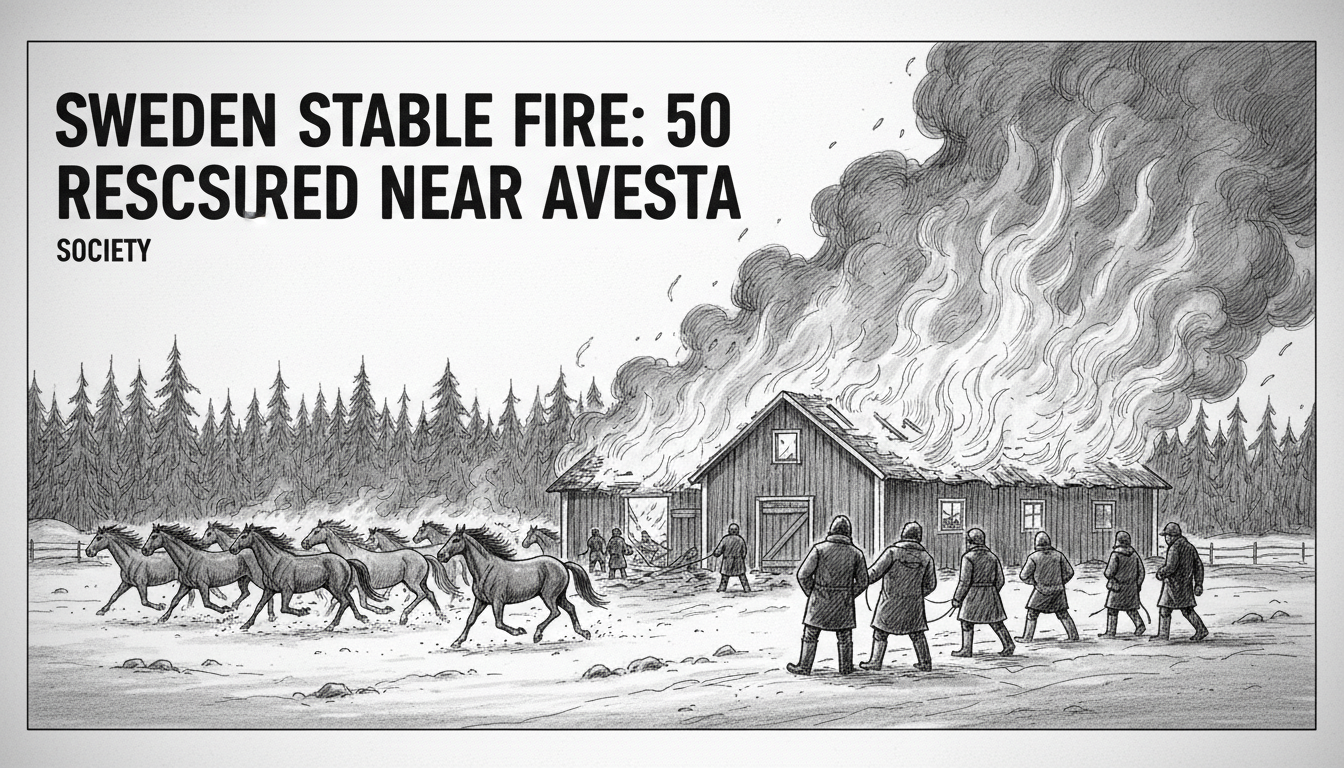
Sweden stable fire crews and staff performed a dramatic overnight rescue of approximately 50 horses from a burning riding school near Avesta. The main stable building was fully engulfed in flames, but no human injuries were reported in the intense blaze.
Louise Joensuu, a team leader with emergency services, described the chaotic scene. "We are getting help from the staff to get all the horses out," she said. "The building is probably beyond saving, so now we are trying to save the other stable building." The fire broke out during the night, turning the rural property into a scene of smoke, heat, and urgent action.
A Night of Smoke and Heroics
The call came in as most of the region slept. Flames tore through the stable, threatening the lives of dozens of horses inside. For equestrian centers, a nighttime fire is a worst-case scenario. Animals are confined, and detection can come too late. In this case, the rapid response from both firefighters and the stable's own personnel made the difference.
"Getting that many large, frightened animals to safety in the dark, with fire spreading, is an incredible feat," said Anna Lundström, a fire safety consultant with expertise in agricultural buildings. "It speaks to having a plan and people who know how to execute it under extreme pressure." The successful evacuation likely prevented a tragedy of much greater scale.
The Constant Threat to Sweden's Equestrian Heartland
The area around Avesta, in Dalarna County, is part of Sweden's strong equestrian culture. Riding schools and private stables are community hubs. They are also vulnerable. Agricultural buildings often contain highly flammable materials like hay, straw, and bedding. Combined with wooden structures, a small spark can become an inferno in minutes.
Swedish regulations mandate specific fire safety measures for animal housing. These include requirements for fire detection systems, the use of fire-resistant materials where possible, and clear evacuation plans. Yet, many older stables, often built before current codes, present ongoing challenges. Protecting livestock is both an economic necessity and an ethical imperative for owners.
"The bond between staff and these animals is profound," explains Karin Berg, a psychologist who works with equestrian communities. "They are not just livestock; they are partners, friends, and often considered family members. A fire like this isn't just a property loss. It's a deep emotional trauma for everyone involved, even with a successful rescue."
How Do You Evacuate a Frightened Horse?
The rescue of 50 large animals is not a simple task. Horses are prey animals by nature. Their instinct when terrified is to flee, but often back into a perceived safe space—their stall. Smoke disorients them. The sound of cracking timber and roaring flames can cause panic.
Effective evacuation relies on preparation. Experts stress the importance of well-rehearsed plans that all staff know. This includes having halters and lead ropes readily accessible—not locked away. It means knowing which horses to move first and having designated holding areas far from the fire. Training horses to be led calmly in unusual circumstances can also save precious seconds.
"The first priority is human safety, always," notes Lundström. "But when it is safe to do so, getting animals out requires calm, familiar handlers. The staff at this stable were undoubtedly crucial. They knew each horse's temperament and how to manage them in crisis."
The Aftermath and the Road Ahead
While the primary building is a total loss, the focus now shifts to the saved horses and the secondary structure. The animals will need to be checked for smoke inhalation and stress. They will require new, temporary housing, a challenge that often sees the wider equestrian community step in with offers of spare stalls and paddocks.
For the owners, the coming days will involve dealing with insurers, assessing the damage, and making heartbreaking decisions about rebuilding. A riding school is a business, but also a passion project for most. The financial and emotional toll is significant.
The fire also serves as a stark reminder for other stable owners across Sweden. It prompts questions: Are smoke alarms functional and loud enough to be heard in a house at night? Is hay stored separately from the main stable? Is the evacuation plan current, and has it been practiced? This incident near Avesta, ending in rescue rather than ruin, is a case study in both vulnerability and preparedness.
A Community's Resilience
Swedish society has a unique relationship with nature and animals. The allemansrätten (the right of public access) underscores a collective responsibility for the landscape. This ethos often extends to supporting neighbors in crisis. It is common to see communities rally after such events, offering everything from manual labor to fundraising.
The rescue of 50 horses is a victory born of swift action and courage. It highlights the silent work of emergency responders who train for such complex scenarios. It also underscores the dedication of stable workers whose love for their charges compels them to run toward danger. As the investigation into the fire's cause begins, the prevailing sentiment is one of relief tempered by the sobering reality of how close the disaster came. The story from Avesta is not just about a fire. It is about what a community can save when it acts together.