
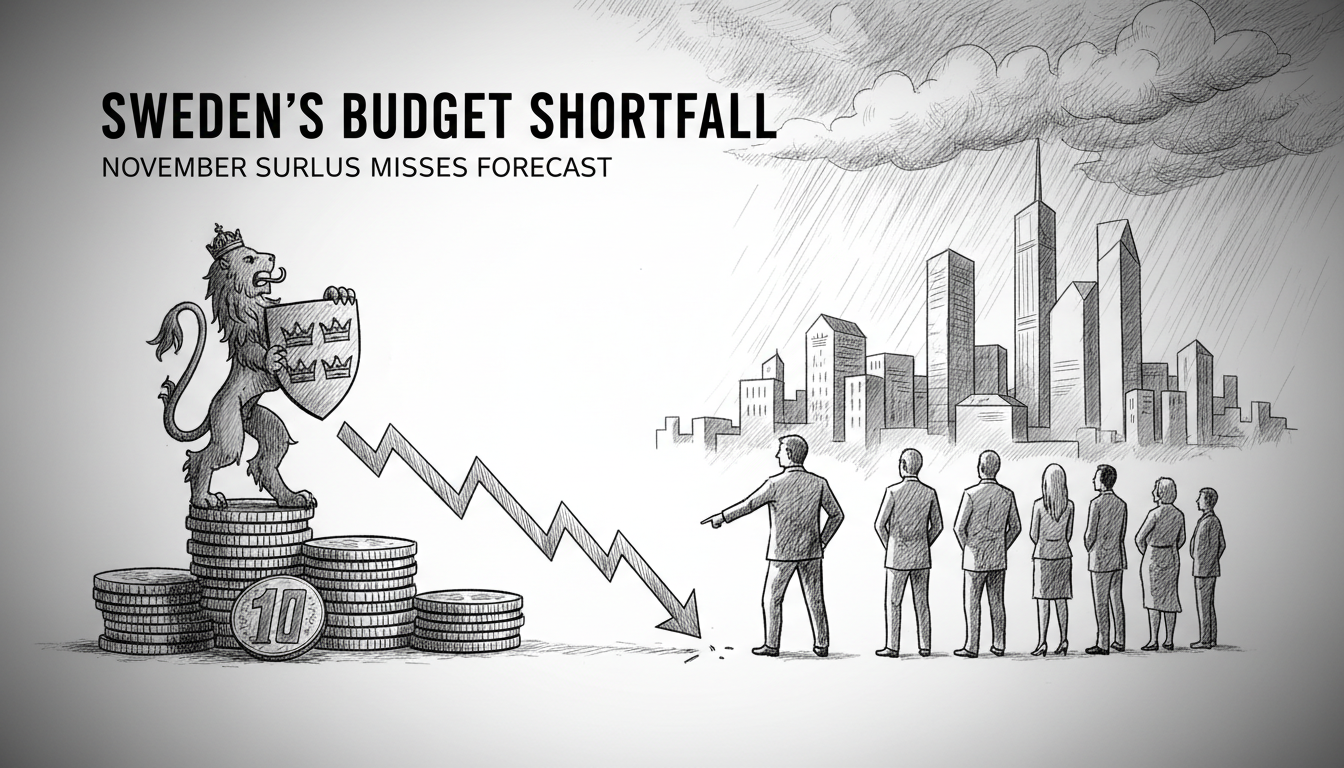
Sweden's state finances recorded a surplus last month, but the numbers tell a more complex story about the country's economic health. The government's payments showed a 4.5 billion kronor surplus in November. This figure fell short of the forecast by a substantial margin. Officials had predicted a 12.1 billion kronor surplus.
The primary reason for the gap lies in tax revenues. They came in approximately 5 billion kronor lower than expected. This weaker performance directly impacted the primary balance. This balance measures the net result of the state's core income and spending. It ended up 6.6 billion kronor weaker than the official forecast.
So what does this mean for the average Swede and the society we see around us? The numbers reflect a broader economic cooling. You can feel it in Stockholm's neighborhoods. In Södermalm, small business owners talk about cautious consumer spending. In Vasastan, families are reconsidering larger purchases. This is the human side of a budgetary shortfall.
The state debt stood at 1,217 billion kronor by the end of November. This context is crucial for understanding Swedish society trends. Sweden operates a robust welfare model funded by high tax revenues. When those revenues dip, it creates immediate pressure. Future discussions about funding for schools, healthcare, and infrastructure often start with reports like this one.
For international readers and new residents, this news connects to daily life. Immigration to Sweden often comes with questions about long-term economic stability. A strong fiscal position supports the social safety net many newcomers rely on. Fluctuations can signal changes ahead in public services or integration programs.
Looking back, Sweden has a history of prudent fiscal management. This recent report, while showing a surplus, indicates potential headwinds. The missed forecast suggests economic models are grappling with new realities. These could include shifting global trade, domestic consumption patterns, or the impact of recent immigration on public finances.
The direct implication is tighter scrutiny of government spending. Ministries may face more questions about their budgets. Proposals for new cultural initiatives or community grants in places like Kulturhuset or new suburban community centers might encounter more resistance. The conversation in the Riksdag will likely turn toward fiscal caution.
In plain terms, the state has more money coming in than going out, but not as much as it hoped. This is a reminder that even strong economies face uncertainties. The Swedish model is being tested by global economic shifts and domestic challenges. The coming months will show how the government responds to this softer revenue picture.