
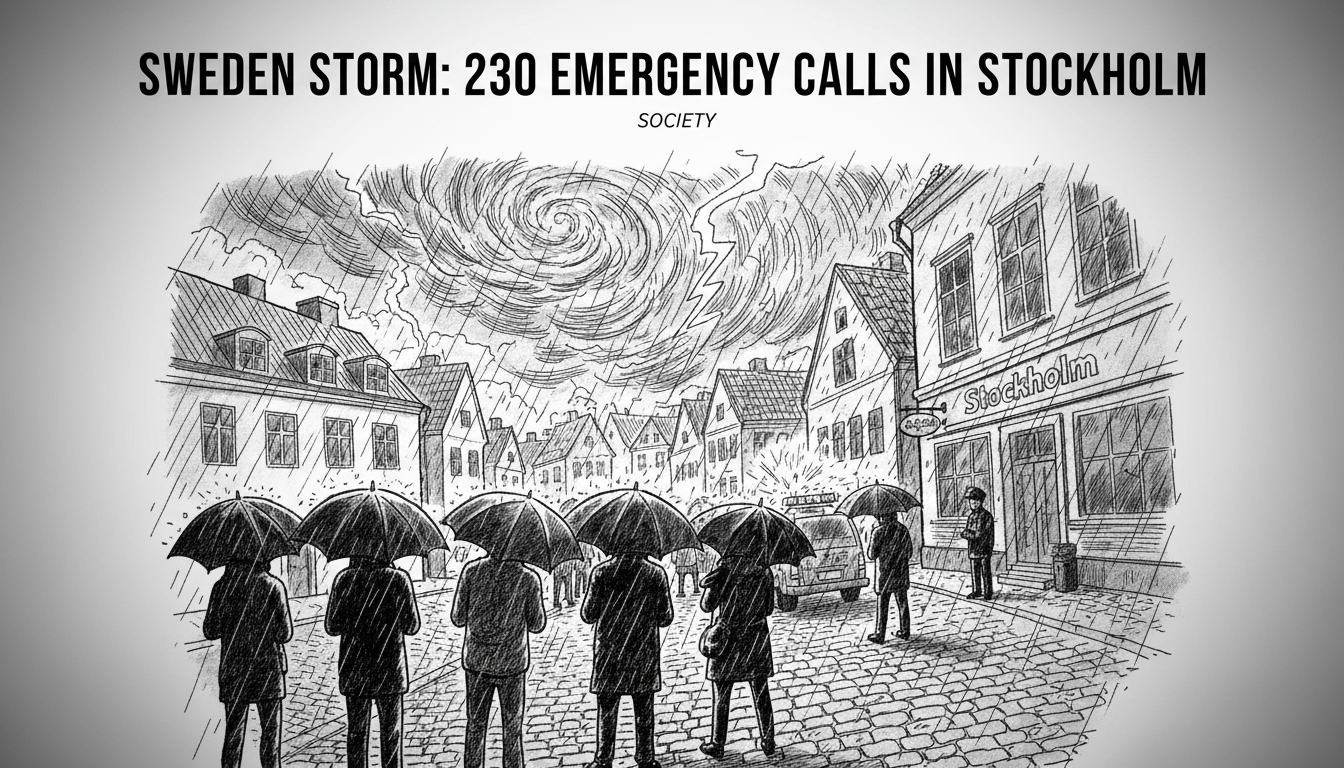
Sweden's Storm Johannes triggered 230 emergency calls in Stockholm on Saturday, more than double the usual number. The Greater Stockholm Fire Department faced a relentless barrage of reports, primarily about fallen trees blocking roads across the region. A typical Saturday sees 80 to 90 calls, making this surge a stark reminder of nature's power. The storm, named Johannes, swept through the county, leaving a trail of disruption in its wake.
A Surge in Emergency Calls
Roger, a lead operator with the Greater Stockholm Fire Department, confirmed the startling figures. 'A normal Saturday usually involves 80-90 calls,' he said in a statement. 'Yesterday was far from normal.' The 230 calls represent a 150% increase over average operations. Most incidents involved trees downed by high winds, snarling traffic on major arteries and rural lanes alike. Emergency crews worked tirelessly from early morning into the night. Their focus was clear: clear the roads and ensure public safety. This event underscores the critical role of first responders during Swedish autumn storms.
Residents in neighborhoods like Vasastan and Södermalm reported loud cracks and thuds as branches gave way. The sound became the unsettling soundtrack to a grey Saturday. For many, it was a day of canceled plans and altered routines. A planned market in Östermalm was shut down prematurely. Several cultural venues, including the outdoor museum Skansen, monitored the situation closely. 'Stockholm events today' often hinge on the weather, and Johannes forced a swift recalibration. This storm highlights how Swedish society trends toward adaptability in the face of nature's whims.
On the Ground: Chaos and Community
The human impact was immediate and widespread. On Ekerö, a island suburb, a large pine tree collapsed across the main road. It isolated residents for several hours until firefighters arrived with chainsaws. 'We heard a huge crash,' said Mia Lindgren, a local teacher. 'Suddenly, our quiet street was blocked. It felt isolating, but neighbors came out to check on each other.' This sense of community response is a hallmark of Swedish culture. During crises, the concept of 'gemenskap' (togetherness) often shines through.
In the lush district of Djursholm, fallen limbs damaged power lines. This left hundreds without electricity for parts of the day. Families gathered around battery-powered lamps, embracing a makeshift 'mys'—the cherished Swedish coziness. They turned a disruption into a moment of quiet connection. Meanwhile, along the winding roads of Tyresö, commuters faced detours and delays. The storm turned simple errands into lengthy ordeals. These personal stories form the real narrative behind the emergency statistics.
The Strain on Emergency Services
The fire department's resources were stretched thin. Teams prioritized calls based on severity and location. Fallen trees near power lines or major intersections took precedence. Operators like Roger managed a constant flow of information and coordination. 'Every storm tests our systems,' he noted. The department's response relies on extensive training and regional cooperation. Sweden's emergency services are built for harsh conditions, but extreme weather pushes them to their limits. This event sparks conversations about infrastructure resilience and proactive tree management.
Experts point to the increasing frequency of such storms. Climate change may be intensifying weather patterns across the Nordic region. 'We're seeing more volatile autumns,' says a meteorologist familiar with Swedish weather. 'Preparedness must evolve.' This involves regular maintenance of roadside trees and public awareness campaigns. For a country proud of its 'Swedish lifestyle' tied to nature, balancing natural beauty with public safety is an ongoing challenge. The storm also touches on 'Sweden immigration news', as new residents experience their first major Swedish storm. Community information in multiple languages becomes crucial for inclusive safety.
Cultural Context and Resilience
Storms like Johannes are woven into the fabric of Nordic life. They interrupt the flow but also reveal societal strengths. Swedes often meet bad weather with practical calm. There's a cultural expectation to be prepared—a legacy of facing long, dark winters. This storm arrived as the country transitions into deeper autumn. It disrupted weekend routines but also prompted collective problem-solving. In cafes across Stockholm, conversations buzzed about the storm over cups of strong coffee. It became a shared experience, a topic that unified the city.
The response highlights Swedish society trends toward efficiency and social trust. People generally trust authorities to handle such crises. They also take personal responsibility, staying off roads when advised. This social contract smooths emergency operations. However, the storm's impact raises questions. Are urban and rural areas equally prepared? How does aging infrastructure cope? These discussions will likely continue in community meetings and local media. 'Swedish culture news' often explores this interplay between nature and modern life.
Looking Ahead: Preparedness in a Changing Climate
Storm Johannes serves as a potent warning. As weather patterns shift, emergency services must adapt. Investment in equipment and personnel is essential. So is public education about storm risks. The Swedish Civil Contingencies Agency (MSB) regularly updates guidelines for extreme weather. They emphasize individual preparedness, like having emergency supplies at home. This storm will likely be analyzed for lessons learned. It could influence future urban planning and tree-planting policies in Stockholm county.
The calm morning that followed the storm felt deceptive. Cleanup operations continued into Sunday. The true cost, in economic and emotional terms, is still being tallied. But the event reinforces a key aspect of the Swedish mindset: resilience is not just about enduring, but about learning. As climate change looms, storms may become more common. Sweden's ability to manage them will depend on continued vigilance and community spirit. Will the peace of a 'lugn morgon' (calm morning) be harder to secure in the future? Only time and preparedness will tell.