
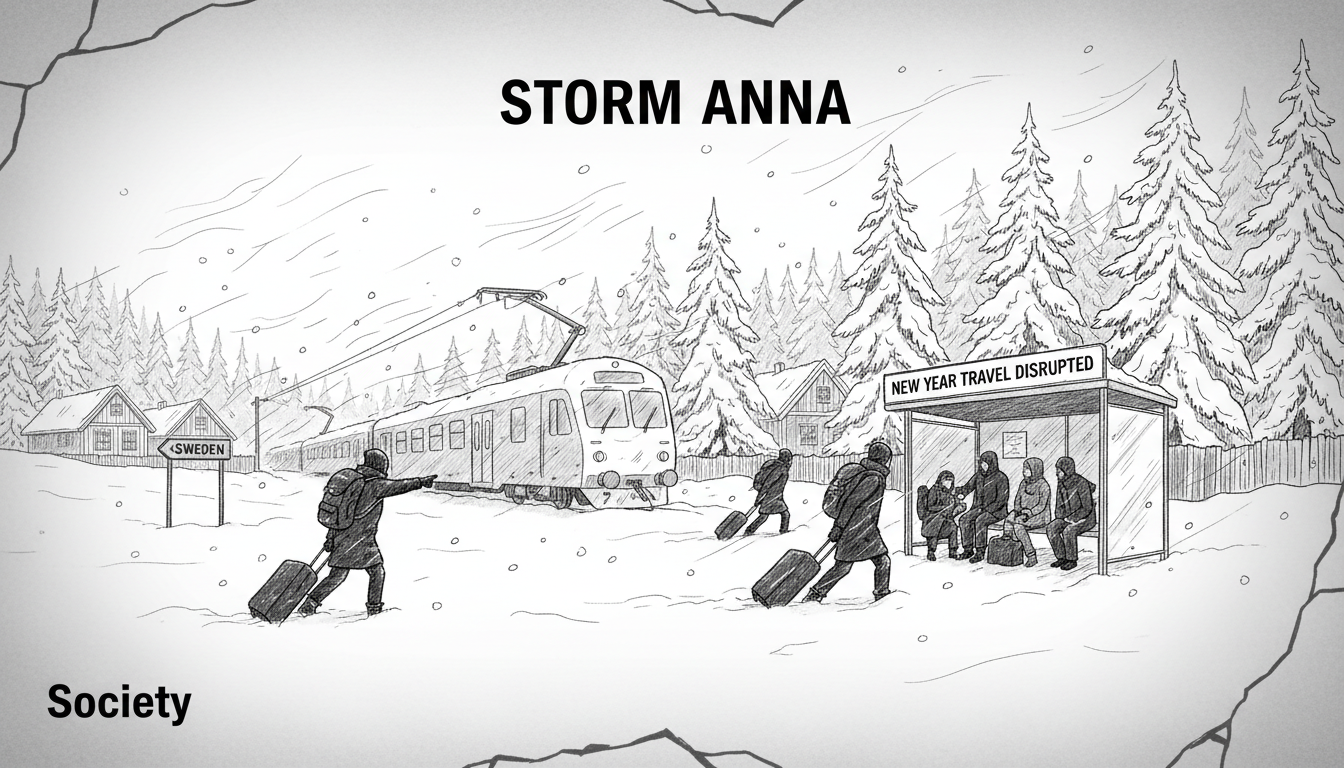
Sweden's winter storm Anna has triggered multiple red-level weather warnings, causing over 50 incidents of fallen trees and road blockages across the country on New Year's Day. The Swedish Meteorological and Hydrological Institute (SMHI) issued severe alerts for heavy snowfall, leading to immediate traffic chaos and disrupted holiday plans. This sudden onslaught highlights the unpredictable nature of Nordic winters, even in a nation accustomed to harsh weather.
New Year's Morning Chaos
In Stockholm County, road 546 from Grödby to Trafikplats Segersäng was partially blocked by a fallen tree early Friday morning. Traffic crawled in both directions, with authorities estimating clearance by 6 AM. Similarly, in Gävleborg County, a tree completely obstructed road 705 from Hybo to Gryttjesbo, near the intersection with highway 84. Crews rushed to the scene, hoping to reopen the route by 7 AM. These disruptions are just a snapshot of the wider impact felt from the northern forests to the southern coast.
For many Swedes, the storm interrupted traditional New Year's visits to family and friends. In Stockholm neighborhoods like Vasastan and Kungsholmen, residents woke to a white blanket of snow and the sound of chainsaws. Public transport experienced delays, though buses and trains largely continued running. The storm's timing, right after celebrations, meant that emergency services were on high alert. Cleanup crews worked tirelessly to restore normalcy.
Understanding SMHI's Color-Coded Warnings
SMHI operates a three-tiered warning system: yellow for moderate conditions, orange for severe, and red for very severe threats. Storm Anna prompted orange and red warnings in several counties, indicating potentially dangerous snowfall rates and wind speeds. This system is crucial for public safety, allowing communities to prepare. Swedes are generally adept at checking these alerts via apps or news broadcasts, but Anna's rapid intensification caught some off guard.
Meteorologists emphasize that such winter storms are not uncommon in Sweden, but their intensity can vary. New Year's Day snowfall is a familiar occurrence, yet Anna's geographical spread and force warranted special attention. Fallen trees remain a primary cause of traffic issues during storms, especially in heavily wooded areas. Infrastructure, while robust, can be tested by extreme events. SMHI's proactive warnings help mitigate risks, urging people to postpone non-essential travel.
Swedish Winter Resilience: Culture and Community
Despite the disruptions, there's a cultural resilience embedded in Swedish society. The concept of 'mys' or coziness often comes to the fore during storms, with families gathering for 'fika'—coffee and pastes—indoors. In Stockholm, venues like the Kulturhuset Stadsteatern might see increased attendance as people seek shelter and entertainment. Local traditions, such as winter hiking in places like Djurgården, were paused but not forgotten.
Community response is key. Neighbors help shovel snow, and local authorities coordinate efficiently. In my own experience living in Södermalm, I've seen how quickly streets are cleared after a blizzard. Storm Anna, however, served as a reminder that nature can still overwhelm even the best preparations. The storm also impacted smaller towns and rural areas more severely, where resources are thinner and isolation can set in quickly.
Expert Insights: Climate Change and Future Storms
Climate scientists note that extreme weather events like Anna may become more frequent and intense in the Nordic region due to climate change. Warmer atmospheric temperatures can hold more moisture, leading to heavier snowfall in some cases. Experts stress the need for ongoing adaptation in infrastructure and public awareness. Emergency services are already refining their response strategies, incorporating lessons from past storms.
Preparedness is a shared responsibility. SMHI's warnings are only effective if heeded, and Swedes are generally compliant. However, as storms evolve, so must communication methods. Social media and mobile alerts play an increasing role in disseminating urgent information. For tourists or new residents, understanding these systems is vital for safety during Swedish winters.
Navigating the Storm: Safety and Preparedness
For those caught in storm Anna, safety tips include keeping emergency kits in vehicles, monitoring weather updates, and avoiding travel unless necessary. Swedish authorities recommend stocking up on essentials before severe weather hits. In Stockholm, traffic management centers work around the clock to update road conditions online. Cultural venues, such as the ABBA Museum or Skansen, often adjust hours during bad weather, reflecting a flexible approach.
Looking ahead, storms like Anna prompt discussions about urban planning and climate resilience. Cities like Gothenburg and Malmö are investing in better drainage and snow removal equipment. Yet, rural areas face challenges with limited funding. The balance between traditional winter coping mechanisms and modern technology will define Sweden's response to future weather crises.
As the snow from Anna begins to melt, questions linger about our preparedness for the next storm. Will community solidarity and advanced warnings be enough in a changing climate? Only time will tell, but for now, Swedes are digging out and moving forward, one shovelful at a time.