
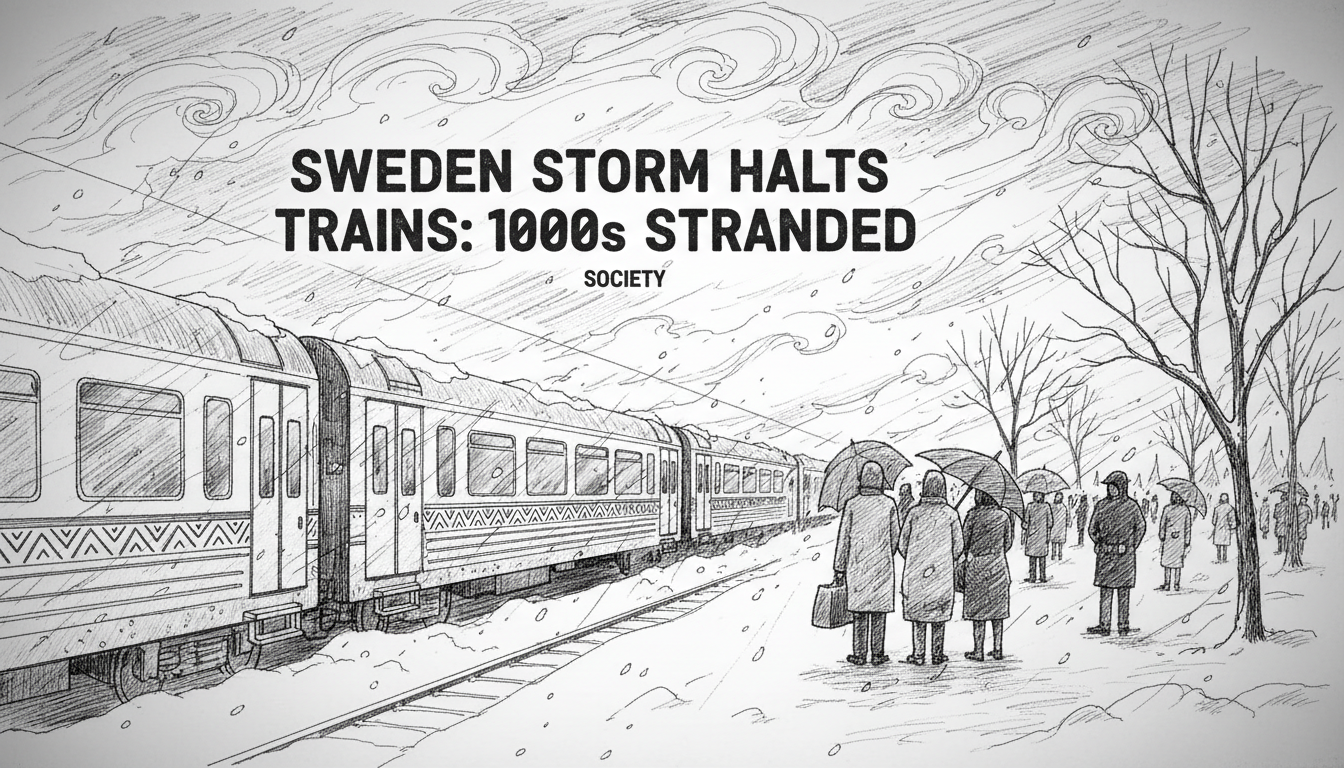
Sweden's train operator SJ has cancelled all services on the Bräcke–Storlien railway line this Saturday, stranding thousands of travelers. Severe storms with powerful winds are sweeping across central and northern Sweden, forcing a complete shutdown of rail traffic on a key route to popular destinations like Åre. Four packed trains from Stockholm to Duved, near Åre, are among those affected, and SJ cannot guarantee replacement buses.
‘Whether we arrange buses or not, that is the big question,’ SJ press communicator Leila Fogelholm said in a statement. ‘If we don't run trains, it's likely not weather for taking passengers out by bus either.’ The decision leaves weekend skiers, families, and commuters in limbo, highlighting the vulnerability of travel in Sweden's vast northern landscapes.
A Perfect Storm for Travel Chaos
The Swedish Meteorological and Hydrological Institute (SMHI) has issued a yellow warning for high winds. It spans from Dalarna and Hälsingland across all of Norrland, from late Friday night until 11 PM Saturday. Gusts may reach storm force, posing risks to infrastructure and safety. This isn't just a minor inconvenience. The Bräcke–Storlien line is a lifeline connecting central Sweden to the mountains. Its closure cuts off access to Åre, one of Scandinavia's top ski resorts, during a busy weekend.
Imagine the scene at Stockholm Central Station. Travelers with skis and snowboards mill around departure boards flashing cancellations. For many, this trip was booked months ago, a cherished winter escape. ‘We were supposed to celebrate a friend's birthday in Åre,’ says Erik Lundström, a teacher from Södermalm. ‘Now we're scrambling to find a hotel here or maybe rent a car, but the roads might be just as bad.’ His story echoes across the station, blending frustration with resignation to the Swedish weather.
SJ's Tough Call in Harsh Conditions
SJ, the state-owned rail giant, faces a no-win situation. Running trains in high winds risks derailments or debris on tracks. But switching to buses is equally hazardous. Swedish roads, especially in remote areas, can become treacherous during storms. ‘Safety always comes first,’ Fogelholm emphasized. This principle is deeply ingrained in Swedish society, but it doesn't soften the blow for stranded passengers.
Sweden boasts about 13,000 kilometers of railway lines. Storms can cause millions of Swedish kronor in damages to this network. Past events, like the 2021 storm that knocked out power and transport in Gävleborg, show how disruptive these weather systems can be. The economic ripple effect is significant. Local businesses in Åre rely on weekend tourists. Restaurants, hotels, and ski rental shops may see empty slots due to the travel halt.
Climate Change and Creaking Infrastructure
Is this just bad luck, or a sign of bigger changes? Experts point to climate change increasing the frequency and intensity of extreme weather in Sweden. ‘We're seeing more volatile storms, especially in transitional seasons,’ says Dr. Lena Forsberg, a climatologist at Uppsala University. ‘Our infrastructure, built for a colder, steadier climate, is being tested.’ Railways in northern Sweden are particularly exposed, traversing forests and open landscapes where winds whip unimpeded.
Investing in resilience is costly but necessary. Sweden has been upgrading its rail network, but challenges remain. The distance between cities in the north means alternatives are limited. When trains stop, options vanish quickly. This storm underscores a pressing question: How can Sweden adapt its travel infrastructure to a changing climate while maintaining the famed efficiency of its transport system?
The Human Cost of Cancelled Plans
Beyond statistics, there's real human disruption. Families with children face long waits and uncertainty. International tourists, perhaps experiencing Swedish winters for the first time, get a harsh lesson in Nordic nature. The concept of ‘flygskam’ or flight shame has boosted train travel's popularity for eco-conscious Swedes. Events like this test that commitment, pushing some back toward cars or planes when trains fail.
Cultural events add another layer. While not directly mentioned in this storm, weekends often host local festivals or markets in northern towns. Travel disruptions can dampen participation. In Stockholm, the vibe shifts as plans collapse. Cafés near the station fill up with displaced travelers, turning frustration into impromptu gatherings. There's a shared stoicism, a very Swedish way of coping with nature's whims.
Looking Ahead: Solutions and Preparedness
What can be done? Better communication is key. SJ and SMHI must coordinate warnings earlier. Mobile app alerts and clear guidelines help travelers adjust plans. Some argue for increased investment in weather-proofing tracks, like wind barriers in vulnerable sections. Others suggest flexible booking policies during storms, reducing stress for passengers.
For now, the focus is on weathering this storm. Travelers are advised to check SJ's website regularly and consider postponing non-essential trips. If you're stranded, Swedish law entitles you to assistance, but during severe weather, priorities shift to safety over convenience. As the winds howl outside, it's a reminder of nature's power in this beautiful, sometimes brutal, part of the world.
Will this become the new normal? As climate patterns shift, Sweden may face more such disruptions. Balancing safety, sustainability, and mobility is a challenge that touches every aspect of Swedish society. For today, the message is clear: stay safe, stay informed, and perhaps enjoy a unexpected pause in the city. After all, even a cancelled trip can lead to a cozy fika in a Stockholm café, watching the storm pass by.