
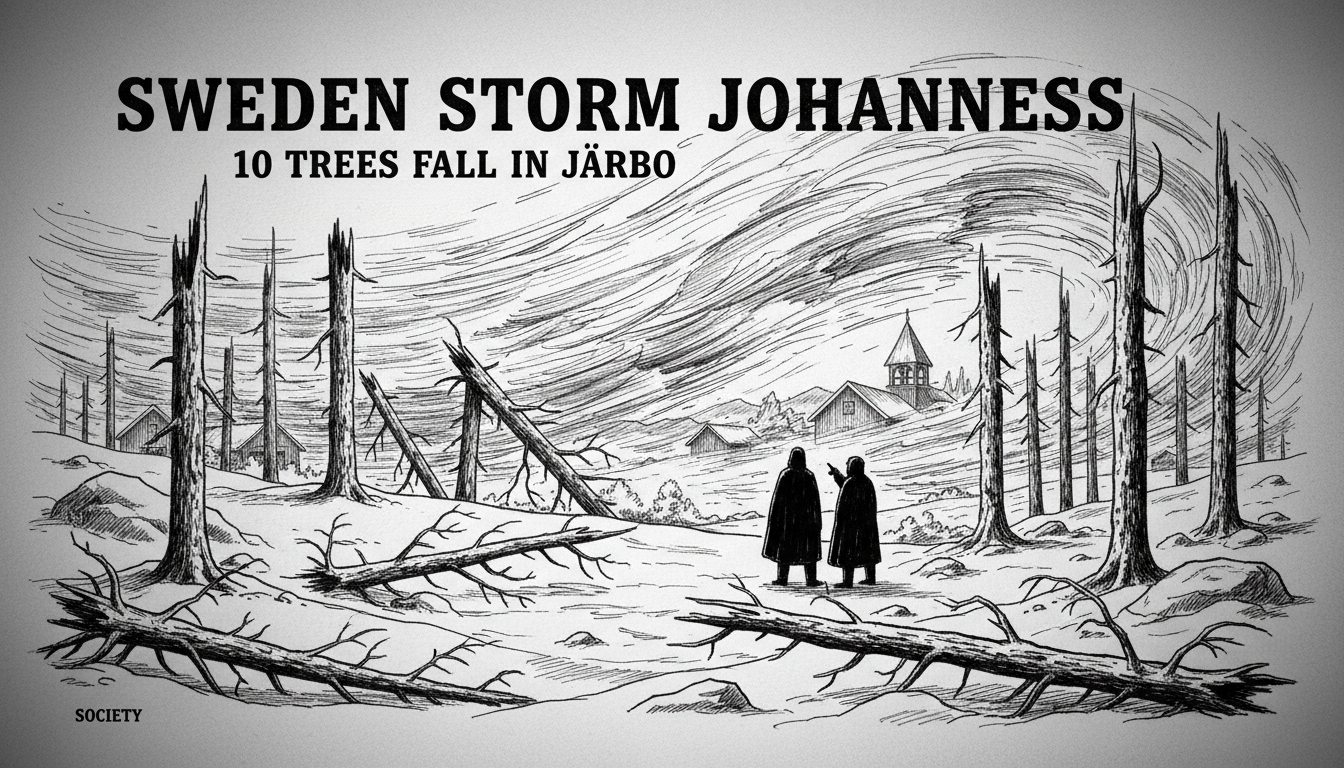
Storm Johannes swept through Sweden, felling trees in Järbo where resident Tomas Bergqvist watched ten bend like bananas before crashing down. 'You have to take it easy and not stress. If you stress, there's a risk of accidents,' says Bergqvist, a man familiar with handling a chainsaw. Luckily, no major injuries or property damage were reported, but the experience left a mark on this small community.
A Night of Howling Winds and Falling Giants
Tomas Bergqvist recalls the eerie sound of wind whipping through his property in Järbo. The trees swayed violently, their trunks curving under the pressure. 'They bent like bananas,' he said, describing the surreal sight. One by one, approximately ten trees on his land succumbed to Storm Johannes. The crack of splitting wood echoed through the night. Bergqvist stayed indoors, prioritizing safety over immediate action. His years of forestry experience taught him patience. Rushing out with a chainsaw during a storm invites disaster. This pragmatic approach is common in rural Sweden. Communities here respect nature's fury. They know when to wait and when to act.
Initial reports confirmed no serious harm to people, vehicles, or houses. This is a testament to Sweden's preparedness. Building codes in storm-prone areas often account for strong winds. Yet, the psychological impact lingers. For Bergqvist, the memory of trees falling endlessly is unsettling. He now faces a days-long cleanup. Each fallen tree represents hours of labor. But he tackles it methodically, without panic. This calm response reflects a broader Swedish mindset. Facing adversity with composure is ingrained in the culture.
The Calm After the Storm: Cleanup and Resilience
Morning light revealed the extent of the damage. Tomas Bergqvist surveyed his property with a practiced eye. Ten trees lay scattered, some narrowly missing structures. He fetched his chainsaw, checking its condition meticulously. 'Taking it slow is key,' he emphasized. Stress leads to mistakes, especially with heavy machinery. His neighbors in Järbo began their own assessments. Offers of help circulated quietly. This low-key solidarity is typical in Swedish towns. People assist without fanfare. They share tools and expertise, embodying the concept of 'dugnad' or community work.
Bergqvist's story mirrors countless others across Gävleborg County. This region is dense with forests, making it vulnerable to storms. Fallen trees often block roads and disrupt power lines. Local authorities swiftly mobilized after Johannes. Crews cleared debris to restore normalcy. Residents like Bergqvist handled private property damage independently. This self-reliance is a point of pride. It reduces strain on public resources. Swedish society values individual responsibility balanced with communal support. The cleanup process becomes a collective ritual, reinforcing social bonds.
Sweden's Stormy Relationship with Nature
Storms like Johannes are frequent guests in Sweden. Autumn and winter months bring powerful weather systems from the Atlantic. The country's long coastline and vast woodlands amplify their impact. Historical data shows regular storm events causing transport halts and blackouts. Järbo, in Sandviken Municipality, sits in a forested heartland. Trees here are both livelihood and hazard. Forestry is a major industry, but storms can devastate timber stocks. Communities have adapted over generations. They build sturdier homes and maintain emergency supplies. Yet, each storm tests their resilience anew.
Swedish meteorologists track these patterns closely. Storm Johannes was part of a seasonal series. It followed predictable paths, but its intensity caught some off guard. Climate experts note a troubling trend. Storms in the Nordic region may grow more frequent and severe. Warmer oceans fuel stronger weather events. Sweden's infrastructure must evolve accordingly. This includes updating forest management practices. Thinning dense stands can reduce wind damage. Building codes may need revision for higher wind loads. The conversation is ongoing in policy circles.
Expert Insights: Climate Change and Preparedness
Researchers point to climate change as a driving factor. Dr. Lena Ström, a climatologist at Uppsala University, explains the link. 'Warmer global temperatures increase energy in weather systems,' she said. 'This can lead to more intense storms in Scandinavia.' Her analysis is supported by recent studies. Sweden has seen a rise in extreme weather events over the past decade. Storm Johannes fits this pattern. Preparedness is now a national priority. Authorities encourage households to have emergency kits. These include flashlights, batteries, and non-perishable food. Public awareness campaigns run before storm season.
Forest management is another critical area. Experts advocate for diverse tree species and spacing. This creates healthier forests that withstand winds better. In Järbo, many landowners already practice sustainable forestry. Tomas Bergqvist's careful cleanup aligns with these principles. He removes fallen timber without harming the surrounding ecosystem. This balance between use and preservation is core to Swedish environmental policy. It also minimizes future storm damage. Building design is evolving too. Architects incorporate wind-resistant features in new constructions, especially in coastal and forested zones.
Cultural Threads: Lagom and Storm Survival
Swedish culture offers unique lenses for coping with storms. The principle of 'lagom'—meaning just the right amount—guides responses. It advocates moderation and avoiding extremes. During Storm Johannes, people like Bergqvist embodied lagom. They didn't overreact but didn't ignore risks either. They prepared adequately and acted thoughtfully. This mindset reduces panic and promotes efficient recovery. It's woven into daily life, from Stockholm apartment living to rural Järbo homesteads. Festivals like Midsummer, with their focus on nature, remind Swedes of their environment's power. They celebrate it while respecting its dangers.
Community events often include safety briefings before winter. In neighborhoods across Stockholm, from Södermalm to Östermalm, residents share tips. They discuss storm protocols over fika, the beloved coffee break. This blends social tradition with practical preparedness. Swedish society trends show increasing interest in self-sufficiency. Urban gardening and emergency training courses are popular. This reflects a desire to control what's possible amid climate uncertainty. Immigration news often highlights how newcomers adapt to these norms. They learn to stockpile for storms and respect nature's warnings. It's part of integrating into Swedish lifestyle.
Looking Ahead: Lessons from Johannes
Storm Johannes left a clear message. Preparedness saves lives and property. Tomas Bergqvist's experience underscores this. His calm demeanor prevented accidents. His methodical cleanup restored order quickly. Sweden as a nation can learn from such individual stories. Investing in resilient infrastructure is crucial. This includes strengthening power grids and improving storm forecasting. Public education must continue, especially for new residents. Cultural resilience, built on lagom and community, is a powerful tool. It turns adversity into a shared challenge rather than a crisis.
Future storms are inevitable. Climate models predict more turbulent years ahead. Sweden's response will set an example for the Nordic region. By blending traditional wisdom with modern science, it can weather any storm. As Bergqvist put it, taking it easy reduces risks. This simple advice, rooted in deep cultural insight, might be the best defense. The trees in Järbo may bend again, but the community will stand firm.