
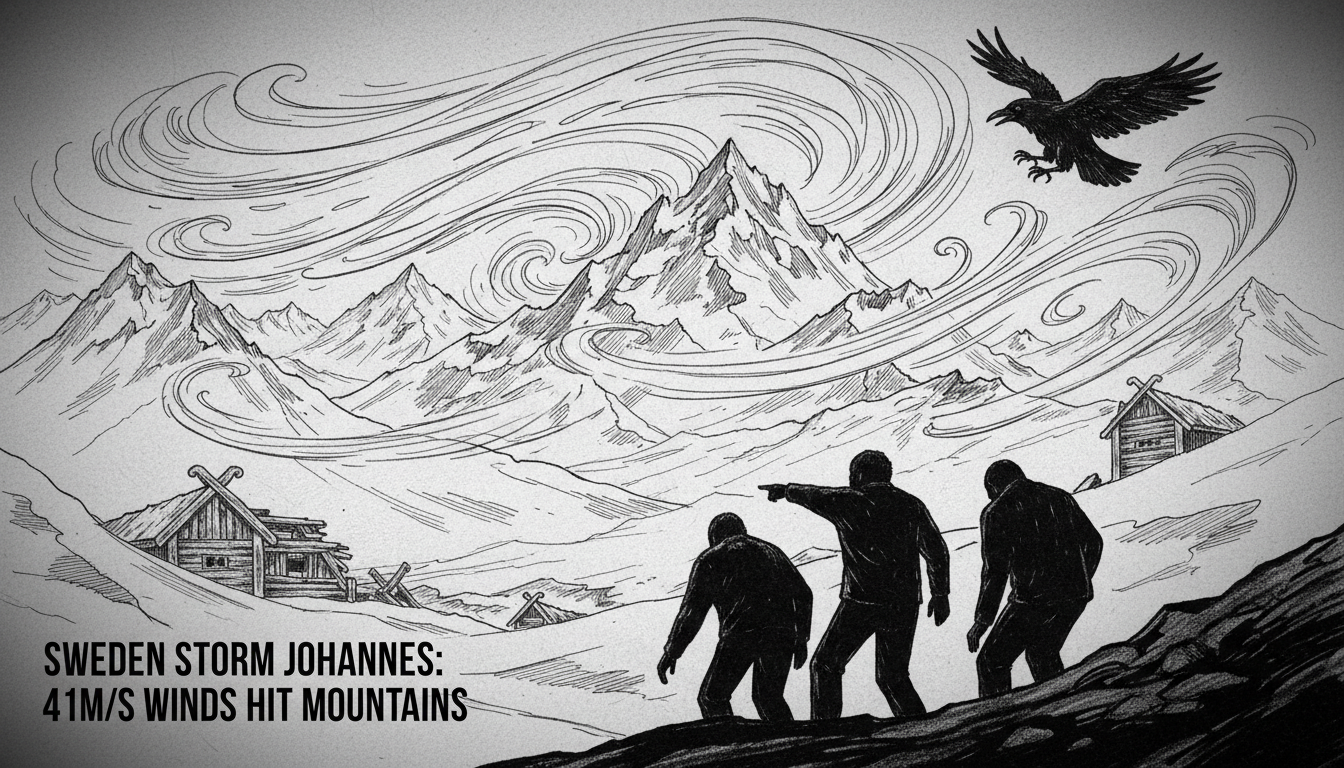
Sweden's Storm Johannes is battering the northern half of the country with hurricane-force gusts reaching 41 meters per second in the Västerbotten mountains. The Swedish Meteorological and Hydrological Institute (SMHI) has issued severe weather warnings for large parts of Norrland, northern Dalarna, and northeastern Svealand, urging residents to prepare for dangerous conditions. 'There, it's 41 meters per second in the gusts, so it's a storm with hurricane-force gusts,' said duty meteorologist Kjell Lund at SMHI.
This is not just another autumn gale. Johannes represents a significant weather event, bringing a combination of extreme winds and heavy snowfall that creates a perfect storm for disruption. The Swedish Transport Administration has issued a stark advisory, asking people to avoid all non-essential travel in the affected regions. For communities in the mountain areas, this means battening down the hatches and waiting it out.
A Northern Landscape Under Siege
The storm's fury is concentrated in the fjäll, the mountainous region spanning Norrbotten and Västerbotten. These areas, popular with hikers and skiers in milder seasons, are now facing winds strong enough to uproot trees and cause structural damage. The 'hårda viden' or hard weather, combined with intense snowfall, creates near-zero visibility and treacherous conditions. Local emergency services are on high alert, anticipating calls for fallen power lines, blocked roads, and potential isolation for smaller villages.
Life in these regions demands resilience. Anna-Karin, a bed and breakfast owner in a village near Vilhelmina, told me over a crackling phone line that preparations began yesterday. 'We've secured everything outside—the furniture, the signs, the woodpile. The guests scheduled to arrive today have postponed. Now, we just listen to the wind howl and hope the power stays on,' she said. Her experience reflects a common seasonal rhythm in the north, where respect for nature's power is ingrained in the culture.
The Science Behind the Warning
Meteorologist Kjell Lund's warning is based on precise data. A wind speed of 41 meters per second translates to approximately 147 kilometers per hour (91 mph), solidly within the hurricane-force category on the Beaufort scale. Such winds can cause widespread damage. SMHI's warning system uses a color-coded scale: yellow for potential danger, orange for significant impact, and red for extreme danger. Johannes has triggered orange-level warnings for vast swathes of land, indicating society needs to take action.
'People should take these warnings seriously,' says Professor Erik Kjellström, a climate scientist at the Swedish Meteorological and Hydrological Institute. 'The combination of wind and snow is particularly hazardous. It leads to snow drift, which can block roads and railways in a matter of hours, and it greatly increases the risk of accidents for anyone caught outside.' He emphasizes that climate research suggests while the number of storms might not drastically increase, their intensity could, making preparedness even more critical.
Travel Grinds to a Halt
The ripple effect of Storm Johannes is felt most immediately on Sweden's transport networks. Trafikverket, the national transport administration, is clear in its guidance: stay off the roads unless absolutely necessary. Major routes like the E4 through Norrland and the E10 towards the mountains are seeing reduced speeds and warnings for high-sided vehicles. Bus and train services in the warning zones are subject to delays and cancellations.
For long-distance truck driver Markus Lindgren, this means an unplanned stop in Umeå. 'I was supposed to be heading up towards Kiruna, but that's not happening today,' he said, checking the Trafikverket app in a roadside cafe. 'It's not worth the risk. The wind can catch the trailer and push you right off the road, especially on the open stretches near the mountains. Better to be safe and wait.' This cautious approach is a standard part of the professional driving culture in Scandinavia, where winter weather dictates logistics.
Community Response and Cultural Fortitude
How does Swedish society weather such a storm? There is a distinct cultural template. The concept of 'förebyggande arbete' or preventive work kicks in. Municipalities check on vulnerable residents. Neighbors ensure outdoor items are secured. Families stock up on essentials. There's a quiet, collective understanding rather than panic. This stems from the Swedish principle of 'myndighetsförtroende'—trust in authorities—meaning that when SMHI and Trafikverket issue a warning, the public generally heeds it.
In cities like Luleå and Umeå, further east, the winds are strong but less extreme. The impact here is more about disruption—delayed public transport, cancelled outdoor events, and the familiar sight of citizens leaning into the wind, hats pulled low. It's a reminder that even urban centers are deeply connected to the rhythms of the northern climate. The storm temporarily shifts the focus inward, to the comfort of 'mys' or coziness, a cherished antidote to the harsh outside world.
Looking Ahead: The Storm's Path and Legacy
Storm Johannes is expected to peak over a 24-hour period before gradually weakening as it moves northeast. However, the aftermath will take time to clear. Road crews will be working around the clock to clear snowdrifts. Utility companies will be restoring power to any affected homes. The true test will be for the mountain resorts and small communities, assessing any damage once the winds subside.
This event also feeds into the broader conversation about infrastructure in a changing climate. Are Sweden's roads, power grids, and communication systems resilient enough for more frequent intense weather events? Professor Kjellström notes that planning is increasingly factoring in these extremes. 'Society's vulnerability is a key focus. It's not just about forecasting the weather accurately, but understanding what that weather will do to our roads, our forests, and our power lines.'
For now, the focus remains on safety. As the pine trees bend and the snow flies horizontally across the mountain passes, the message from authorities is unanimous: stay informed, stay inside, and let this northern tempest pass. The silence after the storm, when it comes, will be a relief. But the memory of Johannes's 41-meter-per-second gusts will linger, another chapter in Sweden's long and formidable relationship with its winter weather. Will this serve as a wake-up call for bolstering northern infrastructure, or simply be remembered as another harsh but manageable Nordic storm? Only the calm after the wind will tell.