
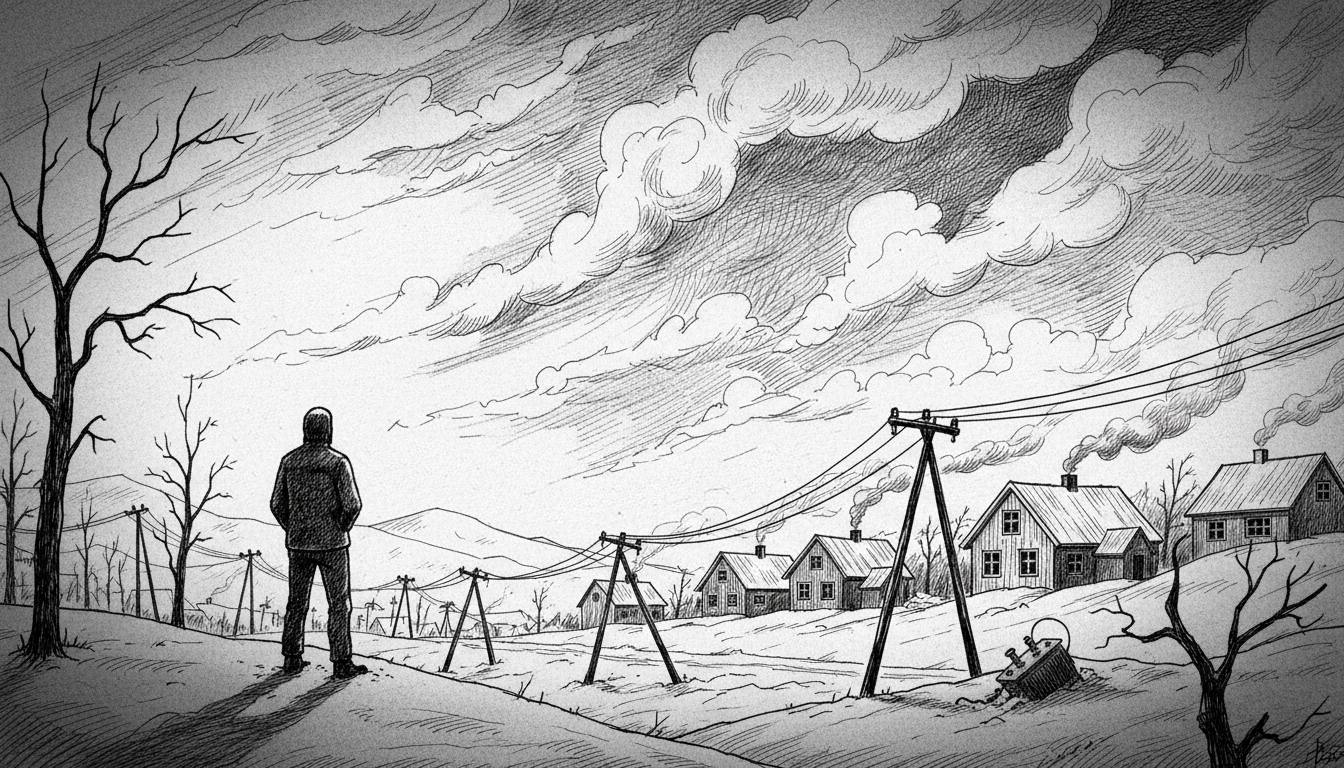
Sweden power outage struck over 40,000 households during Storm Johannes, with 15,000 still stranded in the dark on Monday morning. The violent weather system carved a path of destruction through northern and central regions, transforming serene forests into scenes of chaos. Jesper Liveröd from Ellevio described the aftermath simply: "It's a battlefield out there." For thousands of Swedes, the storm's passing marked the beginning of a prolonged struggle for normalcy.
The Aftermath of Johannes
Storm Johannes retreated on Sunday morning, but its legacy of toppled trees and shattered power lines remained. Communities from Gävleborg to Dalarna woke to a silent, powerless world. Electricity distribution companies Ellevio, Eon, and Vattenfall immediately deployed crews, but the scale of damage overwhelmed initial efforts. By Monday at 9 AM, over 15,000 subscribers across their networks were still waiting for the lights to come back on. This disruption touches every aspect of Swedish lifestyle, from halted coffee makers interrupting the sacred fika ritual to home offices falling silent.
A Battlefield Scene for Repair Crews
Repair teams face a monumental task. Fallen pine and spruce trees, heavy with late-season moisture, have crushed distribution lines across vast, remote areas. "Our teams are working around the clock, but access is a major challenge," said a Vattenfall spokesperson in a statement. The damage is not centralized; it's a scattered mosaic of failures across the grid. In rural villages and summer cottage areas, the isolation deepens the crisis. This event tests the core of Swedish society trends, where self-reliance meets a deep trust in public infrastructure. The outage forces a sudden return to basics, challenging the digital dependency of modern life.
Living in the Sudden Stillness
The human impact is immediate and profound. In Uppsala County, Anna Bergström, a teacher, recounted her family's third night without heat. "We’re layering clothes and using the fireplace, but you don’t realize how much you rely on electricity until it’s gone," she told me. Her story echoes in apartments in Västerås and remote homesteads in Hälsingland. Food spoils in refrigerators, water pumps fail, and the pervasive Scandinavian dusk arrives earlier without the glow of lamps. For elderly residents, the loss of power can be a severe health risk, cutting off medical devices and communication lines. Community centers in some towns have opened as warming shelters, showcasing the Swedish value of collective help.
Sweden's Grid Under Pressure
This widespread failure brings Sweden's electricity grid into sharp focus. The system relies on a network of overhead lines, especially in forested regions, making it vulnerable to severe weather. Sweden's electricity production is a mix of nuclear, hydro, wind, and thermal power, with a national goal of 100% renewable production. However, the local distribution networks—operated by companies like Ellevio—are the fragile link to homes. Experts point to climate change as a driving factor behind more frequent and intense storms like Johannes. "We are seeing a pattern of extreme weather events that our infrastructure was not designed to withstand with this frequency," explains Dr. Lars Fält, an energy systems researcher at KTH Royal Institute of Technology. "Investment in hardening the grid, such as burying lines in critical areas, is no longer a luxury but a necessity for resilience."
Cultural Resilience in the Dark
Swedish culture is inherently tied to nature, but this storm highlights a tense relationship. The very forests that provide solace and recreation have become agents of disruption. In Stockholm, while the city center was largely spared, the event dominated conversations in cafes on Södermalm. It served as a stark reminder of the metropolis's dependence on the surrounding countryside for power. The outage also intersects with Sweden immigration news, as newcomers experience their first major Swedish winter crisis, navigating language barriers and unfamiliar support systems. Local response efforts often hinge on municipal folkbildning (adult education) networks and volunteer organizations, stepping in where official channels are stretched thin.
The Path to Recovery and Reflection
Restoration efforts are prioritized by critical infrastructure: hospitals, nursing homes, and water treatment plants first. For ordinary households, the wait could extend for several more days in the hardest-hit zones. The economic toll is mounting, with small businesses like bakeries and workshops unable to operate. This storm follows a pattern of similar events in recent years, prompting difficult questions. Is Sweden's famously reliable society prepared for a new era of climate instability? The debate often centers on cost—burying power lines is expensive—versus the growing price of repeated outages.
As the repair crews press on, the silence in affected homes is more than just an absence of noise. It's a pause that forces reflection on vulnerability and community. Storm Johannes may fade from the headlines, but its legacy will influence Sweden's approach to energy security and climate adaptation for years to come. The question remains: when the next storm arrives, will the lights stay on?