
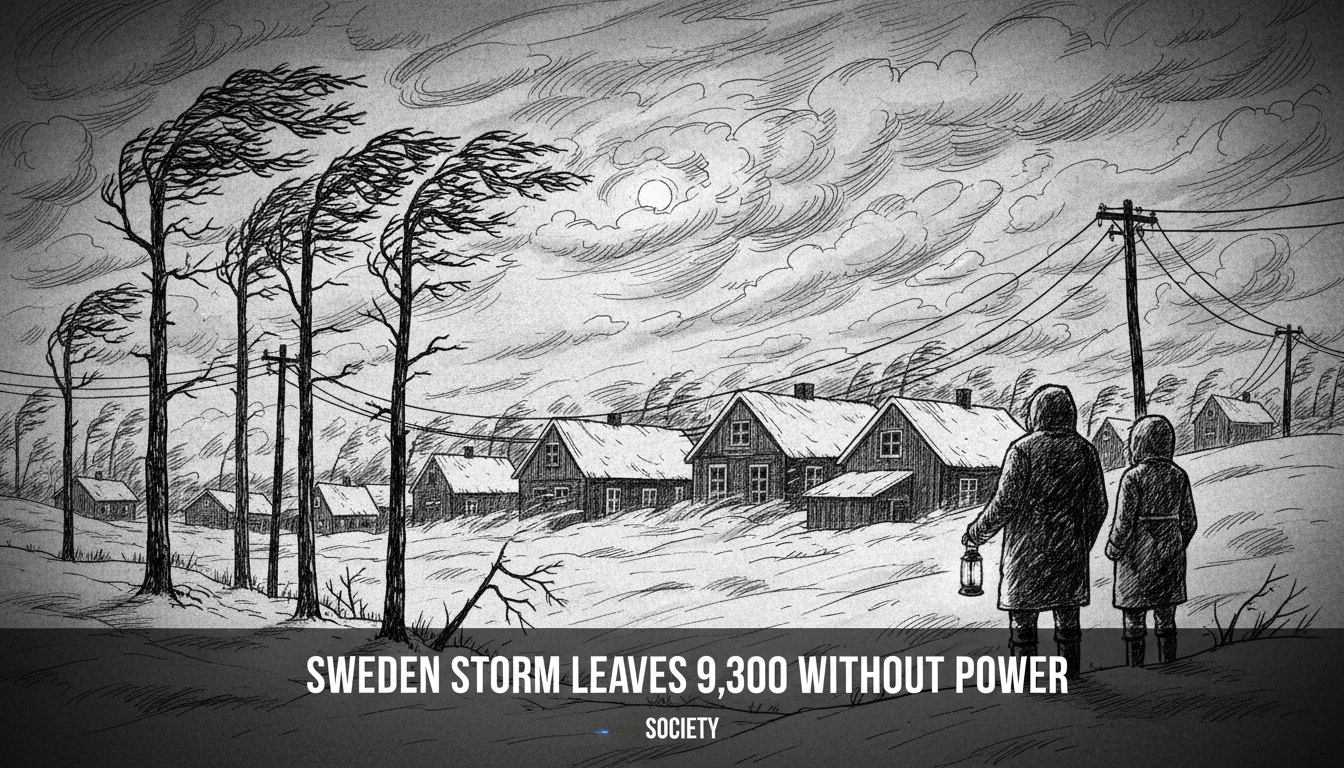
Sweden power outage numbers peaked at over 16,000 subscribers as Storm Johannes battered the country overnight. By Monday morning, approximately 9,300 homes and businesses in Västernorrland county remained without electricity. The storm's aftermath reveals deep vulnerabilities in regional infrastructure, leaving families in the dark during early spring's chilly nights.
Lena Berglund, region chief for Norrland at energy company Eon, delivered sobering news. "Some may have to wait until tomorrow, perhaps even longer," she said. "It is incredibly difficult to say." Her words echoed across communities where fallen trees and damaged power lines disrupted daily life. For many, the uncertainty stretched patience thin.
A Night of Howling Winds and Falling Trees
Storm Johannes swept across Sweden with ferocious intensity on Sunday. It uprooted centuries-old pines in rural areas, snapping power lines like twigs. In towns like Sundsvall and Härnösand, residents reported hearing crashes through the night. By dawn, landscapes were littered with debris. The storm's path carved through central and northern Sweden, where forests meet scattered settlements.
Power outages hit hardest in Västernorrland, a county known for its dense woodlands and coastal communities. Eon, a major provider here, faced several thousand affected customers. Neighbors shared stories on social media, using mobile data until batteries died. One Sundsvall resident described boiling water on a camping stove for morning coffee. "It felt like stepping back in time," she wrote.
The Human Cost of a Darkened Home
Imagine a Monday without alarm clocks, hot showers, or light. For thousands, this was reality. Schools delayed openings, and elderly care facilities switched to backup generators. In Örnsköldsvik, a small business owner fretted over refrigerated stock. "If this lasts days, I lose a week's income," he told me by phone. His voice carried the stress shared by many.
Swedish society prides itself on reliability and modern convenience. Events like this test that identity. Families gathered around battery-powered radios, recalling past storms. Some joked about 'fika' by candlelight, embracing the cozy 'mysig' atmosphere. But beneath the resilience, frustration simmered. Parents worried about children's homework, and remote workers missed critical deadlines.
Sweden's Electricity Grid: Strong but Exposed
Sweden's electricity grid relies on hydropower, nuclear energy, and growing wind power. Overall, it ranks among Europe's most stable. Yet, storms expose weaknesses in rural networks. Overhead lines in forested regions are prone to tree falls. Burying cables is costly but reduces vulnerability. Energy analysts have long advocated for such investments, especially in the north.
"Climate change means more frequent extreme weather," says Karl Ström, an energy infrastructure expert I contacted. "Sweden must accelerate grid hardening in vulnerable zones." He points to southern Sweden's progress with buried lines. However, the vast north presents logistical challenges. The cost-benefit analysis often favors quick repairs over permanent solutions. This storm may shift that calculus.
Cultural Resilience Meets Modern Dependency
Swedes have a historical knack for weathering harsh conditions. From Viking longships to winter survival, resilience is cultural currency. Today, that manifests in community aid. Local Facebook groups buzzed with offers of spare generators and hot meals. In Ånge, a volunteer center opened at the folkets hus, providing warmth and charging stations.
Yet, modern life intensifies dependency on electricity. Smart homes, electric vehicles, and digital workflows crash without power. Immigration has brought diverse populations less familiar with Nordic winters. New Swedes from warmer climates faced a steep learning curve. Community leaders organized check-ins on elderly and isolated families, blending tradition with inclusivity.
Restoration Efforts and Communication Gaps
Crews from Eon and other providers worked through the night. They prioritized critical infrastructure like hospitals and water plants. However, accessing remote areas proved slow due to blocked roads. Communication from energy companies was patchy. Some customers received SMS updates, while others relied on local news.
Clear timelines are essential during outages. Berglund's honest admission about uncertain restoration times reflects this challenge. Experts emphasize transparent communication to manage public expectations. In Sweden's society, where trust in institutions is high, information gaps can erode confidence quickly. This event highlights the need for improved crisis messaging.
Learning from Past Storms
Storm Johannes is not an isolated event. In 2005, Storm Gudrun caused massive outages in southern Sweden. It led to increased funding for grid maintenance. Similarly, 2011's Storm Dagmar prompted reviews of emergency responses. Each event teaches lessons, yet implementation varies. Västernorrland has seen incremental improvements, but funding constraints linger.
Comparatively, Norway invests more in burying power lines in forested areas. Sweden could learn from its neighbor. However, Sweden's larger land area and lower population density complicate economics. Regional governments push for national support, arguing that reliable electricity is a right, not a privilege. This storm renews that debate.
The Broader Impact on Swedish Lifestyle
Power outages disrupt more than appliances. They affect cultural rhythms. In Stockholm, events continued unaffected, highlighting urban-rural divides. A concert at Kulturhuset Stadsteatern went ahead, while a village midsummer planning meeting in Västernorrland was canceled. Such contrasts underscore inequality in infrastructure resilience.
Swedish lifestyle trends like remote work and sustainable living face tests during outages. Families relying on heat pumps shivered without power. Those with solar panels and batteries fared better, sparking interest in off-grid solutions. This event may accelerate adoption of renewable microgrids in vulnerable regions.
Looking Ahead: Climate and Preparedness
Storm Johannes serves as a warning. Climate models predict more intense storms for Scandinavia. Sweden must balance grid investment with climate goals. Renewable energy sources like wind power are crucial but also vulnerable to extreme weather. Diversification and decentralization could enhance resilience.
Public awareness is growing. Swedish society trends show increased interest in emergency preparedness. Sales of portable power banks and candles spike after events like this. Community workshops on crisis management gain popularity. From Stockholm's affluent Östermalm to rural villages, people are rethinking self-sufficiency.
Ultimately, this outage is a story of human adaptation. It blends Swedish tradition with modern challenge. As crews work to restore power, communities band together. The quiet darkness of a Västernorrland night reminds us of our shared vulnerability. And our capacity to shine through adversity.