
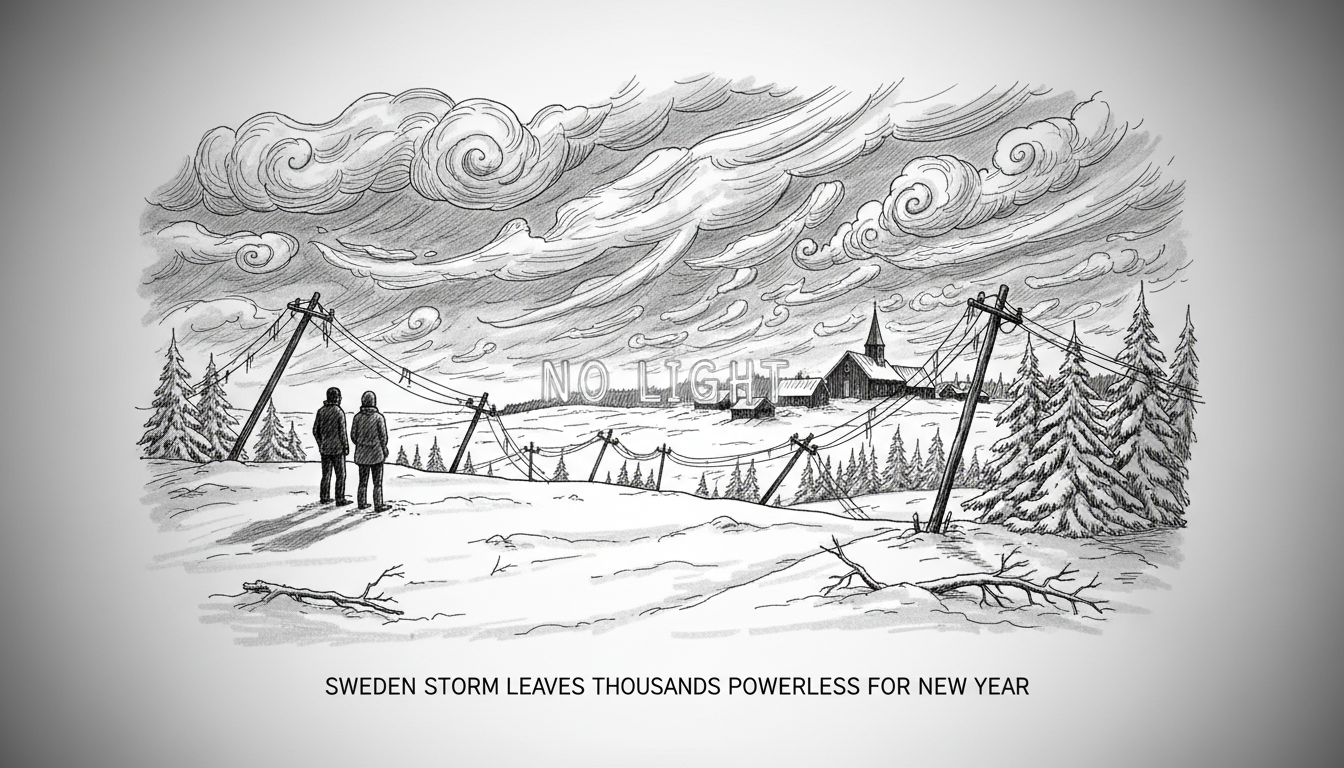
Sweden's New Year's Eve celebrations were plunged into darkness for thousands of households as the aftermath of Storm Johannes continued. Over 3,500 homes, primarily in Gävleborg County, remained without electricity as the clock ticked toward midnight. For these families, the traditional festive warmth was replaced by cold rooms and contingency plans, with electricity distributor Ellevio offering hotel compensation to its affected customers.
"We had the candles ready, but not for this reason," says Anna Lundström, a mother of two from a small village outside Gävle. Her family's planned New Year's feast was packed into coolers on the porch, relying on the sub-zero outdoor temperatures. "The children are trying to see it as an adventure, but it's stressful. You realize how much we depend on that simple flow of power."
A Dark Start to the New Year
The storm, which swept across northern and central Sweden on Saturday, initially cut power to around 40,000 households. While crews from companies like Ellevio and Eon have worked around the clock, the damage in forested Gävleborg has been extensive. Fallen trees and broken power lines scattered across remote areas have made restoration a slow, arduous process. Several municipalities have opened public buildings where residents can warm up, charge devices, and take hot showers.
Ellevio's compensation scheme, announced on New Year's Eve, allows its 2,700 affected customers in Gävleborg to book hotel rooms themselves. The company will reimburse the costs with a receipt, and guests can stay until power is restored. "It's a good gesture, but it's not so simple," notes Lars Pettersson, a farmer from the region. "The nearest hotel with vacancies might be 50 kilometers away. Who will tend to the animals? For many of us, leaving the property isn't an option."
The Persistent Challenge of Sweden's Overhead Grid
This incident highlights a recurring vulnerability in the Swedish system. While the energy market is deregulated and reliable overall, its vast geography presents unique challenges. In densely forested counties like Gävleborg, the network of overhead power lines is exceptionally susceptible to storm damage. Each major weather event reignites the debate about investing in burying power lines, a process known as markkabel.
"Offering hotel stays is a responsible customer service policy, and it's positive that companies are taking this step," says energy analyst Karin Moberg. "However, it treats the symptom, not the cause. The real discussion we need to have is about long-term grid resilience. The economic cost of these repeated outages—for households, businesses, and the utilities themselves—must be weighed against the massive investment required for underground cabling."
That investment is staggering. Burying cables can cost up to ten times more per kilometer than maintaining overhead lines. For cash-strapped municipalities and profit-conscious distribution companies, it's a difficult calculation. The Swedish Energy Markets Inspectorate monitors outage times and compensation, but there is no nationwide mandate to underground the grid.
Life on Hold in the Midwinter Dark
The human impact goes beyond missed TV specials or a cold dinner. In the Swedish winter, electricity is not a convenience but a basic necessity for heating and lighting. Prolonged outages pose real risks, especially for the elderly or those with medical needs. The social disruption is also significant, isolating communities when they would typically gather.
In Gävle, known globally for its giant straw Christmas goat, the mood was subdued. Some restaurants with generators became impromptu community hubs. "We've had people coming in just to sit in the warmth for an hour," says café owner Mikael Berg. "They buy a coffee, charge their phone, and get a bit of human contact. It's a different kind of New Year's spirit—people helping each other."
For families with children, the experience is mixed with frustration and forced creativity. "We told stories by flashlight and played board games," says Lundström. "In a way, it was a throwback to a simpler time. But by the second day, the novelty had worn off. You just want a hot shower and the hum of the refrigerator back."
A Policy Puzzle of Power and Priorities
The situation presents a classic Swedish policy dilemma: balancing cost, efficiency, and security. The deregulated market encourages competition and keeps prices relatively low for consumers. Yet, critics argue it can discourage the huge upfront capital investments needed for infrastructure hardening. Is the cost of occasional hotel rooms and outage compensation cheaper than a fortified grid? For now, the market seems to think so.
"These storms are not becoming less frequent," Moberg, the analyst, warns. "The calculus may change as climate patterns shift. We need a comprehensive national strategy for grid modernization, particularly in vulnerable regions. It's about security of supply, which is the foundation of modern society."
Local politicians in affected areas are already calling for action. They argue that rural communities should not consistently bear the brunt of these disruptions, which hurt local economies and quality of life.
Looking Ahead: Light and Lessons
As repair crews continue their work in the short days of early January, the broader conversation continues. The incident serves as a stark reminder of our fundamental dependence on energy infrastructure. For the international audience, it challenges the image of Sweden as a perfectly engineered society, revealing the ongoing struggle to manage nature's force across a vast, sparsely populated landscape.
Will Storm Johannes be the catalyst for a major shift in how Sweden protects its power grid? Or will it become just another entry in the logbook of winter storms, with costs calculated and compensated, until the next one hits? For the thousands who rang in 2024 by candlelight, the answer to that question carries real weight. Their dark New Year's Eve may yet shine a light on a critical national issue.