
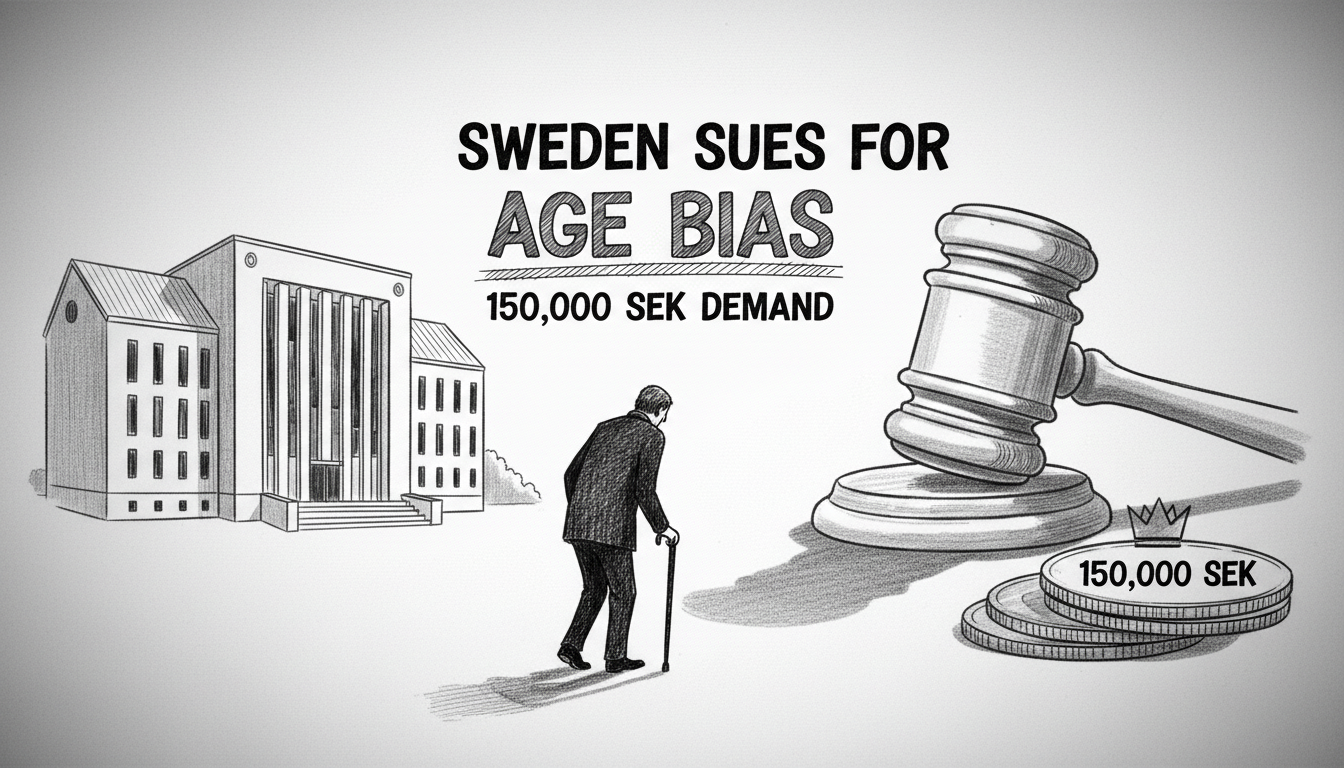
Sweden's anti-discrimination laws face a direct test in a controversial case from the consultancy sector. A 62-year-old job candidate, fully qualified for a position, was allegedly told by a recruiter it would be 'unprofessional' not to hire a younger person. The white-collar union Unionen is now suing the employer for 150,000 Swedish kronor in discrimination damages, spotlighting persistent labor market ageism.
This lawsuit strikes at a core tension in Swedish working life. Strong legal protections on paper often clash with ingrained biases in hiring practices. The case originates from a recruitment process where the older candidate passed initial screening and was interviewed. According to the union's publication, the recruiter subsequently contacted the candidate to deliver the blunt assessment about favoring youth. This explicit statement provides rare documented evidence for a discrimination case, which often relies on circumstantial proof.
A Case That Tests the Discrimination Act
The legal action will hinge on Sweden's Discrimination Act (Diskrimineringslagen). This legislation explicitly prohibits unfair treatment based on age in working life. The law covers all stages of employment, from advertising to dismissal. For the case to succeed, Unionen's lawyers must prove a direct causal link between the candidate's age and the decision not to hire. The recruiter's reported comment about professionalism and youth becomes the central piece of evidence. Legal analysts suggest such a clear alleged statement is unusual and could strengthen the plaintiff's position significantly.
Employers found guilty of discrimination can be ordered to pay compensation for violation of integrity and economic damages. The 150,000 SEK demand reflects the serious nature of the alleged violation. Previous rulings from the Swedish Labour Court provide benchmarks for such sums. A victory for Unionen would reinforce the act's power as a tool for individuals. A loss could highlight the difficulties in proving systemic bias, even with seemingly direct comments.
The Systemic Challenge for Older Workers
This individual case reflects a broader national challenge documented by official agencies. A 2023 report from the Swedish National Institute of Economic Research (Konjunkturinstitutet) confirms that workers over 55 endure longer average unemployment periods than younger groups. Their skills and experience are frequently undervalued in a market often focused on digital native status. The consultancy field, where this case emerged, particularly prizes contemporary methodologies and recent training, sometimes at the expense of accumulated wisdom.
Furthermore, a 2022 study by the Swedish Work Environment Authority (Arbetsmiljöverket) identified age discrimination as a commonly reported issue in workplace surveys. Many instances go unreported or unchallenged due to the burden of proof resting on the employee. Unions play a critical role in bridging this gap by offering legal and financial support to members. Unionen, one of Sweden's largest private-sector unions, regularly takes such cases to court to establish legal precedent and deter widespread practice.
The Union's Strategic Fight
Unionen's decision to litigate is a strategic move with objectives beyond a single compensation payout. By taking a public stand, the union signals to its hundreds of thousands of members that it will defend their rights throughout their careers. It also sends a warning to employers across all sectors that discriminatory hiring practices carry legal and reputational risks. Union representatives argue that age diversity strengthens companies by combining innovation with experience and stability.
Labor law experts note that union-backed cases are essential for developing anti-discrimination jurisprudence. Individual employees rarely have the resources to pursue lengthy legal battles against corporate HR departments. The union's involvement levels the playing field and ensures that principles established in the Riksdag are enforced in practice. This case may prompt internal reviews of recruitment guidelines within many Swedish companies, particularly in fast-evolving sectors like consulting and tech.
Societal Biases and Economic Consequences
The alleged recruiter's comment reveals a deeper societal bias equating youth with professionalism and capability. Sociologists point to a cultural narrative that frames technological adaptation and energy as predominantly youthful traits. This overlooks the adaptability, mentorship capacity, and institutional knowledge older workers provide. In an aging Swedish population, pushing experienced individuals out of the workforce prematurely has significant economic consequences. It increases pension system strain and wastes a vast human capital resource.
Demographic trends make solving this issue a national economic imperative. Policy discussions in Stockholm increasingly focus on extending working lives and ensuring inclusive labor markets. Cases like this one demonstrate that legal frameworks require consistent enforcement to change attitudes. Government agencies like the Discrimination Ombudsman (DO) monitor trends but rely on reported cases to take action. High-profile litigation thus serves a dual purpose: delivering justice for an individual and educating the market.
The Road to a Court Decision
The legal process will now follow Sweden's labor court system. Initial proceedings will likely involve a district court, with potential appeals moving upward. The employer will have the opportunity to present its version of events, possibly contesting the wording or context of the recruiter's statement. The court's analysis will dissect the recruitment process to determine if age was a determining factor. Even if the exact phrase is disputed, the court may examine whether the selection criteria were objectively applied or indirectly favored younger applicants.
The outcome will be closely watched by HR professionals, union lawyers, and policymakers. A ruling in favor of the 62-year-old candidate would empower other older workers to challenge dubious rejections. It would mandate clearer, more objective hiring protocols across industries. Conversely, a ruling for the employer might encourage more cautious, coded language among recruiters but not necessarily change underlying biases. The true measure of success may be whether this case sparks a tangible shift in how Swedish companies assess value across age groups.
Ultimately, this lawsuit is about more than 150,000 kronor. It questions whether Sweden's celebrated model of fair labor markets can deliver on its promise for citizens at every stage of their professional lives. As the population grows older, the answer will define the country's economic resilience and social cohesion for decades to come. The final court decision will provide a verdict on one employer's actions and, in a broader sense, on the maturity of the Swedish labor market itself.