
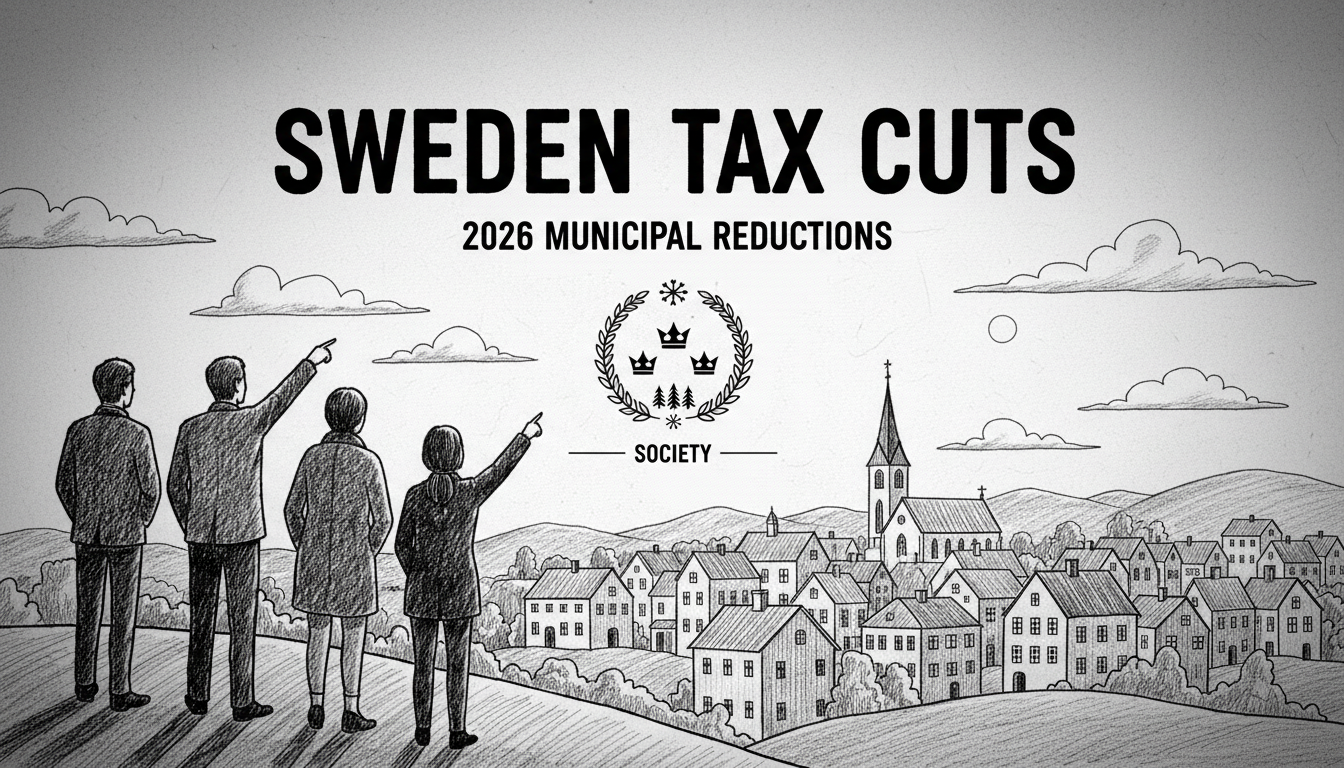
Sweden municipal tax cuts in the Gothenburg area will take effect in 2026, directly impacting household budgets and local services. For families like the Petterssons in Ale, this news sparks immediate calculations. "We could save maybe a thousand kronor a month," says father Erik, a nurse. "But will the library hours stay the same?" His concern echoes across several municipalities announcing reductions. Henrik Fogelklou, chairman of Ale's municipal board, states the rationale clearly. "We are collecting too much tax if we have money left," he says. This decision stems from controlled expenses and a stalled population increase in the region.
A Local Decision with National Resonance
The kommunalskatt is the lifeblood of Swedish local democracy. It funds everything from preschools and elder care to road maintenance and summer festivals. The average rate in Sweden sits at approximately 32.28%. Changes are politically sensitive and deeply personal. In Ale and neighboring communes around Gothenburg, officials have identified a surplus. Rather than accumulate reserves, they choose to return funds. This reflects a core Swedish principle of fiscal responsibility. Yet, it also invites scrutiny about future service quality.
The Gothenburg Area's Financial Picture
Why are these cuts possible now? Local leaders point to efficient cost-control and a surprising demographic shift. The rapid population growth that strained Gothenburg suburbs has slowed. Demand for new schools and housing has eased slightly. This created breathing room in municipal budgets. "We've managed our resources wisely," Fogelklou explains. The region's strong industrial base, including the port and automotive sector, also provides stable revenue. However, this stability is not guaranteed. Sweden immigration news often highlights fluctuating patterns that can quickly alter local needs.
Expert Analysis: A Calculated Risk
Economists view this move with cautious optimism. "It's a sign of healthy municipal finances in the short term," says Dr. Linnea Bergström, a public policy researcher at Stockholm University. "But municipalities must model various scenarios." She warns that an aging population will inevitably increase costs for elderly care. A tax cut today could limit flexibility tomorrow. Other experts note the political timing, with local elections always on the horizon. Tax reductions are a popular platform. "The true test," Bergström adds, "is whether service standards can be upheld. Swedish society trends show high public expectation for quality."
Cultural and Community Impact
Beyond balance sheets, tax cuts touch the cultural fabric. In Ale, the annual 'Ale Marknad' fair and local sports clubs rely on municipal grants. Organizer Sofia Karlsson watches closely. "Even a small budget change affects how many lights we can string up or equipment we can buy," she says. In Gothenburg neighborhoods like Västerhöjd, community centers hosting language cafés for newcomers might feel the pinch. These spaces are vital for integration, a key part of Swedish lifestyle. Cultural venues, from the Röda Sten Art Centre to smaller music halls, also depend on indirect support through municipal cultural policies.
Contrast with Stockholm's Reality
While the Gothenburg area trims taxes, Stockholm faces different pressures. The capital's relentless growth forces constant investment. Suburbs like Haninge or Botkyrka debate tax hikes to fund new schools and public transit. This regional divide underscores Sweden's varied economic landscape. In quieter rural municipalities, tax rates are often higher to maintain services for a scattered population. The Gothenburg decision highlights how local conditions dictate fiscal policy. It also raises questions about equity and the long-term vision of the welfare state.
Voices from the Community
Residents have mixed feelings. "As a pensioner, any extra money helps," says Birgitta from Partille. Yet, she worries about home care wait times. Young parents in Mölndal express similar duality. They appreciate potential savings but prioritize their children's schools. Small business owner Lars in Kungälv sees another angle. "If people have more disposable income, they might spend more locally," he hopes. This micro-economic effect is part of the calculus. Engaging citizens in these discussions is a hallmark of Swedish local governance, often happening in public meetings or digital forums.
The Path Forward to 2026
The announced cuts for 2026 provide a two-year planning window. Municipal councils will now enter detailed budget negotiations. Specific percentage reductions will be set, balancing various departments' needs. Public consultations will follow, allowing the kind of grassroots input Sweden is known for. For the Pettersson family in Ale, this period is key. "We'll attend the meetings," Erik says. "It's about our community's soul, not just our wallets." As 2026 approaches, all eyes will be on Gothenburg-area services. Will parks remain impeccably kept? Will after-school programs thrive? The answers will define the success of this fiscal shift.
Ultimately, the tax cuts represent a moment of confidence in the Gothenburg region. They also embody a timeless Swedish negotiation between individual benefit and collective good. In a society built on trust and high-quality public services, every krona returned must be justified. The coming years will reveal if this decision strengthens the community or asks it to make difficult compromises. For now, it's a story of surplus, but the final chapter on service quality remains unwritten.