
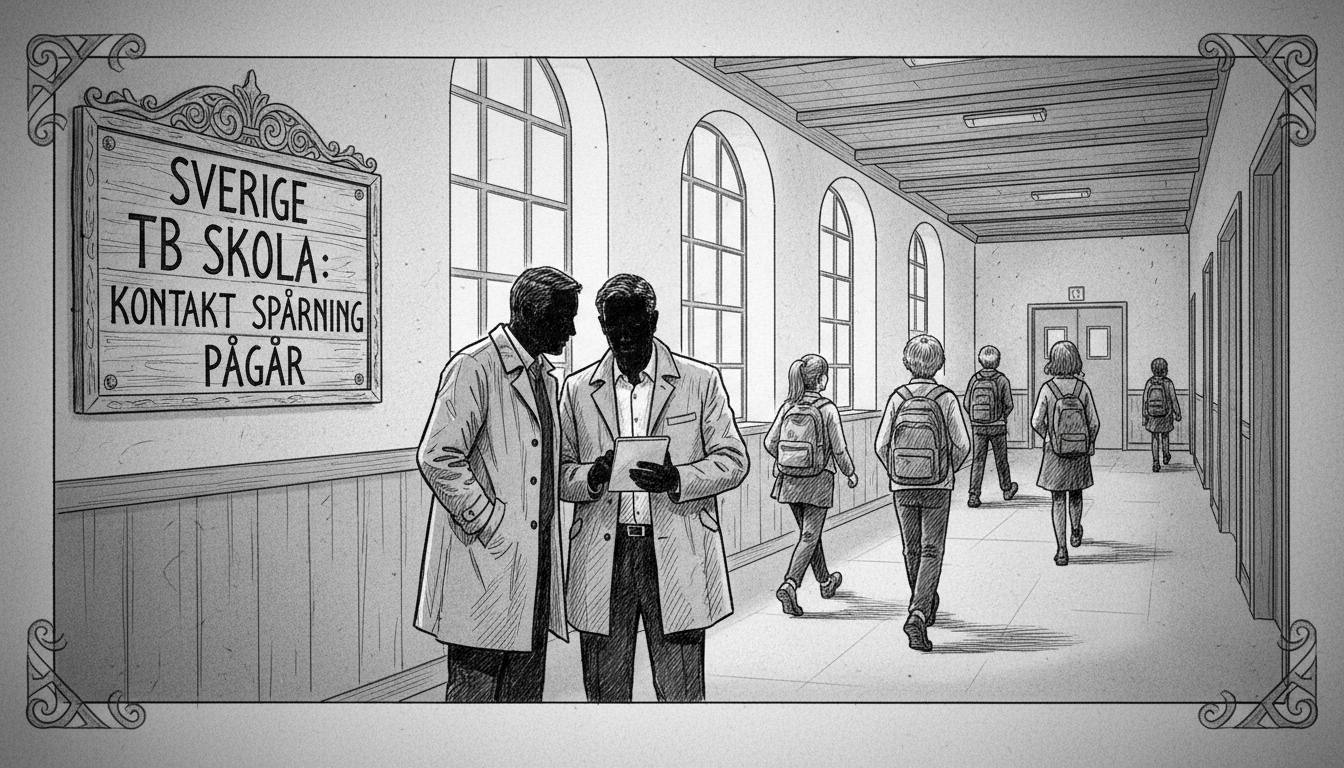
Sweden's public health officials are tracking contacts after a tuberculosis case was connected to a Stockholm high school. Parents in the city's Östermalm district opened emails this week with news no one wants to receive. A person linked to their children's school had fallen ill with tuberculosis, prompting a formal health alert.
The school's principal assured families that classes would continue. The risk of transmission within the school walls is considered minimal. "It requires prolonged and close contact to risk infection," the principal wrote in a letter home. Stockholm's infection control unit is now leading the contact tracing effort. They are identifying anyone who may have been exposed to the bacteria.
The school, part of a larger academy chain, has not disclosed whether the case involves a student, teacher, or family member. This discretion is standard to protect patient privacy. Yet, the mere mention of tuberculosis in a modern Swedish school sends a ripple of concern through a community accustomed to low disease rates.
Understanding Tuberculosis in a Swedish Context
Tuberculosis is an infectious disease that primarily attacks the lungs. It spreads through the air when an infected person coughs or speaks. For many, the word conjures images of a distant past or far-away countries. In Sweden, it is a rare but managed public health issue. The disease is curable with a full course of antibiotics, which typically takes several months to complete.
Public health experts stress that the school's decision to stay open is grounded in science. "The key point here is the nature of TB transmission," explains Dr. Lena Strömberg, a infectious disease specialist based in Stockholm. "It's not like influenza or the common cold. Casual contact in a hallway or classroom is not how this spreads. It requires shared air over a significant period, often in a confined space." This expert perspective is crucial for calming nerves. It shifts the focus from fear to the practical, measured response underway.
Sweden's Track Record with TB
Sweden maintains one of the lowest tuberculosis rates in Europe. According to the latest official figures from the Swedish Public Health Agency (Folkhälsomyndigheten), 344 cases were reported in 2022. This translates to roughly 3.2 cases per 100,000 inhabitants. The majority of these cases occur among individuals born outside of Sweden, reflecting global disease patterns rather than domestic spread.
The global picture provides important context. The World Health Organization's most recent comprehensive estimate, from 2021, reported that 10.6 million people fell ill with TB worldwide that year. The stark contrast with Sweden's numbers highlights the effectiveness of its public health systems. In Stockholm, clinics are well-versed in contact tracing protocols. Nurses and doctors systematically interview the diagnosed patient to map their movements and contacts over the infectious period.
Life in Stockholm Amid a Health Scare
In the affected school, the daily rhythm continues. Students still gather in the lunchroom, discussing university applications or the latest pop culture from Sweden's vibrant music scene. The subtle difference is the heightened awareness. Hand sanitizer stations, a permanent fixture since the COVID-19 pandemic, see more use. There's a quiet understanding that some classmates or staff might be called for a screening.
Swedish society places high trust in authorities like the Public Health Agency. This incident tests that trust in a minor way. "We got the letter and of course we worried," says Markus, a parent of a tenth-grade student. He asked not to use his full name to protect his child's school. "But the information was clear. They explained why the risk is low and what they're doing. It feels controlled." This sentiment is common in a culture that values transparency and detailed official communication.
The Machinery of Public Health
When a case like this emerges, a well-oiled machine kicks into gear. The Swedish Public Health Agency oversees the national strategy, while local units in Stockholm County perform the ground work. Contact tracing is meticulous. Individuals identified as close contacts will be offered a tuberculin skin test or a blood test. These tests determine if someone has been infected with the TB bacteria. Infection does not always mean illness; many carry latent TB that never develops into active disease.
"The goal is to find any potential infections early, before symptoms appear," Dr. Strömberg notes. "This breaks the chain of transmission. It's a textbook example of preventive healthcare." Those diagnosed with latent infection might be offered preventive therapy. For active disease, treatment is immediately started, rendering the person non-infectious within weeks.
A Look at the Bigger Picture
This single case in a Stockholm school is a tiny blip in Sweden's health statistics. Yet, it serves as a reminder of the interconnected world we live in. Tuberculosis has not been eradicated. It persists, and in a global city like Stockholm, paths cross from every corner of the earth. The city's schools, especially in central areas, are microcosms of this diversity.
Analysts point out that Sweden's robust welfare and healthcare systems are designed for such events. The response is not panic but procedure. The school alarm follows a protocol that balances public safety with the disruption of daily life. For students, the biggest impact might be a friend missing class for a doctor's appointment, not a widespread outbreak.
Moving Forward with Confidence
As the contact tracing continues, the story will likely fade from headlines. The affected individual will receive treatment. Close contacts will be screened. The school community will move on, perhaps with a renewed appreciation for public health vigilance. This event also underscores the importance of global health equity. Sweden's low incidence is privilege built on strong systems, a privilege not shared worldwide.
For now, parents in Östermalm and across Stockholm receive a lesson in resilience. It's a lesson taught not through textbooks, but through the calm, coordinated response of their society. The question lingering is not about this single case, but about how we maintain these systems of care and trust for the challenges ahead.