
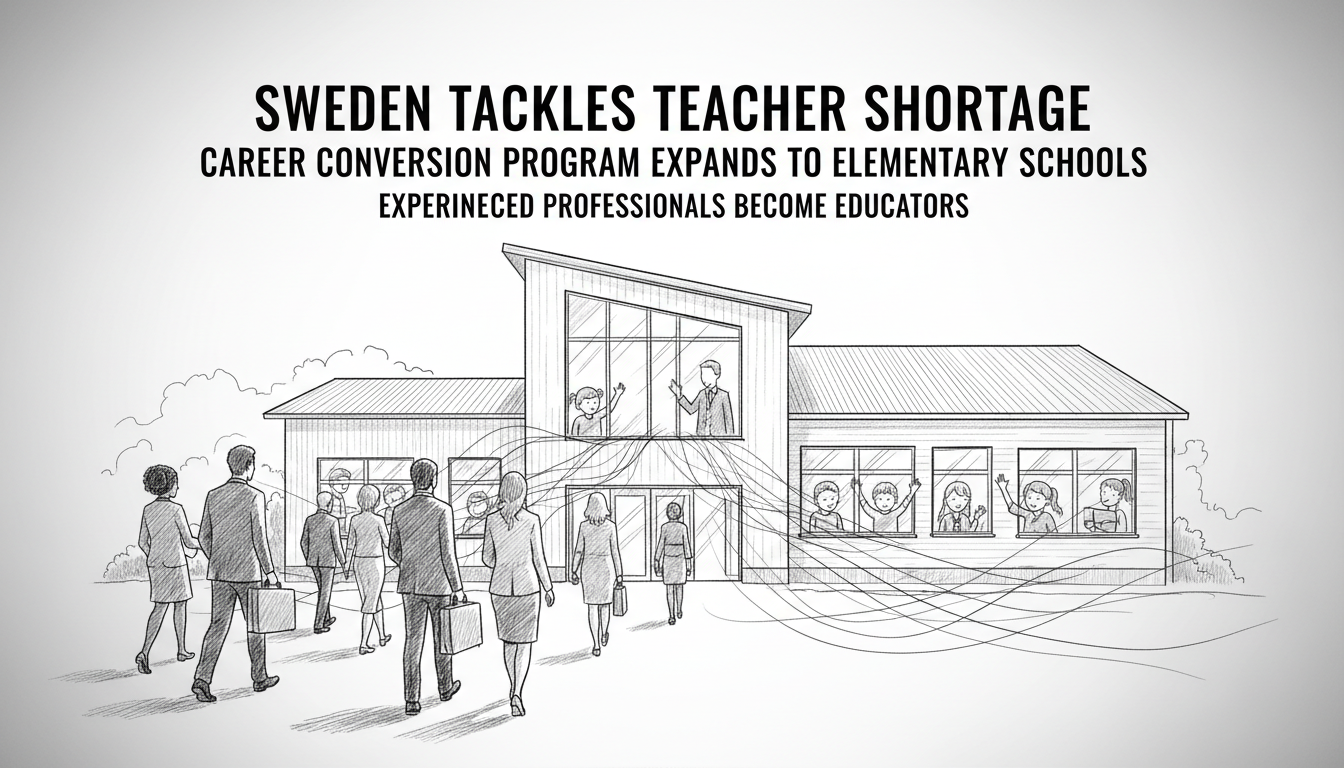
More than 16,000 Swedish students finished middle school with failing grades in mathematics this year. The nonprofit organization Teach for Sweden calls these numbers alarming. They have launched an initiative to address Sweden's growing teacher shortage.
The program partners with Luleå University of Technology to help academics transition into teaching careers. Originally focused on middle school teachers, the program now expands to elementary school positions due to increasing demand.
Moa Rönnhagen represents one success story from this initiative. The former food agronomism now teaches mathematics and biology at Sjöparksskolan in Gällivare, a municipality in northern Sweden. She explains her motivation for changing careers.
"I'm driven by the opportunity to be a stable adult presence for children," Rönnhagen said in an interview.
The conversion program recognizes the existing knowledge academics bring from their previous education. Participants complete a practical two-year program that includes direct classroom experience. They work in schools throughout their training before qualifying as subject teachers.
Sweden faces a critical shortage of qualified teachers, particularly in STEM subjects and northern regions. The problem has been developing for years as teacher salaries failed to keep pace with other professions requiring similar education levels. Many experienced teachers have left the profession while fewer new graduates choose teaching careers.
Northern Swedish communities like Gällivare face additional challenges. Remote locations and harsh winters make recruitment difficult. Programs that help professionals transition into teaching offer a practical solution for these areas.
The Swedish education system has undergone significant changes in recent decades. Municipalization of schools in the 1990s created more variation between different regions. International test scores have shown declining results in core subjects like mathematics.
Career conversion programs represent one approach to addressing systemic issues in Swedish education. They bring professionals with real-world experience into classrooms. These individuals often have deep subject knowledge that benefits students.
Teacher shortages affect educational quality across Sweden. Students in disadvantaged areas often face the greatest impact. Programs that target specific regions help address educational inequality.
The expansion from middle school to elementary school teaching positions shows the program's success. It also indicates the depth of Sweden's teacher shortage crisis. Elementary schools form the foundation of children's educational journey.
International readers might compare this approach to alternative certification programs in other countries. Sweden's model emphasizes practical classroom experience alongside academic training. The two-year timeframe allows for gradual transition into the teaching profession.
Sweden's investment in teacher recruitment reflects broader concerns about educational quality. A well-educated population remains crucial for the country's knowledge-based economy. Mathematics proficiency specifically supports careers in technology and engineering sectors.
Programs like this one represent a pragmatic response to complex educational challenges. They acknowledge that solving teacher shortages requires multiple approaches. Career conversion offers one pathway while broader systemic reforms continue.
The success of participants like Moa Rönnhagen demonstrates the program's potential. Her transition from food science to teaching shows how professional expertise can transfer to education. Students benefit from teachers with diverse background experiences.
Sweden will likely need more such initiatives as teacher retirements increase in coming years. The country faces competition for educated professionals across multiple sectors. Teaching must remain an attractive career option for Sweden's future.