
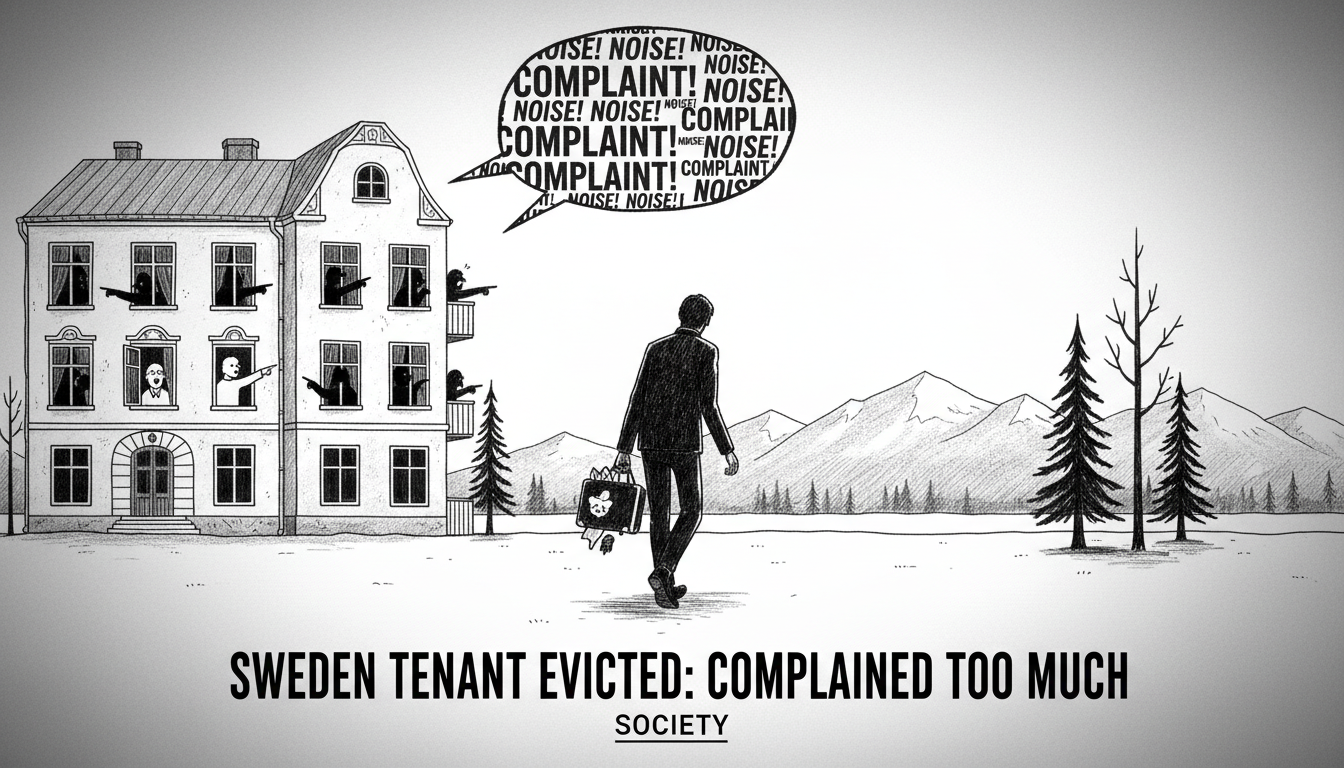
Sweden's strong tenant protection laws have met a rare and paradoxical test in a Gothenburg courtroom. A tenant in the Gamlestaden district has lost his apartment. His eviction stems not from failing to pay rent or damaging property, but from complaining too frequently and intensely about noisy neighbors. This case highlights the delicate balance in Swedish housing law between a tenant's right to peace and their responsibility to not become a source of disturbance themselves.
For years, the man documented disturbances. He filed formal complaints with the housing association about loud music, arguments, and general noise from surrounding apartments. He sought the quiet home environment Swedish rental law promises. Yet, the legal process concluded that his method of seeking peace had itself become disruptive. The court found his persistent complaints created an untenable situation for both the housing association and his neighbors, leading to the eviction order.
A Quiet Street in Gamlestaden
Gamlestaden, on Gothenburg's eastern side, is a area known for its mix of old industrial buildings and modern housing developments. It's a neighborhood in transition, attracting young professionals and families. The case centers on a typical Swedish rental apartment in this setting. The tenant believed he was exercising his rights. Swedish law is clear: tenants have a right to a habitable and reasonably peaceful home. But the law also requires tenants to not cause significant disturbance to others.
"This is a classic example of a legal collision," says Emma Lundgren, a professor of housing law at Stockholm University. "The framework is designed to protect tenants from arbitrary eviction, which is a cornerstone of our system. But it also contains clauses to protect the collective living environment. A tenant who, through their actions—even actions that stem from a legitimate grievance—makes the building dysfunctional for others can lose that protection."
The Burden of Proof and the Tipping Point
The key question becomes: when does a complainant become the problem? Legal experts point to the concepts of "significant disturbance" and "persistent behavior." A single complaint, or even several over a long period, would rarely trigger such a severe outcome. The court must be convinced the tenant's behavior has crossed a line from seeking resolution to creating a hostile or unmanageable environment.
"The burden of proof is high," explains Lundgren. "The landlord, usually a municipal or private housing company, must demonstrate that the tenant's actions have severely disrupted the management of the property or the well-being of other residents. It's not about being annoying. It's about actions that systematically undermine the possibility of a normal living situation for others." In this case, the volume, frequency, and perhaps manner of the complaints were deemed to have reached that threshold.
The Swedish Rental Model Under Scrutiny
This unusual case touches a nerve in Sweden's housing culture. The Swedish rental market, especially in cities like Gothenburg, Stockholm, and Malmö, is defined by long queues, secure tenancies, and strong regulations. This security is a cherished social contract. Evictions for behavioral reasons are statistically rare, making this judgment noteworthy.
It raises practical questions for tenants. How should one legitimately address noisy neighbors? The standard advice is to first speak directly with the neighbor, if safe to do so. If that fails, contact the building's caretaker or the housing association formally. Documenting disturbances with times and dates is recommended. However, this case introduces a cautionary note: the process must be pursued within reasonable bounds. Bombarding the landlord with daily emails or creating conflict with multiple neighbors can backfire legally.
A Broader Cultural Context
This story resonates in a society that values both individual rights and collective harmony, a concept often referred to as "lagom"—not too much, not too little. The expectation in Swedish apartment living is one of mutual consideration. Loud parties late on weeknights are frowned upon. There's an emphasis on resolving conflicts calmly and through proper channels.
"We have a word, 'grannsämja,' which means neighborly harmony," says cultural commentator Lars Trulsson. "It's an unwritten social rule as important as any law. This case shows what can happen when that social contract breaks down completely. The system is designed to preserve the harmony of the whole building, even if that means removing someone who sees themselves as a victim of disharmony."
For housing associations, the case is a reminder of their difficult middle-ground position. They must address legitimate complaints from tenants about their living conditions while also managing the building as a whole. They can find themselves mediating between warring neighbors, a time-consuming and often thankless task. An eviction is typically a last resort, pursued only after warnings and attempts at mediation have failed.
The Human Cost of a Legal Paradox
Beyond the legal analysis lies a human story of a home lost. Regardless of the court's reasoning, the outcome for the tenant is severe. Finding a new first-hand rental contract in Gothenburg's tight market is notoriously difficult. He may be forced into the more expensive and less secure secondary sublet market. The eviction record itself could make future landlords hesitant.
This underscores the high stakes of such conflicts. What begins as a quest for a good night's sleep can escalate into a life-altering legal battle. It serves as a stark lesson in the complexities of communal living, even in a system famed for its tenant protections. The right to a peaceful home does not grant unlimited license in how one pursues that peace.
Looking Ahead: A Precedent for Future Disputes?
Will this case change how tenants complain? Probably not in a sweeping way, but it may enter the lexicon of housing advice. Tenant unions, which offer legal support to members, will likely study the judgment closely. They may adjust their guidance to emphasize strategic, documented, and persistent—but not excessive—approaches to conflict resolution.
For the average Swede living in an apartment, life will continue with the usual minor neighborly negotiations. The sound of a vacuum cleaner on a Sunday morning, the occasional loud TV, the footsteps from above—these are the normal sounds of shared living. This case from Gamlestaden lives in the extreme end of that spectrum, where normal conflict spiraled into a legal paradox. It reminds us that in the quest for a silent home, one's own voice can sometimes become the loudest sound of all.