
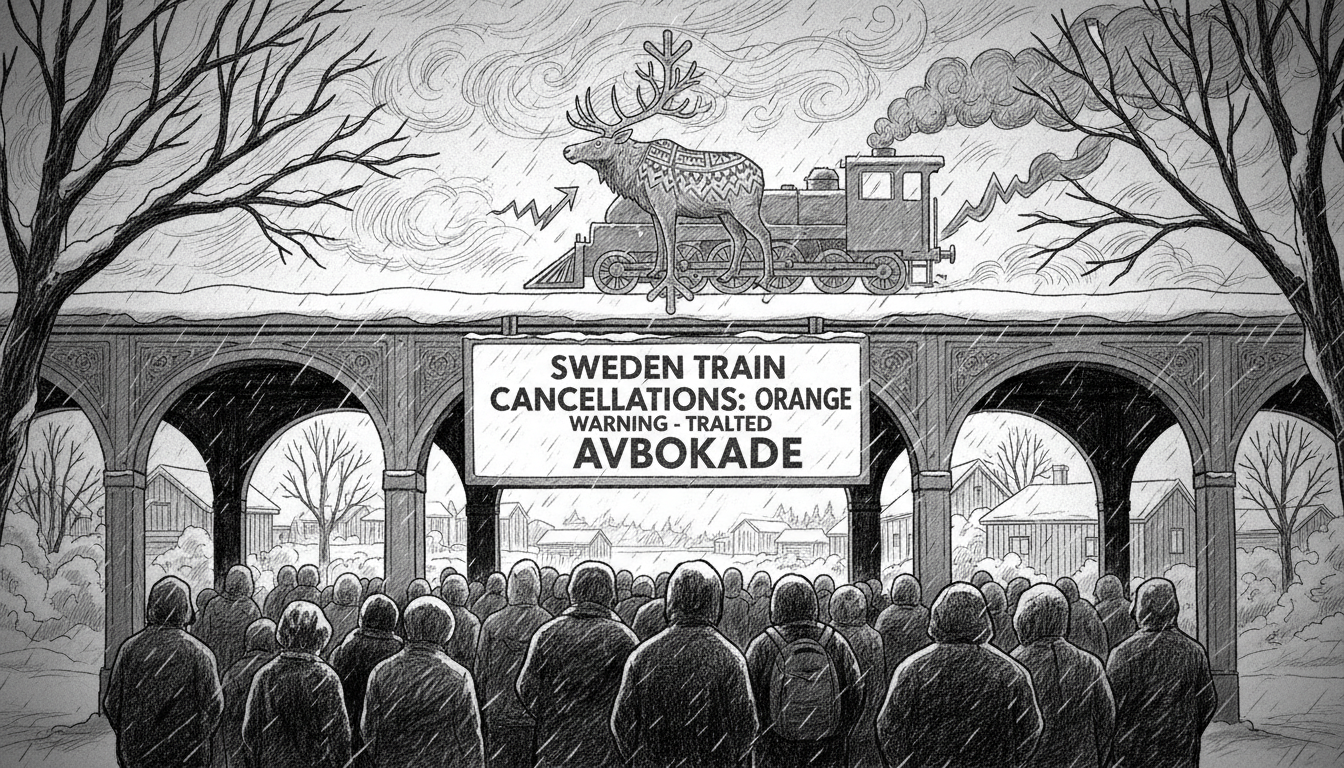
Sweden train delays are stranding thousands of travelers this Saturday after operator SJ cancelled multiple fully-booked services. An orange weather warning from the Swedish Meteorological and Hydrological Institute (SMHI) has prompted the suspension of key routes, including trains between Duved and Stockholm, and between Bräcke and Storlien. This decision directly impacts passengers heading to popular destinations like Åre, the bustling ski resort in Jämtland, during a peak winter travel weekend. For many, it’s a frustrating start to a planned holiday, highlighting the delicate balance between safety and mobility in Sweden's harsh winters.
The Orange Alert: Decoding SMHI's Warning
SMHI's orange warning is the second-highest alert level, indicating a serious risk of hazardous weather. In this case, it covers wind combined with snow across fjäll regions in Jämtland, Dalarna, Norrbotten, and Västerbotten counties. "We have made the decision to cancel trains between Duved and Stockholm," said Leila Fogelholm, a press officer at SJ, in a statement. The Swedish Transport Administration, Trafikverket, ordered the stoppage on the Bräcke-Storlien stretch, a critical line for accessing northern resorts. Orange warnings are not issued lightly; they signal potential for damage, injury, and major disruptions, forcing authorities to prioritize public safety over convenience. This proactive approach is standard in Sweden, where weather can change rapidly in northern terrains.
A Recurring Winter Challenge: Sweden's Railway Vulnerability
Sweden's extensive railway network faces recurring winter disruptions, especially in the north. The country relies heavily on trains for long-distance travel, with SJ as the primary operator. Infrastructure in regions like Norrbotten is vulnerable to severe snow and wind, which can cause delays, cancellations, and even accidents. This isn't the first time travel to Åre has been affected; similar incidents occur almost every winter, testing the resilience of the system. Trafikverket continuously works on maintenance and upgrades, but the geography and climate pose inherent challenges. For international visitors, accustomed to more temperate climates, these disruptions can be a stark introduction to Nordic winter realities. Yet, for Swedes, it’s a familiar part of the seasonal rhythm, often met with practical preparedness.
Voices from the Platform: Travelers' Stories of Disruption
Imagine arriving at Stockholm Central Station, only to find your train to Åre cancelled. That was the reality for families like the Petterssons from Södermalm, who had booked a weekend skiing trip. "We've been looking forward to this for months," said Anna Pettersson, a teacher. "Now we're scrambling for alternatives—maybe a bus, but those are also affected." Ferry services are impacted too, adding to the travel chaos. In Åre itself, hotel owners express concern over guest arrivals, while local businesses feel the pinch. This human impact extends beyond mere inconvenience; it affects livelihoods and cherished traditions. Winter sports are deeply embedded in Swedish culture, with trips to the mountains being a rite of passage for many. Cancellations disrupt not just plans, but also cultural rituals that define the Swedish lifestyle in colder months.
Expert Insights: Safety First in a Changing Climate
Transportation and meteorology experts emphasize that cancelling trains is a necessary precaution. "Proactive measures save lives," says Dr. Erik Lundström, a transportation safety researcher at Uppsala University. "When SMHI issues an orange warning, the risk of derailments or stranded passengers is real." Experts also note that climate change may lead to more frequent and intense weather events in Sweden, including heavier snowfall and stronger winds. This requires ongoing investment in infrastructure resilience, such as improved snow-clearing technology and better forecasting capabilities. SMHI's warnings are based on advanced models, but unpredictability remains. The collaboration between SMHI, Trafikverket, and operators like SJ is crucial for minimizing risks, yet it inevitably leads to travel delays that ripple through society.
Cultural Resilience: How Swedes Handle Winter Disruptions
Swedes have a long-standing relationship with winter, embodied in concepts like 'mys' (coziness) and practical optimism. When trains are cancelled, many turn to alternative plans—perhaps a spontaneous 'fika' in a local café or a winter walk in nearby parks like Stockholm's Djurgården. There's a collective understanding that nature dictates terms in the north. This resilience is part of Swedish society trends, where adaptation is key. Communities in affected regions often rally, offering shelter or advice to stranded travelers. The event also sparks conversations about sustainable travel and infrastructure priorities. As Sweden continues to navigate immigration and integration, such disruptions remind newcomers of the climatic realities that shape daily life here, from Stockholm events to remote northern villages.
Looking Ahead: Balancing Mobility and Safety
What does this mean for future Nordic winter travel? Authorities face pressure to improve reliability without compromising safety. Investments in rail infrastructure, such as weather-proofing tracks and enhancing real-time communication, are ongoing. However, experts argue that a broader cultural shift might be needed, including more flexible travel insurance and better public information systems. For now, travelers are advised to check SMHI warnings and SJ updates regularly, especially during winter peaks. As climate patterns evolve, Sweden's approach to weather disruptions will serve as a model for other northern nations. The weekend's cancellations are a reminder that in the land of the midnight sun, winter's grip can still bring life to a halt, challenging the very fabric of modern mobility.
This incident underscores a timeless truth: in Sweden, respecting winter is not just a choice, but a necessity. How will we adapt as the storms grow fiercer?