
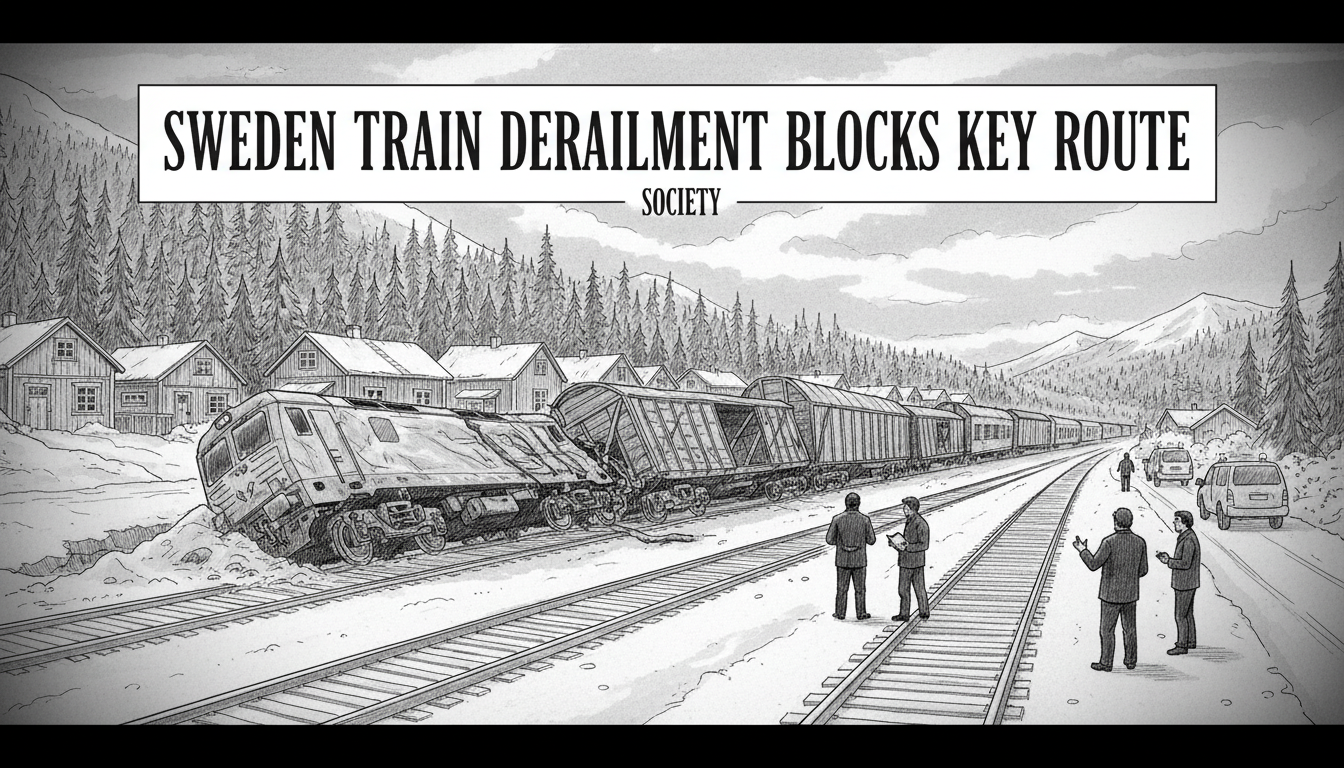
Sweden's rail freight network, which moved 22 billion tonne-kilometres in 2022, shuddered to a halt when a timber train derailed in Krokom early Monday. The freight train, bound for Hissmofors to load timber, jumped the tracks at a switch point. It blocked Trafikverket's rail lines and Road 611 between Nyheden and Krokom. Police confirmed no injuries, but the disruption rippled through northern Sweden's transport corridors. By afternoon, vehicles were cleared to pass, and wagons were moved. Yet the incident exposed vulnerabilities in a system crucial to Swedish industry.
The Morning Chaos in Krokom
Residents near Krokom, a municipality in Jämtland County, woke to unusual quiet. The usual rumble of trains was replaced by sirens. A freight train carrying empty wagons for timber loading had derailed at a rail switch. It happened in the crisp morning hours, with mist hanging over the forests. Emergency services responded swiftly, cordoning off the area. Road 611, a vital artery for local commuters and trucks, was impassable for hours. For a region where daily life hinges on reliable transport, the blockage was more than an inconvenience. It was a stark reminder of how fragile connections can be in rural Sweden.
Local shop owner Lena Bergström shared her frustration. 'I rely on that road for deliveries,' she said from her store in Nyheden. 'When it's blocked, everything stops. It's not just about trains; it's about our livelihoods.' Her sentiment echoes across inland communities where rail and road networks are lifelines. The derailment occurred on a line managed by Trafikverket, Sweden's Transport Administration. With approximately 13,000 km of railway lines nationwide, maintenance is a constant challenge. This incident highlights the pressure on aging infrastructure in less populated areas.
Swedish Rail Freight: An Economic Backbone
Rail freight is the unsung hero of Swedish industry. In 2022, it accounted for 22 billion tonne-kilometres of transport. That's a staggering volume moving through forests, mountains, and cities. Forestry alone depends on efficient rail links to move timber from inland areas to processing plants and ports. Hissmofors, the train's destination, is a key hub for timber processing. Derailments like this disrupt supply chains, causing delays that cost businesses money. Sweden's commitment to green transport makes rail even more critical. Shifting goods from road to rail reduces carbon emissions, aligning with national climate goals.
However, this derailment underscores a tension. As Sweden pushes for more sustainable transport, infrastructure must keep pace. Heavy freight trains strain tracks, especially in remote regions. Regular inspection and maintenance are non-negotiable. Erik Malm, a rail transport expert based in Stockholm, emphasized this point. 'Freight lines in northern Sweden face harsh weather and heavy loads,' he said in a phone interview. 'Proactive maintenance is essential to prevent such incidents. A single derailment can have cascading effects on local economies.'
Malm noted that derailments on freight lines are relatively rare but impactful. When they occur, they reveal systemic issues. For instance, switch points are common failure points. They require precise alignment and wear monitoring. In Krokom, the cause is under investigation, but initial reports point to the switch. This isn't just a technical glitch; it's a wake-up call for infrastructure investment.
The Human Impact Beyond the Tracks
While no one was hurt, the human impact of this derailment is tangible. Imagine a truck driver delayed for hours, missing a delivery window. Or a family planning a trip to Östersund for shopping, rerouted through back roads. In Swedish society, punctuality and efficiency are cultural touchstones. Disruptions like this fray the social fabric, especially in tight-knit communities. Krokom, with its population of around 15,000, thrives on connectivity. The area is known for outdoor activities like skiing and hiking, attracting tourists who rely on smooth transport.
This event also ties into broader Swedish society trends. As urban areas like Stockholm buzz with innovation, rural regions grapple with infrastructure gaps. The derailment underscores a growing divide. Investments often flow to high-speed lines in the south, leaving northern networks vulnerable. For a country proud of its egalitarian values, this imbalance is concerning. It affects not just commerce but lifestyle. Swedish lifestyle ideals emphasize harmony with nature, but that requires reliable access to remote areas.
From a cultural perspective, such incidents spark debates about self-reliance. In Jämtland, there's a strong tradition of community cooperation. Neighbors help each other during disruptions, but systemic solutions are needed. The derailment may prompt local authorities to advocate for better funding. It's a story repeated across the Nordics, where geography tests resilience.
Analyzing the Causes and Responses
Why did this derailment happen? Early investigations focus on the rail switch. Switches are mechanical devices that guide trains from one track to another. They are prone to wear, especially in cold climates. Sweden's winters, with ice and snow, accelerate degradation. Trafikverket has maintenance schedules, but resources are stretched. In 2022, the agency reported over 1,000 incidents on rail networks, including minor derailments. Most are quickly resolved, but each one signals potential risks.
Expert analysis suggests that increased freight volumes strain existing infrastructure. Sweden's timber industry is booming, with exports driving demand. Trains are longer and heavier, pushing tracks to their limits. Without upgrades, derailments could become more frequent. This incident in Krokom is a microcosm of a national challenge. Balancing economic growth with infrastructure upkeep is a delicate act.
The response from authorities was swift. Police secured the site, and Trafikverket crews worked to clear the tracks. By Monday afternoon, road traffic resumed. Rail services were restored after inspections. Such efficiency is typical of Swedish crisis management, yet it can't erase the underlying issues. Communities like Krokom deserve durable solutions. This might mean investing in digital monitoring systems for tracks or more frequent manual inspections.
Economic Ripple Effects and Future Outlook
The economic impact of this derailment extends beyond Krokom. Timber delays affect processing plants in Hissmofors, which supply materials for construction and paper products. Sweden's export-oriented economy relies on just-in-time logistics. Even a few hours of disruption can ripple through supply chains. For local businesses, lost time translates to lost revenue. In a region where forestry supports jobs, such events are more than headlines; they're threats to stability.
Looking ahead, this derailment could influence policy. Swedish rail freight is set to grow, with goals to shift more cargo from roads. The government's infrastructure plans must address maintenance backlogs. Public discussions about rail safety may intensify, especially before budget allocations. For residents of Krokom, the hope is that this incident sparks action. Better tracks mean safer communities and stronger economies.
As Sweden navigates its transport future, lessons from Krokom are clear. Infrastructure isn't just about steel and concrete; it's about people and their dreams. A derailed train is a momentary pause, but it echoes long after the tracks are cleared. Will this event drive meaningful change, or will it fade into memory? Only time will tell, but for now, Krokom serves as a reminder of what's at stake.