
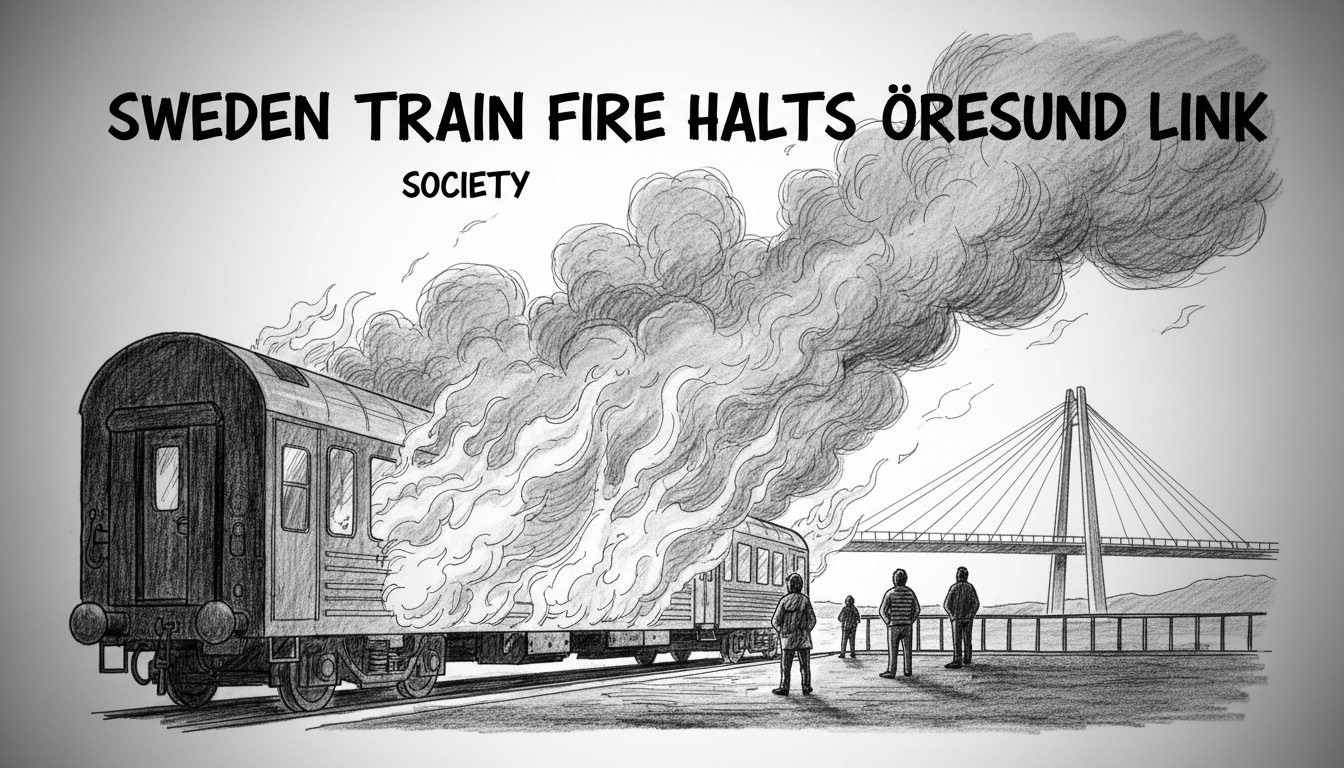
Malmo Copenhagen train services, used by thousands of daily commuters, have stopped after a vehicle fire on the Öresund Bridge. The incident occurred at 1:58 PM, bringing all rail traffic between Sweden and Denmark to a standstill. Kastrup Airport Station was evacuated, stranding travelers and disrupting one of Scandinavia's busiest transport corridors.
Chaos on the Cross-Border Commute
'We have a stop in railway traffic, over the bridge,' said Katarina Wolffram, a spokesperson for the Swedish Transport Administration. The cause is a vehicle fault, with initial reports indicating a fire. Stefan Johansson, press officer for operator Transdev, clarified the situation. 'It should be a train that is burning. But it is not one of our Öresund trains,' he stated. This detail points to the complexity of the incident, which involves multiple agencies across two countries.
All Öresund trains are now turning back at Malmö Central Station. For commuters, this means sudden, major plans. The ripple effect is immediate. Business meetings in Copenhagen are missed. Families awaiting arrivals at Kastrup are left in limbo. The cultural and economic pulse of the Öresund region skips a beat.
The Scramble for Alternatives
Transport authorities acted quickly to mitigate the crisis. 'We are replacing with replacement buses between Hyllie and Copenhagen Airport,' said Theresia Swanholm, press officer for Skånetrafiken. The advice for travelers is specific. Reach Hyllie station by bus or local Pågatåg services. From there, board a replacement bus to the airport.
For those moving between Kastrup and central Copenhagen, the metro remains an option. But the guidance is piecemeal. It adds layers to a normally smooth trip. The Öresund Bridge, an 8-kilometer engineering marvel, now represents a frustrating barrier. Trains that typically run every 20 minutes during peak hours are silent.
A Vital Link Frozen
The Öresund Line is more than just tracks. It symbolizes the integration of Swedish and Danish societies. Since the bridge opened in July 2000, it has enabled a cross-border lifestyle. Thousands live in Malmö and work in Copenhagen, or vice versa. This disruption exposes the fragility of our interconnected region. Kastrup Airport Station is a crucial hub. It connects Scandinavia's largest airport to the network. A halt here sends shockwaves through travel and logistics.
From a Swedish perspective, this stoppage tests the famed 'lagom' balance. It pushes the practical, orderly Swedish approach to transport to its limits. Commuters from neighborhoods like Limhamn or Hyllie in Malmö rely on this predictability. Today, that trust is broken.
Voices from the Ground
While official statements provide the framework, the human stories define the day. Imagine a student trying to reach Copenhagen University. Or a nurse finishing a shift at Rigshospitalet. Their routines are shattered. 'I have an important client meeting in forty minutes,' said Erik, a businessman reached by phone at Hyllie station. He declined to give his full name. 'The bus replacement is chaos. This costs money and trust.'
Another traveler, Anna, was trying to catch a flight from Kastrup. 'I left extra time, but now I'm just hoping,' she said. Her experience highlights the airport's role as a regional gateway. Events like this can color international perceptions of Swedish and Danish efficiency.
Expert Insight: A Wake-Up Call?
I spoke to Lars Bengtsson, a Stockholm-based transport analyst familiar with the line. He offered context. 'Single points of failure, like major bridges or key stations, always pose a risk,' Bengtsson explained. 'This incident shows how dependent we are on this infrastructure. The economic impact per hour of stoppage is significant.'
He emphasized the need for strong contingency plans. 'The replacement buses are a standard response. But their capacity is never equal to the train's. The real test is communication and managing passenger flow.' Bengtsson also touched on the cultural aspect. 'The Öresund region has built an identity around mobility. A disruption like this is a reminder that integration requires constant maintenance.'
The Swedish Way of Handling Crisis
There's a cultural script for these moments. It involves calmness, practical solutions, and a collective sigh. You see it in the orderly queues for buses. You hear it in the resigned but polite tones of fellow travelers. It's a stark contrast to more chaotic scenes elsewhere. Swedish society values reliability. This event is a dent in that self-image.
Local traditions like 'fika' might be missed by commuters stuck on a bus. But the response reflects a deeper societal trend. There's an expectation that systems will work. When they don't, the structure of alternative arrangements is mobilized. It's not perfect, but it functions.
What Happens Next?
Currently, there is no prognosis for when traffic will resume. This uncertainty is perhaps the hardest part. For the many who cross the bridge daily, life is on pause. The investigation into the vehicle fault will determine the timeline. Clean-up and safety checks must be completed.
This stoppage follows other minor disruptions on the line. Each one chips away at confidence. It raises questions about investment and renewal for this critical piece of infrastructure. As the Nordic days grow shorter, the urgency for a fix grows.
A Final Thought from the Oresund
As a society reporter, I see stories like this as cultural stress tests. They reveal how we live, work, and connect. The Malmo Copenhagen train is not just a service. It's a lifeline for a binational community. Tonight, many will be home late. Others will cancel plans. The bridge will stand dark and quiet over the water. It makes you wonder: in our pursuit of seamless connection, have we built a single point of failure that leaves too many vulnerable? The answer, much like the trains, is currently stalled.