
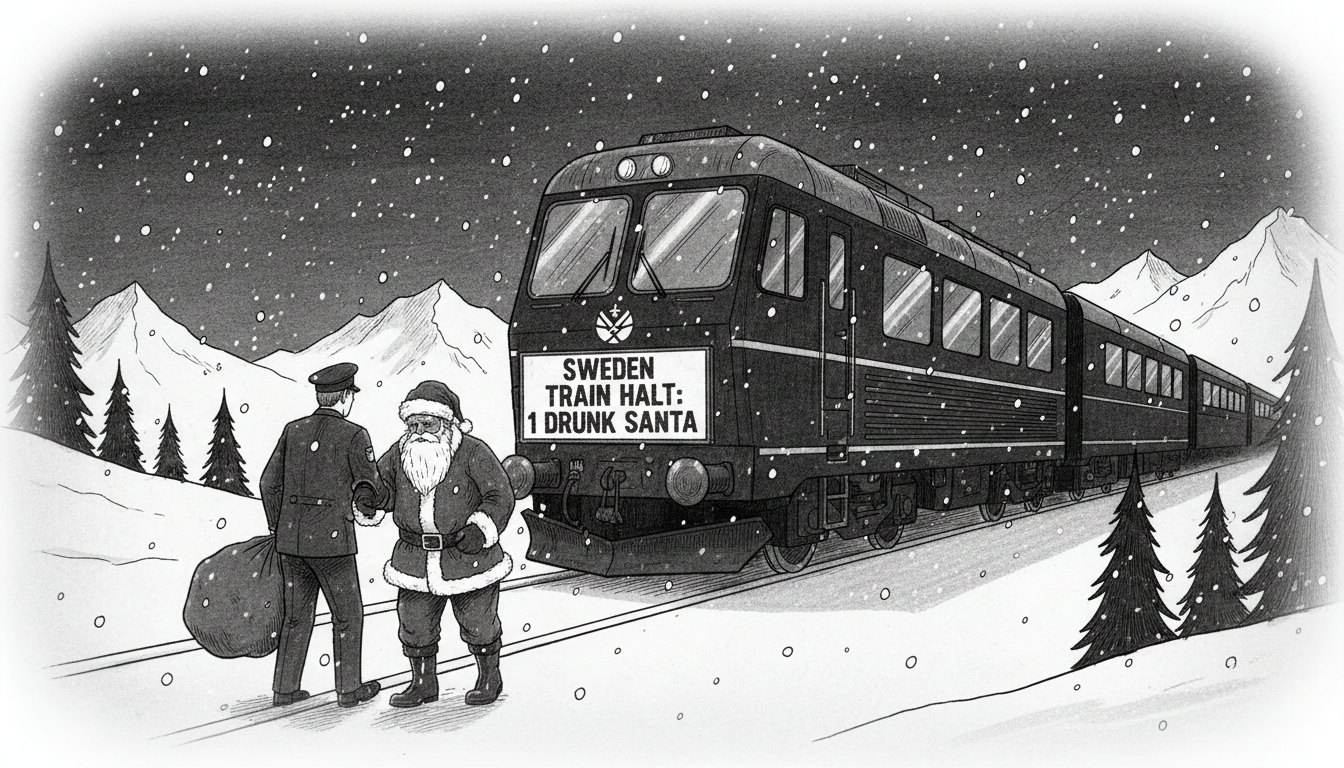
One drunk Santa figure caused a Sweden train delay this week, halting a service between Stockholm and Malmö. The incident involved a person dressed as a 'tomte' who activated the emergency brake on a moving train. He then exited the vehicle, leaving railway officials puzzled. This festive fiasco highlights unexpected challenges in Sweden's transport system.
The Festive Intruder
A service train operated by SJ, Sweden's state-owned railway, was traveling without passengers when the disruption occurred. Leila Fogelholm, an SJ press communicator, confirmed the details. 'It was a person on board who pulled an emergency brake,' she said. 'He was dressed as a tomte and apparently drunk.' The tomte then left the train, disappearing into the night. Fogelholm added a touch of humor: 'I think maybe it's Santa who wanted a break from the reindeer and preferred to travel with SJ instead.'
The train was a service vehicle, meaning no commuters were affected. However, delays to such trains can ripple through the schedule, impacting later passenger services. How the tomte accessed the train remains unclear. 'I can't answer that now,' Fogelholm said. 'Perhaps it's a Christmas mystery.' This event occurred on a route connecting Sweden's two largest cities, a vital corridor for business and travel.
Tomte: From Folklore to Fiasco
In Swedish culture, the tomte is a beloved mythological creature. Traditionally, tomtes are guardians of farmsteads, depicted as small, bearded men in red caps. They share similarities with Santa Claus but are deeply rooted in Nordic folklore. During December, tomte figures appear everywhere from Stockholm's Christmas markets in Gamla Stan to family homes across the country. They symbolize goodwill and protection.
The irony of a tomte causing disruption isn't lost on Swedes. 'It's like a symbol of chaos instead of comfort,' says Lars Bengtsson, a cultural historian I spoke to in Södermalm. 'Tomtes are supposed to bring gifts, not train delays.' Public intoxication, while not uncommon in Sweden, carries social stigma. Offenders can face fines, especially if they endanger others. This incident blends tradition with modern mishap.
Railway Security in Question
How did an unauthorized person board a service train? SJ's protocols are under scrutiny. Service trains are crucial for maintenance and logistics, often running during off-hours. They typically have restricted access. 'This breach is concerning,' says security analyst Eva Strand. 'It suggests gaps in surveillance or personnel checks.' Strand notes that Swedish railways generally have strong safety records, but isolated lapses occur.
In recent years, SJ has invested in digital tracking and staff training. Yet, human factors remain. The tomte incident echoes past oddities, like wildlife on tracks or weather delays. But a costumed intruder is rare. Stockholm Central Station, a hub for such trains, sees thousands of daily movements. Ensuring every vehicle is secure is a complex task.
Expert Insights: Culture and Safety
I reached out to experts for deeper perspective. Karin Nilsson, a folklore expert at Uppsala University, explains the tomte's role. 'The tomte is both a helper and a trickster in stories,' she says. 'This event plays into that dual nature—benevolent yet capable of mischief.' Nilsson links it to Swedish holiday stress, where celebrations sometimes boil over.
On the practical side, transport consultant Magnus Lindgren points to systemic issues. 'One incident might seem minor, but it reflects broader vulnerabilities,' he says. 'Sweden's railways handle over 200,000 passengers daily. Service trains are the backbone. Any security flaw can have cascading effects.' Lindgren calls for reviewed access controls, especially during busy seasons.
Public reaction has been mixed. On social media, many Swedes joked about the tomte's 'early Christmas escape.' Others expressed concern. 'It's funny until you think about safety,' commented a Stockholm resident on a local forum. The incident sparked discussions about alcohol consumption during festivities. Sweden's relationship with alcohol is regulated, with state-run Systembolaget stores controlling sales.
What This Means for Sweden's Holidays
As December unfolds, this story serves as a quirky reminder of cultural tensions. The tomte figure is everywhere—from advertisements to public events in Kungsträdgården. Yet, modern life intrudes. Railway delays cost the Swedish economy significant sums annually, though exact figures vary. This particular delay was minor in scale but rich in symbolism.
SJ has launched an internal review. They aim to prevent repeat occurrences. 'We take all incidents seriously,' a spokesperson said. 'Safety is our priority.' Passengers might see increased checks on non-public trains. For now, the tomte's whereabouts remain unknown. Perhaps he's blending into the festive crowds at Skansen's Christmas market or enjoying glögg in a cozy pub.
This episode blends Swedish tradition with contemporary chaos. It highlights how folklore icons can step out of storybooks into real-life headlines. As the holiday season peaks, Swedes will continue celebrating with tomtes aplenty. But railway staff might double-check who's boarding those late-night service trains. After all, not all holiday visitors come bearing gifts—some just pull emergency brakes and vanish into the dark.