
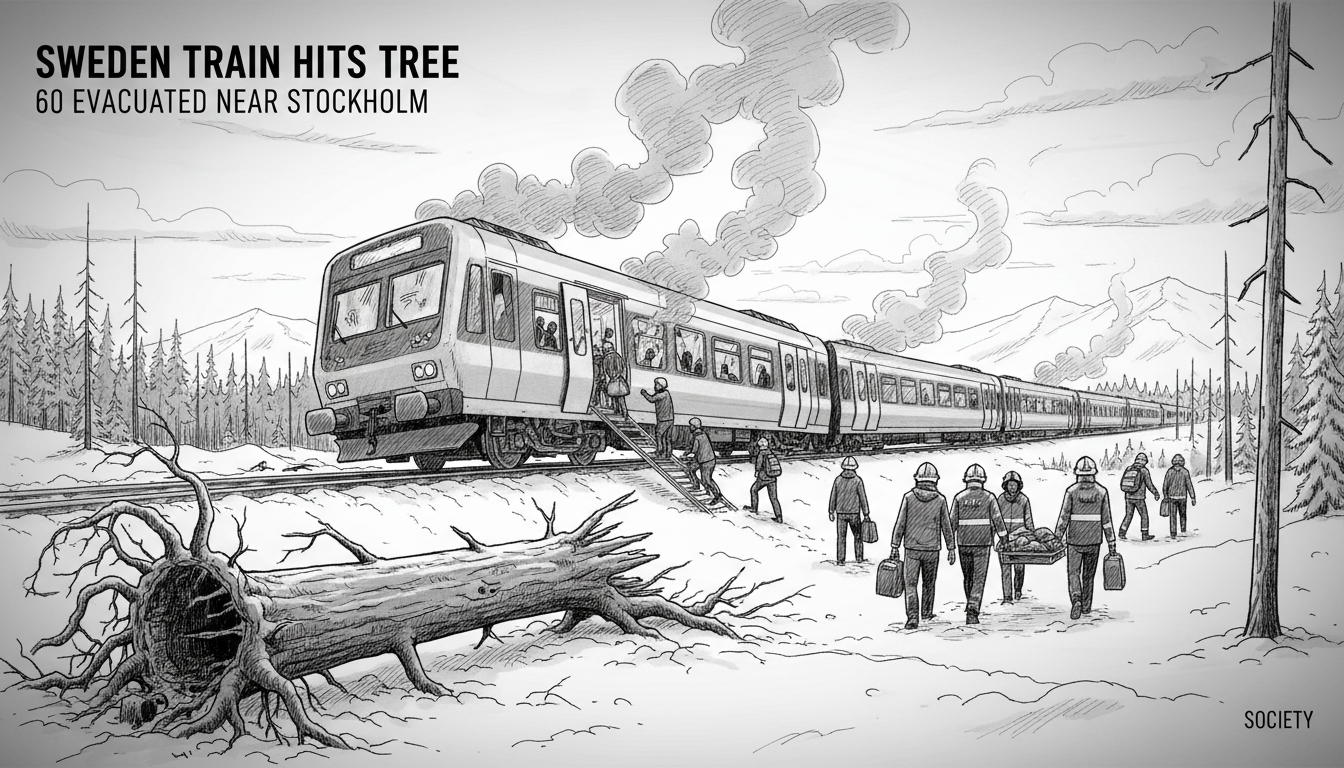
Sweden's Stockholm commuter rail service faced major disruption after a train collided with a fallen tree between Segersäng and Ösmo stations. Approximately 60 passengers were evacuated from the stranded train, which came to a halt just 300 meters from Ösmo station platform. The incident forced the suspension of all Pendeltåg traffic on the critical Västerhaninge to Nynäshamn line for the entire evening, leaving commuters to find alternative routes home without replacement bus services.
"The tree was lying across the tracks and about 60 people have been evacuated from the train," said Stina Petrini, communications chief at SJ Stockholmståg. The accident occurred during the evening commute, affecting seven scheduled departures between 21:30 and 00:18. For residents in the southern Stockholm archipelago communities, the suspension meant a sudden and complete severance of their primary rail link to the city.
A Night of Disrupted Journeys
The affected route serves Nynäshamn, a key port town and commuter hub south of Stockholm. Passengers stranded at stations like Västerhaninge and Ösmo faced a difficult choice. They could wait for uncertain updates, attempt to arrange private pick-ups, or navigate a complex web of local bus routes. The lack of replacement buses, a decision often made based on available resources and the time of day, compounded the frustration. This left many, particularly those without cars, effectively stranded.
"It's these moments that test the system," says Lars Bengtsson, a public transport analyst based in Södermalm. "A single tree can paralyze a line for hours. The infrastructure is exposed, especially in the wooded corridors leading out of the city. The response isn't just about clearing the track; it's about communicating clearly and providing viable alternatives, which seems to have been lacking here." The incident highlights the delicate balance Swedish transport authorities manage between vast, nature-adjacent networks and reliable service.
The Vulnerability of the Commuter Network
The Stockholm Pendeltåg network is the backbone of regional transit, with over 300,000 journeys on a normal weekday. Lines stretch deep into the surrounding forests and coastal areas. This integration with nature is a cherished part of Swedish life but introduces a specific set of risks. Autumn storms with high winds are a perennial concern for Trafikverket, the Swedish Transport Administration, which is responsible for track maintenance and vegetation control.
Accidents involving trees on the rails are not uncommon in Sweden, especially during the volatile weather months of autumn and spring. Each event triggers a standard but disruptive protocol: immediate stoppage of all traffic on the affected section, a safety inspection of both the track and the train, and an assessment of damage. The priority is always passenger safety, but the ripple effects on commuter schedules can be significant.
Life in the Archipelago Without the Train
For the communities south of Västerhaninge, the train is more than a convenience; it's a lifeline. The Nynäshamn line connects quieter, family-oriented suburbs and picturesque archipelago towns to the job market and cultural pulse of central Stockholm. A disruption like this doesn't just delay a journey home; it can mean missed family dinners, canceled evening plans, and added stress. It underscores a reality of life in many Swedish suburbs: a deep dependence on a single, efficient rail line.
"You plan your life around the Pendeltåg schedule," says Anette Lindström, a teacher who commutes from Ösmo. "When it stops, everything stops. There's no real plan B. Tonight, I saw people calling relatives for rides, looking at taxi apps with shocked faces. We accept that nature is here, but you hope the system can handle it better." Her sentiment echoes a common discussion in Swedish society about the resilience of critical infrastructure.
Analysis: Balancing Nature and Infrastructure
This incident, while minor in terms of injuries, serves as a microcosm of a larger Swedish challenge. How does a nation famed for its forests and environmental consciousness protect its modern infrastructure from the very nature it celebrates? Trafikverket conducts regular vegetation management along railways, but with thousands of kilometers of track, it's a relentless task. Climate change, bringing more frequent and intense storms, may increase the pressure.
Experts point to a multi-layered approach. "Prevention is key, through targeted tree felling and monitoring of vulnerable zones," explains Bengtsson. "But response is equally important. Investing in quicker clearance teams and more flexible contingency plans, like on-call bus services, would mitigate impact. The public's tolerance for disruption is high, but not infinite." The conversation often turns to cost versus benefit, a constant calculus for transport authorities.
Looking Ahead: The Journey Home
As the night progressed, the focus for SJ Stockholmståg shifted from evacuation to restoration. Clearing the tree, inspecting the locomotive for damage, and ensuring the track's integrity are all necessary steps before the first morning train can run. For the evacuated passengers, their journeys ended with unexpected inconvenience, but also with the hallmark Swedish response of orderly cooperation. No injuries were reported, a fact that will be the primary relief for officials.
Yet, the disruption leaves a lingering question for daily commuters. As Sweden moves into the stormier season, can the system that connects a sprawling, nature-bound capital region become more resilient? Or will the sight of a train halted by a fallen tree remain an accepted, if frustrating, part of the Swedish commute? The answer lies in the quiet, ongoing work along the rails, far from the stations, where the forest meets the steel.