
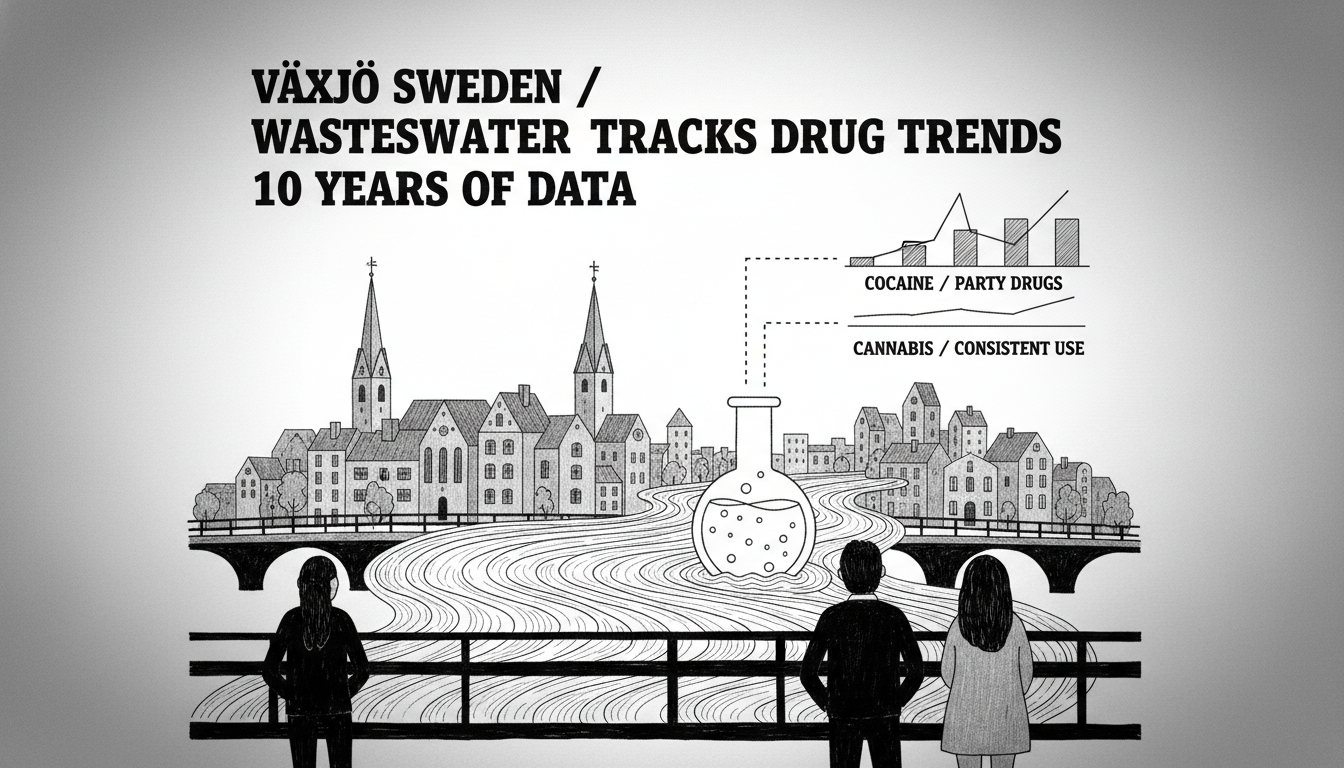
Växjö municipality in southern Sweden has monitored drug consumption through wastewater analysis since 2014. Officials call this method useful for tracking drug use patterns across the entire population.
Public health coordinator Jörgen Gustavsson-Blommendahl said they wanted to test a new approach to measure drug abuse prevalence. The wastewater testing provides data about narcotics use that traditional methods cannot capture.
Researchers observed a peak in cannabis consumption in 2019. Cocaine use reached its highest level in 2023. Current measurements show relatively stable drug levels since then.
The testing also reveals when new drugs appear and increase in popularity, according to officials. Recent summer measurements aligned with the municipality's own annual data.
By sampling on different weekdays, authorities identified clear usage patterns. Cocaine, crystal meth, methamphetamine and ecstasy primarily appear during weekends. Cannabis and tramadol maintain consistent levels throughout the week.
Susanna Edvardsen, head of addiction interventions in Växjö, acknowledged that drug presence isn't surprising. But she said the data confirms other information they receive about local drug trends.
The wastewater measurements rarely lead to direct interventions. One exception occurred when the municipality tested individual high schools to identify where youth drug use was most concentrated.
This decade-long monitoring approach shows how municipalities can gather objective drug use data without relying solely on self-reporting or arrest statistics. The method provides an unfiltered look at actual consumption patterns in communities.