
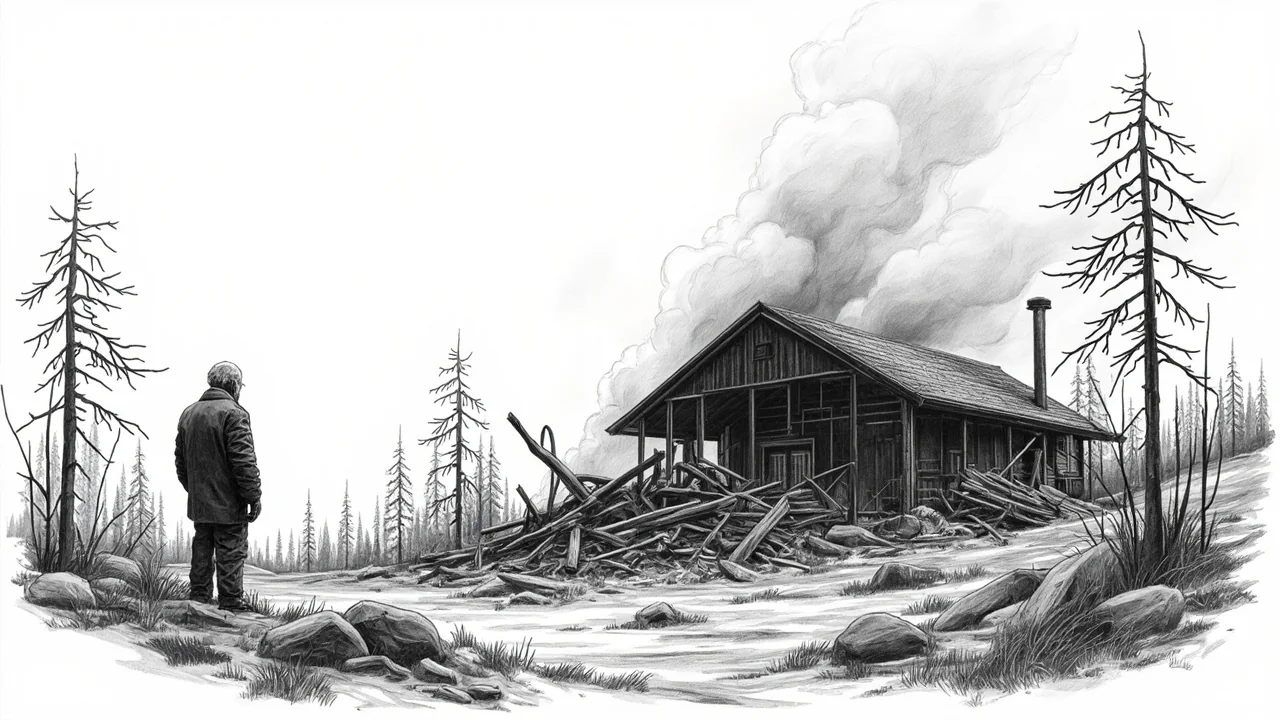
Swedish police are searching for a 75-year-old man missing after a devastating villa fire northwest of Östhammar. The alarm came from neighbors just before midnight on Friday, reporting a house completely engulfed in flames. Emergency services rushed to the scene but faced an inferno. "It was completely on fire. A person may have been in the residence and this person is still missing," said police spokesperson Stefan Larsson. The man's family has been notified. Authorities have not been able to enter the gutted building to conduct a search or technical investigation. With the cause of the blaze unclear, police have cordoned off the area and opened a preliminary investigation into arson.
A Community Awakened by Flames
The quiet, coastal community near Östhammar, a town known for its archipelago and historic center, was jolted awake late Friday. In these semi-rural areas, neighbors often know each other well. The sight of a neighbor's villa ablaze would have been a profound shock. Such events ripple through small communities, where safety and tranquility are part of the Swedish lifestyle. The immediate response from neighbors, who raised the alarm, highlights this close-knit dynamic. Yet, their vigilance could not prevent the tragedy that unfolded in the dark hours. The missing man, in his mid-seventies, represents a generation that has shaped these communities. His absence leaves a void that extends beyond the property line.
The Slow, Painful Search for Answers
As daylight arrived on Saturday, the scene revealed the full extent of the destruction. The villa was severely damaged, its structure compromised. This has created a dangerous environment for investigators. "We have not been able to enter the building and it will take a while longer before we can carry out a technical investigation," Larsson explained. This delay is agonizing for the waiting family. It also slows the official process of determining what happened. The police decision to open a preliminary investigation into arson—"mordbrand" in Swedish—is a procedural step. It does not immediately indicate criminal intent. It simply means the cause is unknown and all possibilities, including accidental electrical faults or other mishaps, must be examined forensically. The truth is locked within the charred remains, awaiting expert analysis.
The Human Story Behind the Headline
While the investigation focuses on the 'how,' the human story asks 'who.' A 75-year-old man, missing. In Swedish society, where independence in later life is highly valued, many seniors live alone in villas they have owned for decades. This case touches on broader themes of aging, safety, and community support in less densely populated areas. It raises quiet questions families across Sweden consider. Is an older relative safe in their home? Are support networks strong enough? There is no suggestion these factors played a role here. But the incident naturally directs attention to the well-being of the elderly, a cornerstone of the Swedish social contract. The promise of a secure and dignified old age feels momentarily shaken by such a sudden, violent event.
A Long Road Ahead for Investigators
The technical investigation will be meticulous. Fire experts will sift through the debris, looking for a point of origin and indicators of accelerants or faulty wiring. They will interview neighbors more thoroughly, building a timeline of the evening. Did anyone see or hear anything unusual? The process can take weeks. Until then, the community and the family are left in a state of painful limbo. The uncertainty is perhaps the hardest part. Without a body recovered, hope—however faint—persists alongside grief. The police have stated there is no information about additional injured persons, which at least narrows the circle of immediate concern to one missing individual.
Reflections on Safety and Sudden Loss
This tragedy, isolated in a specific villa outside Östhammar, resonates because it contradicts a fundamental sense of security. The home is a sanctuary. In Sweden, with its high building standards and strong social safety nets, a sudden, catastrophic home fire feels particularly jarring. It is a reminder of how quickly normal life can unravel. For the local community, the coming days will be marked by quiet support for the affected family. There will be offers of help, shared meals, and conversations at the local supermarket. This is the Swedish way of coping—practical, reserved, but deeply felt. The cultural emphasis on collective well-being, or "folkhemmet," manifests in these small, personal gestures during a crisis.
Looking Forward: The Wait for Clarity
As the investigation proceeds, the missing man's family faces an unbearable wait. Swedish authorities are generally thorough and transparent in such matters, but forensic science takes time. The community will slowly return to its routines, but the scar of the fire will remain. The blackened shell of the villa will stand as a somber landmark until it is cleared. This story is not about large-scale policy or sweeping societal trends. It is a specific, heartbreaking incident that highlights the fragility of life. It shows how Swedish society responds when that fragility is tested—with organized emergency response, procedural diligence, and underlying community solidarity. The ultimate answers, when they come, will provide closure but not erase the loss. For now, a coastal community holds its breath, hoping for resolution and mourning a neighbor lost to the night's flames.