
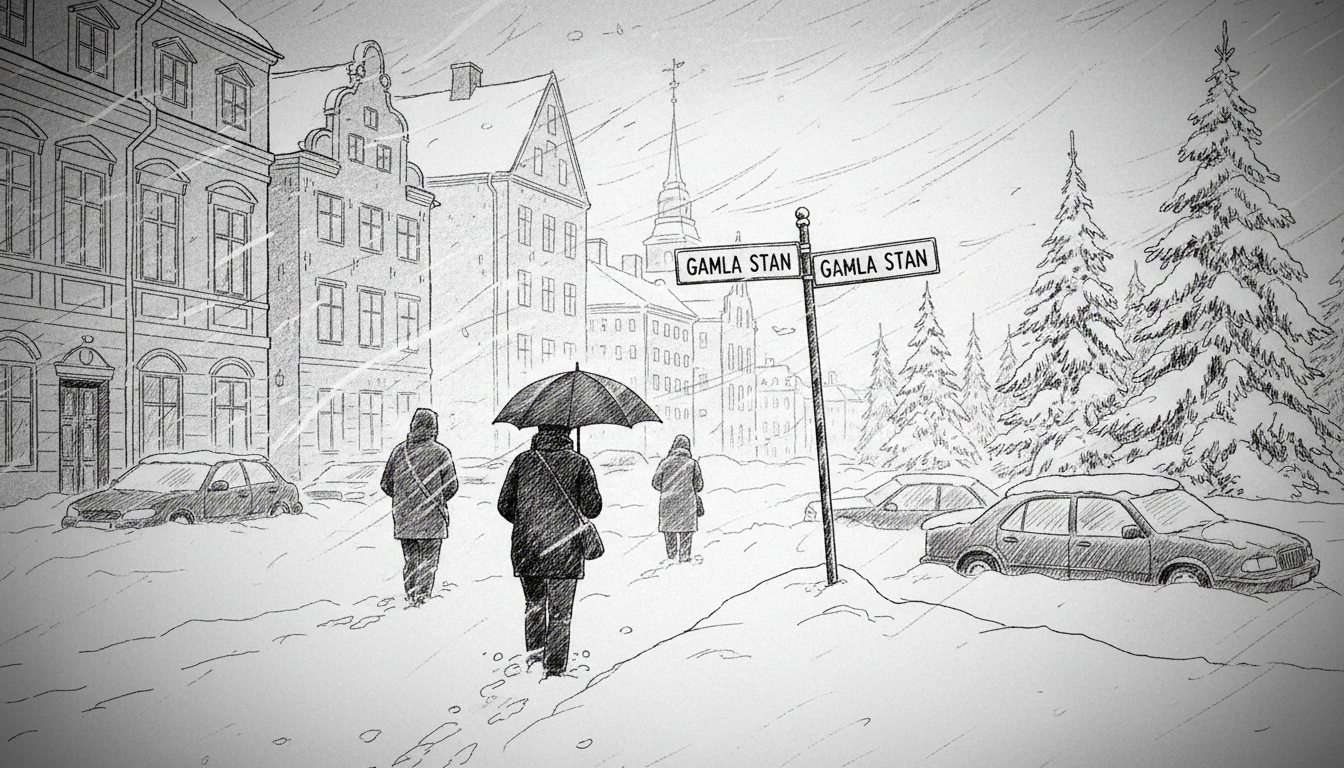
Sweden weather forecast warnings for heavy snowfall have triggered road closures and traffic chaos across the country. The Swedish Meteorological and Hydrological Institute (SMHI) issued new alerts today, with the Stockholm region facing significant disruptions from fallen trees and hazardous driving conditions. For many Swedes, the morning commute turned into a slow-motion battle against the elements.
"I left Södermalm an hour early, but I'm still going to be late," said Erik Lundström, a teacher whose car was diverted near Segersäng. "You could hear the crack of branches giving way under the snow. It’s a proper winter assault." His experience mirrors that of thousands. The classic Swedish virtue of 'lagom'—just the right amount—feels absent when nature delivers a surplus of snow.
A Capital City Slowed to a Crawl
Specific routes in the greater Stockholm area have become impassable. On road 546 between Åby and Segersäng station, a large tree blocks the entire roadway. The same scene repeats on road 509 near Sätravik, and road 540 between Sunnerby and Norrhagen. Over on road 549, from Pålamalm to Västerby, another fallen tree blocks traffic in both directions. These aren't just minor country lanes; they are key arteries for suburban commuters. Clean-up crews are working against the clock, with preliminary estimates suggesting roads will reopen between 8:00 and 9:00 PM tonight.
The disruption exposes the fragile balance between urban infrastructure and Nordic nature. Stockholm is a city built on islands and forests, and today, the forests are reclaiming the asphalt. This kind of weather event tests the municipal response systems to their limits, from the Transport Administration to local arborists. It’s a coordinated scramble that defines Swedish winter resilience.
A Serious Accident on the E4
Further north, the situation turned more dangerous. A midday traffic accident on the E4 near Lindefallet in Gävleborg involved two cars and a truck. While all vehicles have now been removed, one northbound lane remains closed. Only plowing operations are left, with officials hoping to fully reopen the route by 8:00 PM. This incident underscores the expert advice repeated every winter: SMHI warnings are not suggestions. They are critical information for planning and survival on the roads.
"When SMHI issues an orange or red warning, it means the conditions exceed the design parameters of our vehicles and roads," explains Lena Forsberg, a transportation safety researcher. "People think their modern car with winter tires is invincible. It is not. Reduced speed and increased distance are not optional; they are the only way to compensate for the loss of friction and visibility." Her analysis points to a cultural tension between Swedish proficiency in winter driving and overconfidence.
The SMHI's Crucial Role in Swedish Life
The Swedish Meteorological and Hydrological Institute is more than a weather service; it's a cornerstone of public planning. Its forecasts dictate decisions from school closures to ferry schedules and highway maintenance deployments. In a country where winter can last six months, its accuracy is a matter of economic and personal safety. Today's warnings for 'kraftigt snöfall'—heavy snowfall—activate a well-rehearsed chain of command across multiple agencies.
This system is a product of long experience. Sweden's climate demands respect, and the societal response is built on a foundation of collective responsibility. The 'vinterdäck' (winter tire) law is strictly enforced. Municipalities have detailed snow-clearing hierarchies, prioritizing emergency routes and public transport. Yet, as today shows, even the best systems can be overwhelmed by the sheer force of a storm.
The Human Cost of a Snow Day
Beyond the traffic reports and official statements, there's a human rhythm disrupted. Parents are stuck at home with children as daycare closures ripple out. Small business owners in affected areas see a day of lost revenue. Delivery drivers face impossible deadlines. For the elderly or vulnerable, such weather can mean isolation and difficulty accessing essential services.
At the same time, there's a quiet, shared experience. The collective groan at the weather app. The offers of help to push a stranded car. The acceptance that sometimes, nature sets the agenda. In fika conversations across the land, the weather isn't small talk; it's a primary topic with real consequences. This shared challenge reinforces a certain Swedish stoicism, a 'det ordnar sig' (it will work out) mentality that is tested but rarely broken by a snowstorm.
Looking Ahead: A Test of Resilience
As crews work into the evening to clear roads, the immediate question is about the night and tomorrow. Will the snowfall ease as forecast? Will temperatures drop, turning wet roads into sheets of black ice? The coming hours are critical for restoring normalcy. For Stockholmers, the hope is for a clear morning and the familiar, efficient grind of plows through the night.
These events, while disruptive, are woven into the fabric of Swedish life. They are reminders of the power of the natural world in a highly modernized society. They test infrastructure, patience, and preparedness. The response—measured, systematic, and communal—reveals a core aspect of the national character. It’s a culture that plans for darkness and cold, finding warmth and efficiency in the response. As the headlights of the last plow cut through the falling snow tonight, it’s not just a road being cleared. It’s a society making way for tomorrow.