
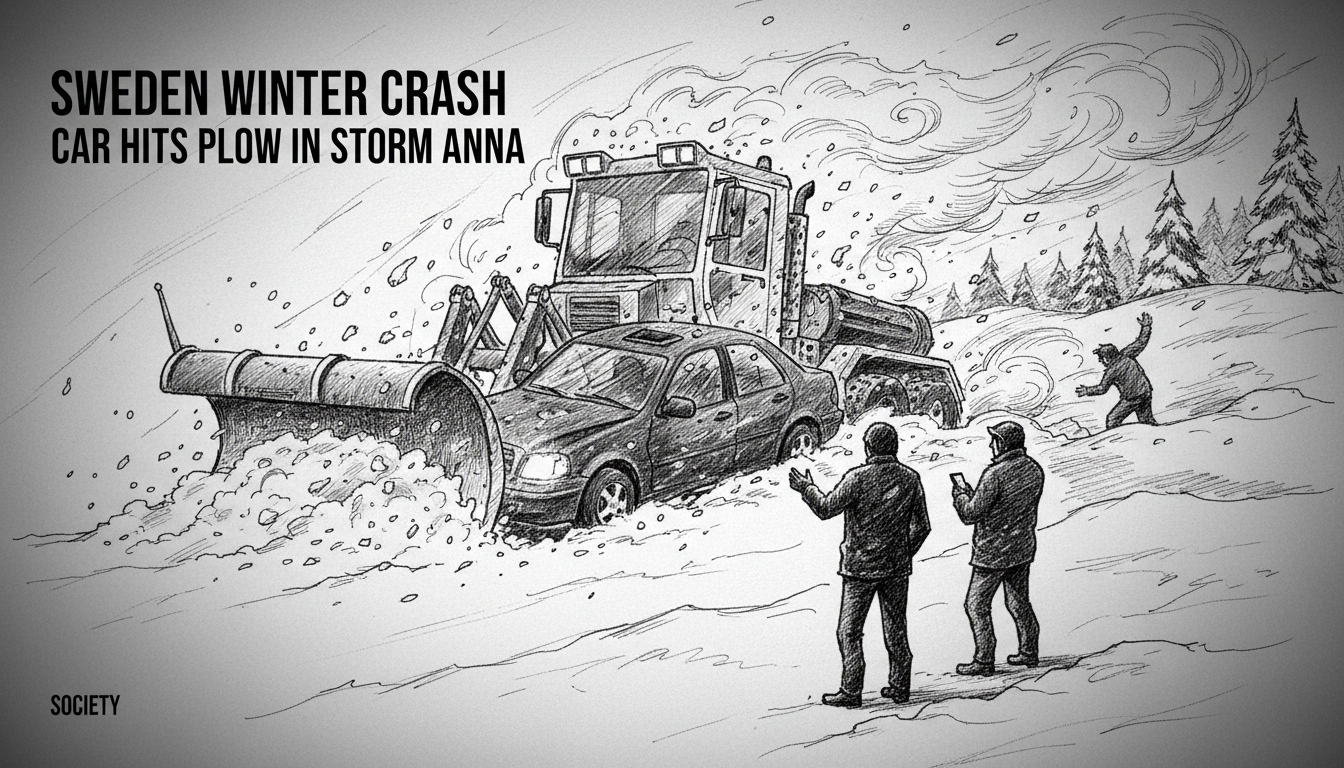
Sweden's treacherous winter roads claimed another victim on New Year's Day. A passenger car collided with a snowplow on Road 334 between Strinne and Lugnvik in Kramfors Municipality. One person was rushed to hospital for checks as Storm Anna swept in with snow and wind.
The accident forced a complete closure of the road. Rescue services worked at the scene under a yellow weather warning. Police attended but found no immediate suspicion of a crime. This single-vehicle incident highlights a recurring seasonal danger across the Nordic region.
A Routine Road Turned Hazardous
Road 334 is a typical Swedish regional artery. It connects smaller communities in Västernorrland County, winding through forest and coastal areas. For locals, it's a daily commute. In winter, it becomes a challenging corridor where drivers share space with large snow-clearing vehicles. The collision occurred as conditions rapidly deteriorated.
Storm Anna arrived on January 1st, bringing the promised snow and gusty winds. The Swedish Meteorological and Hydrological Institute (SMHI) had issued its warning. They cautioned about difficult travel, potential accidents, and stranded vehicles. For the driver on Road 334, this forecast became a harsh reality.
The Unseen Danger of the Plow
Snowplows, or 'plogbilar', are a common sight during Swedish winters. They are symbols of safety and order, clearing paths for society to function. Yet, for motorists, they present a unique hazard. Their size, slow speed, and the cloud of snow they often generate can create a dangerous blind spot.
"Driving near snow removal equipment requires a completely different mindset," says Lars Bengtsson, a veteran driving instructor from Umeå. "People see the flashing lights and think 'safety'. But they forget the plow is working, not just traveling. It can make sudden turns or stops. The driver's focus is on the road edge, not the car behind."
Bengtsson emphasizes reduced speed and extreme patience. "That extra five minutes you gain by overtaking a plow is never worth the risk. It's better to arrive late than not at all." This advice feels especially poignant following the Kramfors crash.
Winter's Annual Toll on Swedish Roads
This accident is not an isolated event. It fits a pattern seen each winter across Sweden. Slippery conditions, reduced visibility, and encounters with maintenance vehicles lead to hundreds of collisions. While major highways often get attention, regional roads like 334 see their share of incidents.
These roads are vital lifelines for rural communities. They are treated and plowed, but often later than national routes. During active snowfall, the line between a cleared lane and a snowbank can be blurry. A moment of inattention, a sudden gust of wind, or a patch of black ice can have serious consequences.
The human cost is significant. Beyond injuries and fatalities, these accidents cause major disruptions. Road closures strand people, delay emergency services, and impact local economies. For the individual involved, a trip to the hospital for "checks" can mean a life-altering injury or a traumatic shock.
The Culture of 'Vinterberedskap'
Swedes have a concept called 'vinterberedskap' – winter preparedness. It's a cultural expectation. It means having winter tires, keeping an emergency kit in the car, and checking weather reports before travel. SMHI's color-coded warnings (yellow, orange, red) are a key part of this system.
A yellow warning, like the one active during this crash, advises the public to be aware. It signals that weather may cause disruptions. For many, it prompts a decision: is this trip necessary? Could I wait until the storm passes? This cultural framework is designed to prevent exactly the type of accident that occurred.
Yet, the pressure of daily life often intervenes. People need to get to work, visit family, or return home. The confidence bred from handling decades of winters can sometimes tip into overconfidence. "We Swedes think we are experts at winter driving," Bengtsson notes. "Sometimes, that expertise makes us complacent. We forget that every storm is different, and every road has its own personality."
A Narrow Escape and a Broader Lesson
The Kramfors accident had a relatively fortunate outcome. One person was taken to hospital, but there were no reports of life-threatening injuries. The police finding no immediate criminal suspicion suggests a tragic accident, not reckless behavior. It serves as a powerful, real-world reminder during the holiday season.
As Storm Anna moved across the country, other regions braced for impact. The incident on Road 334 became a local news item, a brief flash of blue lights in the swirling snow. For the rescue crews who responded, it was another call-out in a long winter. For the driver involved, it was likely a terrifying experience that will linger long after the bruises fade.
These events ask a quiet question of Swedish society. How do we balance the necessity of mobility with the immutable dangers of winter? The infrastructure is excellent, the vehicles are well-equipped, and the public is informed. Yet, the collisions keep happening.
Looking Beyond the Crash Barrier
The answer may lie in a shift of perspective. Technology offers some solutions, like improved lighting on plows or vehicle-to-vehicle communication systems. But the core issue is behavioral. It's about respecting the immense power of nature and the limitations of machines.
Driving behind a snowplow can be frustrating. It's a rolling blockade on your journey. But within that frustration lies a form of safety. The plow is literally carving a safe path forward. The lesson from Strinne and Lugnvik is to see that plow not as an obstacle, but as a guide. In the whiteout of a Swedish winter storm, following its taillights might be the wisest course of all.
As the new year begins, the winter is far from over. More storms will come, more plows will roll, and more drivers will face the choice between patience and risk. The hope is that this narrow escape on a regional road reminds everyone to choose the former. The snow will eventually melt, but the lessons of a winter crash should remain.