
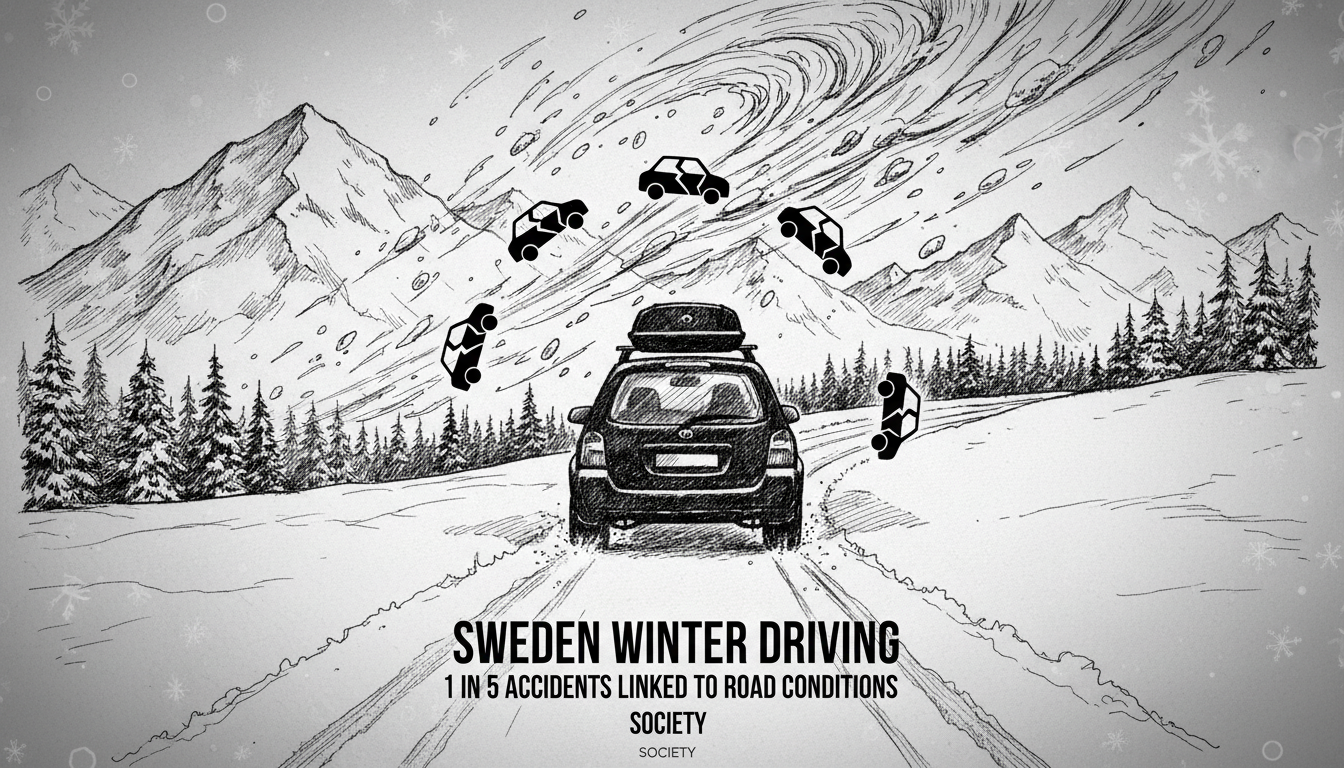
Sweden winter driving is facing a harsh reality check as deep cold and heavy snow expose a dangerous gap between regulation and preparation. In the forests of Västerbotten, tow truck driver Jonas Sandberg has seen it firsthand. His phone has been ringing constantly. 'We've had a lot to do,' he says, his voice carrying the fatigue of a long season. 'Many wildlife collisions, frozen cars, and a very large number of cars that have simply slid off the road.' The common thread in many of these callouts, he notes, is drivers who are shockingly unprepared for the conditions they knowingly entered.
A Chilling Disconnect on Winter Roads
This is a nation that prides itself on mastering the elements. From December 1 to March 31, fitting winter tires is not a suggestion but a legal requirement. Studded tires are permitted for even longer, from October to April. Yet, as the mercury plummets in the north, a persistent problem surfaces. The Swedish Transport Administration states that road conditions are a factor in roughly 20% of all injury accidents. In counties like Västerbotten, the rate of winter accidents per capita consistently outpaces the south. The law mandates the equipment, but it cannot mandate the mindset. Sandberg and his colleagues frequently encounter drivers stranded without extra warm clothing, proper shovels, or even adequate windshield washer fluid—another legal winter requirement. 'You see people in sneakers, without a proper jacket, hoping for a quick fix,' Sandberg observes. 'The cold here doesn't forgive.'
Beyond the Tires: The Culture of 'Blindförtroende'
Experts point to a cultural overconfidence, or 'blindförtroende', in vehicle technology and infrastructure. 'There's a belief that because we have good winter tires and well-plowed roads, we are immune,' explains Lena Forsberg, a road safety analyst based in Umeå. 'The technology is excellent, but it creates a buffer that can lead to complacency.' She notes that modern safety features like anti-lock brakes and stability control can make drivers feel more secure than the actual grip on the road allows. The shift from studded to friction tires in urban areas, driven by environmental concerns about particulate matter, also requires a significant adjustment in driving style that many haven't fully made. 'A studded tire will dig in on ice. A friction tire relies on a different kind of grip. You must drive accordingly, with more anticipation and gentler inputs,' Forsberg says. This nuance is often lost in the public conversation, which focuses heavily on the simple binary of having or not having winter tires.
The High Cost of Winter Miscalculation
The consequences are more than just inconvenient. Each slide-off, collision, and rescue operation carries a substantial economic and human cost. Beyond vehicle repairs and insurance claims, there are medical expenses, emergency service resources, and lost productivity. For the individuals involved, a minor miscalculation on a remote forest road can quickly become a survival situation. Swedish authorities recommend every car carry a winter emergency kit: thermal blankets, a warning triangle, a flashlight, high-energy food, and a shovel. Yet, spot checks and anecdotal evidence from recovery services suggest compliance is low. The mindset is often reactive, not proactive. 'People think, 'I'm just popping to the store,' or 'It's a main road, it'll be fine,'' says Sandberg. 'But in -20°C, a flat tire or a minor collision becomes a major crisis if you're not dressed for it.' This is especially critical given Sweden's geography, where help can be tens of kilometers away in the northern regions.
Learning from the North: A Shift in Mindset
Perhaps the solution lies not in new laws, but in embracing a northern Swedish approach to winter. Here, winter preparedness is woven into daily life. It’s about the small rituals: checking the weather forecast not just for rain, but for wind-chill and snow accumulation; keeping a full tank of fuel; always having a wool hat and gloves in the car door pocket. It’s a form of respect for the climate. Some municipalities and driving schools are pushing for more rigorous winter driving education, including practical skid-pan training, rather than relying solely on theoretical knowledge. 'We need to move from just 'equipping your car for winter' to 'equipping yourself and your mindset for winter,'' argues Forsberg. This includes planning longer travel times, drastically increasing following distances, and understanding that the posted speed limit is for ideal conditions, not for a snowy Tuesday in February.
As another cold front blankets the country, the message from the front lines is clear. The blue and yellow winter tire sticker is only the first step. True winter readiness is a package deal—a combination of legal compliance, practical preparation, and a humble adjustment of attitude. The snow and ice reveal our preparations, or lack thereof, without pity. The question for every driver now is not just what's on their wheels, but what's in their boot and, more importantly, in their head as they turn the key.