
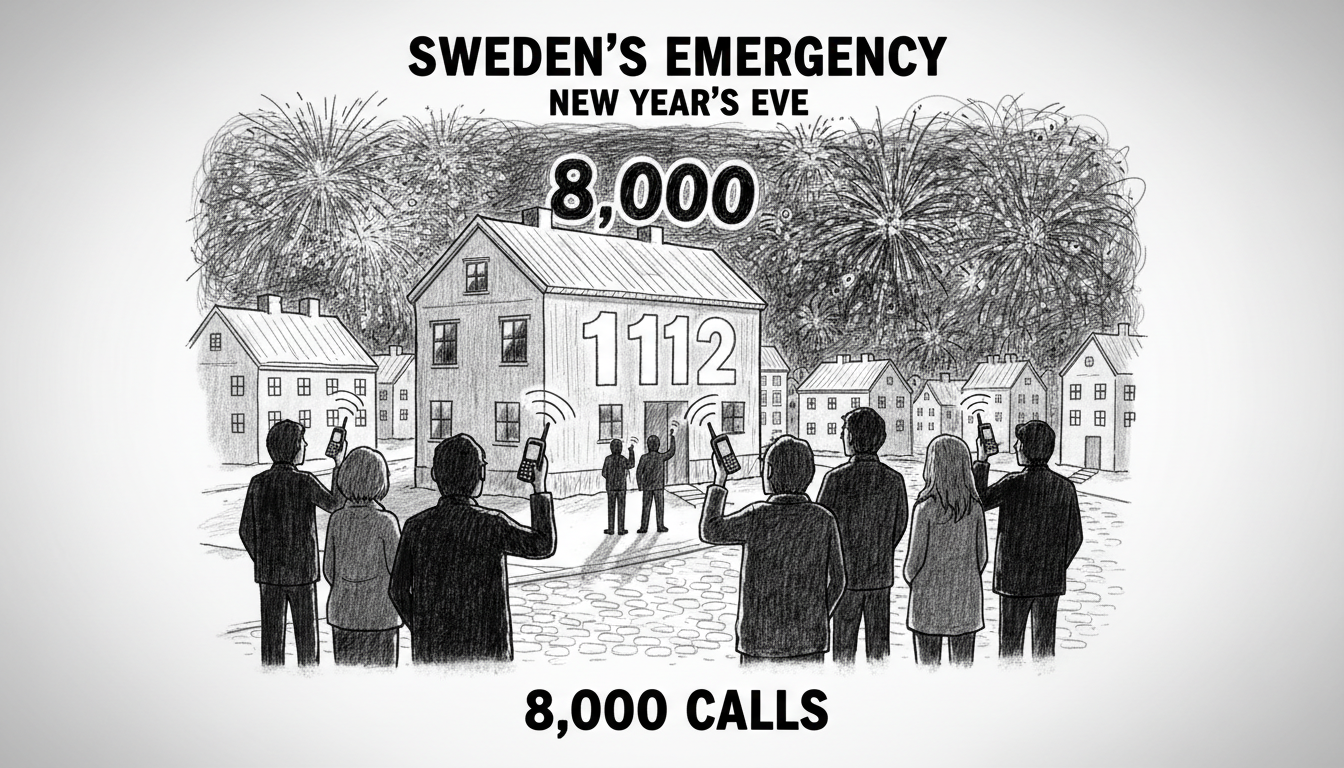
Sweden's emergency number 112 faces a predictable crisis every December 31st. The phones at SOS Alarm's national call centers ring incessantly, with call volume tripling around midnight. For the operators answering, it's the most intense night of the year. "It looks the same every year. About an hour before midnight, we get a doubling in the number of calls, and at midnight in parts of the country it's about triple compared to a normal weekend," says Douglas Norström, acting press officer at SOS Alarm. A normal weekend evening sees around 3,200 calls. But on New Year's Eve and night, from 10 PM to 6 AM, that number soars to approximately 8,000. The surge creates a dangerous bottleneck. Every non-essential call can delay help for someone in a life-threatening situation.
The Midnight Bottleneck
The chaos is both predictable and preventable. Norström explains the strain these calls place on the system. "All calls go into the same queue, which means a call about a spraying water tap or noisy neighbors can steal time from someone with a cardiac arrest." This isn't a hypothetical scenario. On a night when fireworks-related injuries, domestic incidents, and traffic accidents spike, efficient call handling is critical. The data is stark: about one-third of those 8,000 calls are assessed as non-emergencies or misdials. That means over 2,600 calls that shouldn't be on the 112 line are clogging the system. For locals in Stockholm, Gothenburg, or Malmö celebrating, a misplaced call might seem harmless. For the operator who must answer, assess, and potentially dispatch services, each second counts.
I spoke with a former SOS Alarm operator, Anna, who worked several New Year's shifts. She asked to use only her first name. "You brace yourself mentally. You know it's coming. The first 'happy new year' shouts you hear over the phone aren't from friends, they're from drunk callers who dialed 112 by mistake. You have to be polite but incredibly fast to clear the line." She describes the tension of hearing genuine panic in one call, followed immediately by someone complaining about a minor noise disturbance. The emotional whiplash, combined with the pressure to perform, makes it a uniquely challenging shift.
Why Do Non-Emergency Calls Spike?
Cultural and behavioral factors drive this annual clogging of Sweden's emergency lines. New Year's Eve is a night of widespread public celebration, often involving alcohol. Simple misdials from slippery fingers on smartphones are common. There's also a blurring of lines about what constitutes an emergency. Is a loud private party in an apartment block a 112 matter? Many callers think so, though police non-emergency lines exist for such issues. Fireworks, while beautiful, are a major source of problems. Minor burns or small fires cause panic, leading to urgent calls that may not require full emergency response. Public awareness campaigns run annually, but their message seems to drown in the champagne and sparklers.
"The public's help is our most important resource," Norström's statement emphasizes. The plea is clear: use 112 only for situations where there is immediate danger to life, health, property, or the environment. For a leaking tap, a non-violent neighbor dispute, or a question about fireworks regulations, there are other numbers. The national healthcare advice line, 1177, handles medical concerns. Local police have separate non-emergency contact numbers. The challenge is getting this information to stick during the biggest party night of the year.
A System Under Strain
SOS Alarm manages this surge through meticulous planning. Staffing levels are maximized, with extra operators brought in. Experienced handlers are strategically placed. The system is designed for resilience, but it has limits. Every non-critical call consumes an average of two to three minutes of an operator's time—time that is irreplaceable. Emergency service analysts consistently point to public education as the most effective tool for managing peak demand. While resource allocation is vital, preventing unnecessary calls from entering the queue in the first place is more efficient.
The impact is felt across Sweden's entire emergency response chain. When a 112 call is delayed, the dispatch of police, ambulance, or fire services is also delayed. In a dense urban neighborhood like Stockholm's Södermalm or Göteborg's Majorna, where celebrations are concentrated, these minutes can matter enormously. A firework-related injury needs swift ambulance response. A fight breaking out requires police. The system is interconnected, and a bottleneck at the very first point of contact—the phone call—ripples outward.
A Plea for Public Consciousness
The message from SOS Alarm is not about stopping celebrations. It's about adding a layer of public responsibility to the night's festivities. Before dialing 112, they urge people to pause and ask: Is there an immediate and serious danger? Could this be handled another way? Saving 112 for true emergencies is a civic act that directly contributes to community safety. It’s a shared responsibility that becomes acutely visible on this one night.
As the clock ticks toward midnight next December 31st, the operators at SOS Alarm will be at their stations, ready. They will answer the calls about cardiac arrests and car crashes, about fires and serious assaults. They will also, inevitably, answer calls from people wishing them a happy new year or complaining about a stray firecracker. The difference between those calls is the difference between a system that functions and one that falters under avoidable pressure. The power to choose which call is made lies entirely with the public. In a society that values collective well-being, the most important New Year's resolution might be a simple one: know when to call, and more importantly, when not to.