
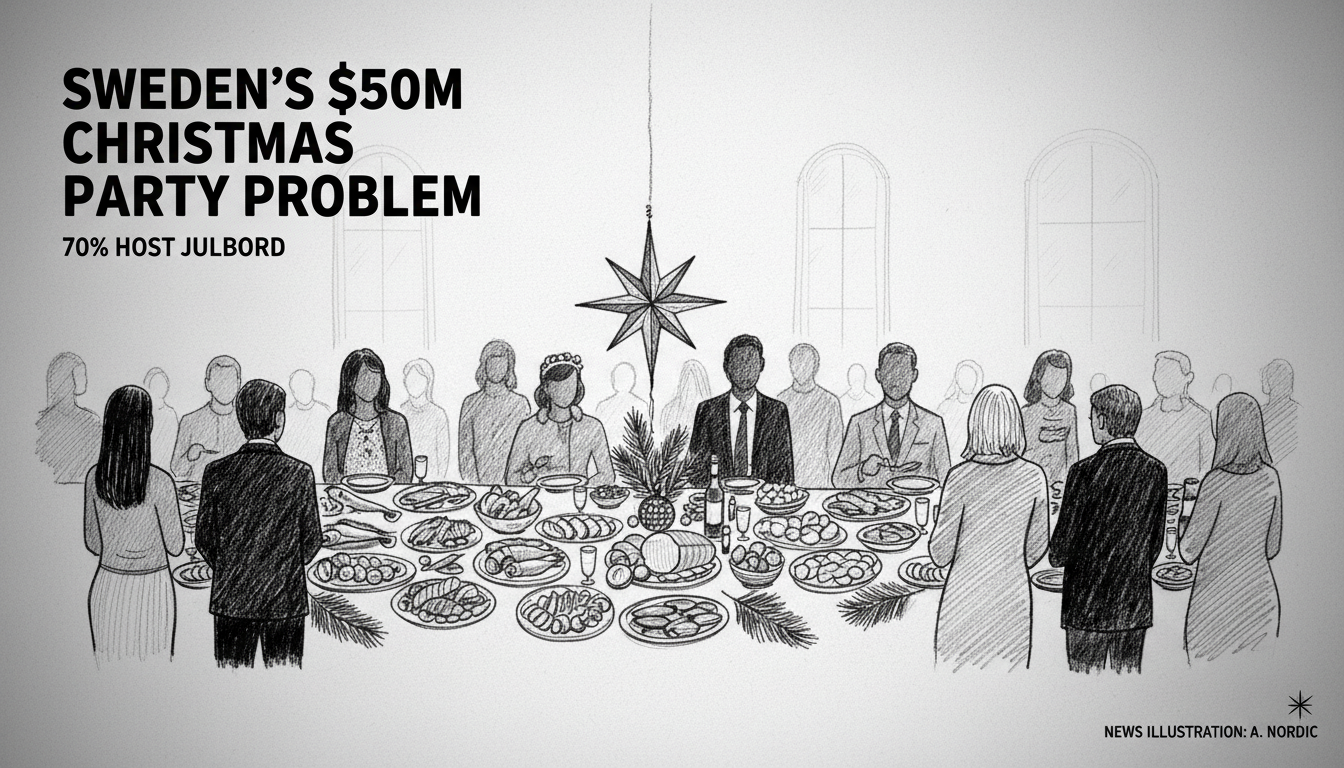
Sweden's festive company 'julbord' is the biggest annual risk zone for businesses, according to workplace experts. Approximately 70% of Swedish companies host the traditional Christmas buffet, a Visita survey shows. This creates a complex management challenge where celebratory tradition collides with modern duty of care. Nordics Today investigates the multi-million krona liability hidden in the glögg and meatballs.
From Festive Feast to HR Headache
The julbord is a cornerstone of Swedish corporate culture. Yet it presents a clear paradox. Companies spend millions annually to foster team spirit. Simultaneously, they expose themselves to significant financial and reputational risk. Swedish labor law firmly places responsibility on employers for a safe environment, even at social events. A 2019 study by the Swedish Work Environment Authority linked unclear alcohol expectations at such events to increased harassment risks. "Tafs, tjafs och fyllepussar. Och en skam i att gå till jobbet dagen efter," says alcohol expert Anna Sjöström, summarizing the risks of drunk groping, arguments, and next-day shame. She places the responsibility squarely on management.
The Startup Scene's Sober Shift
This tension is stark in Sweden's innovation economy. In Stockholm's business districts, from the venture capital hubs of Östermalm to the startup studios of Södermalm, a shift is underway. Fast-growing companies with young teams and international staff are redefining tradition. They balance the expectation of a festive gathering with the need for a professional, inclusive atmosphere. For a fintech startup closing a €20 million Series A, a scandal from a Christmas party could jeopardize investor confidence and recruitment. "We host a lavish jullunch instead," says Clara Engström, founder of a Stockholm-based SaaS company with 85 employees. "It ends at 4 PM. There's wine, but the focus is the food, not the bar. We've eliminated the risk of late-night incidents and everyone is fresh the next day."
Investors are noticing. Venture capital firms like Creandum and EQT Ventures encourage portfolio companies to build sound operational cultures from day one. This includes responsible event planning. A messy julbord incident can signal deeper management problems. It can affect a company's valuation during future funding rounds. Human resources directors in the Nordic tech hub now view the December event through a risk management lens. They draft clear policies, communicate expectations, and always provide compelling non-alcoholic options.
The High Cost of Low Standards
The potential costs are substantial. Beyond human cost, the financial liability is real. A single serious incident of harassment or injury can lead to massive legal fees, compensation payouts, and lost productivity. For a 200-person company, a successful lawsuit could easily reach into the millions of kronor. Insurance may not cover all scenarios, especially if the employer is deemed negligent. The damage to employer brand in a tight talent market like Sweden's can be more enduring. Top engineers and commercial talent have options. They will avoid companies known for booze-fueled, uncomfortable holiday parties.
Sjöström's advice is pragmatic. She suggests avoiding overnight stays linked to the event entirely. This removes the pressure for excessive drinking and the potential for post-party room incidents. She advocates for managers to be visible role models, not participants in heavy drinking. Training for management is critical. They must know how to discreetly de-escalate situations and intervene early. "The leader sets the tone," says Lars Bengtsson, an HR consultant who works with Nasdaq Stockholm-listed firms. "If the CEO is doing shots, that's the company policy, regardless of what the written document says."
Redefining Swedish Corporate Tradition
Some companies are going further, abandoning the alcohol-centric model completely. They are investing the budget into exceptional daytime experiences. Examples include premium cooking classes, winter forest foraging trips followed by a chef-led meal, or donations to a charity chosen by staff. These activities build team cohesion without the associated risks. They are also more inclusive for employees who do not drink for religious, health, or personal reasons.
The evolution of the julbord reflects a broader change in Swedish work culture. The informal, consensus-driven 'Swedish Model' is maturing. It now incorporates formal safeguards against its own informal excesses. Globalized workforces bring diverse expectations. The move is away from a one-size-fits-all mandatory party. The trend is towards offering choice and emphasizing respect.
This is not about abolishing joy or tradition. The Swedish julbord, with its herring, ribs, and saffron buns, is a beloved ritual. The challenge for modern Swedish business is to preserve the community and celebration while stripping out the peril. It requires intentional planning and clear communication. The successful companies will be those that understand their legal duties. They will see the event not as a lawless break from work, but as an extension of the workplace itself.
A Question for Leadership
As December approaches, Swedish management teams face a simple question. Are they hosting a party for their employees, or are they managing a company event? The language matters. The former implies passive hosting. The latter implies active stewardship, planning, and duty of care. In today's climate, there is only one acceptable answer. The julbord must transform from a professional risk zone into a genuine celebration of a year's hard work. It must do so on terms that protect both the people and the company. The future of this Swedish tradition depends not on banning it, but on thoughtfully rebuilding it. Can the great Swedish julbord sober up and survive?