
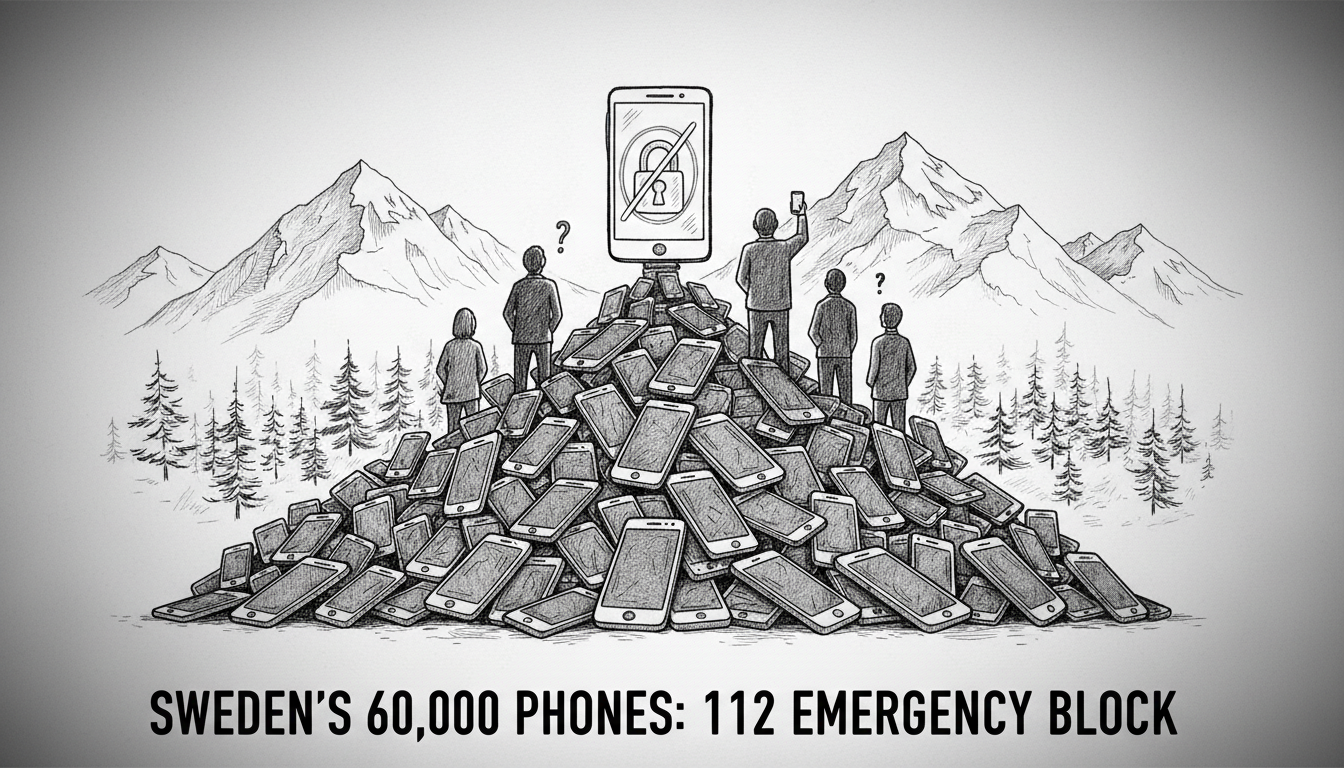
Sweden's emergency number 112 may soon be unreachable for approximately 60,000 mobile phones across the country. The Swedish Post and Telecom Authority (PTS) announced the startling figure during a press conference, linking the potential block to the ongoing national shutdown of older 2G and 3G mobile networks. This technological transition, while paving the way for faster 4G and 5G services, is creating an unexpected and dangerous gap in the national safety net.
"This is a critical situation where technological progress cannot come at the cost of public safety," said a PTS representative. The core of the problem lies with mobile operators Tele2, Tre, and Telenor. As their own 2G and 3G networks are switched off, emergency calls from affected devices on these networks are supposed to be rerouted via competitor Telia's remaining 2G infrastructure. However, PTS has deemed this backup solution insufficiently secure and reliable for handling life-or-death calls.
A Safety Net with Holes
The issue highlights a hidden vulnerability in Sweden's much-vaunted digital infrastructure. The phones at risk are not just old models gathering dust in drawers. They are active devices used by people every day. More alarmingly, the shutdown doesn't only impact handsets. It also affects a wide array of connected devices that rely on these older networks, including personal medical alarms worn by the elderly or infirm, security sensors for water systems, and even automated lawnmowers. For someone dependent on a medical alert pendant, this network change isn't about slower internet speeds—it's a potentially fatal flaw.
Lars-Åke Norling, a retired engineer living in a Stockholm suburb, expressed his concern. "My wife has a fall alarm connected to the home care service. We were told it uses the mobile network. Now I have to call and find out if it will still work, or if we need a new one. At our age, this isn't just technology, it's our lifeline." His story is likely being repeated in thousands of households across Sweden, from the apartment blocks of Södermalm to remote villages in Norrland.
The March of Technology Leaves Some Behind
Sweden has always been at the forefront of mobile technology. It launched the world's first commercial 1G network in 1981. Each subsequent generation—2G for texting, 3G for mobile data, and now 4G and 5G—has been adopted rapidly. The current shutdown is a practical necessity. The radio frequencies used by the old networks are needed to provide the greater bandwidth and capacity required for modern data-hungry applications on 4G and 5G. It's a global trend, but Sweden's approach is under scrutiny.
"While the network evolution is inevitable, the implementation must be handled with extreme care," explains tech policy analyst Elin Månsson. "The authorities and operators have a joint responsibility to ensure no one is left behind, especially when it comes to emergency services. A blanket shutdown without guaranteed, secure alternatives for critical functions is irresponsible. This isn't just about losing Spotify on a car ride; it's about losing access to ambulances and fire departments."
The PTS has not provided a detailed timeline for when the blocking might begin, but the pressure is mounting. The regulator is now tasked with forcing mobile operators to find a secure solution before proceeding with network closures that could cut off tens of thousands from emergency help.
Who Bears the Responsibility?
The situation creates a complex blame game between regulators and service providers. The mobile operators argue they are following the technological roadmap and that redirecting calls via Telia's network is a valid interim solution. PTS, as the watchdog, is saying that solution isn't good enough. Caught in the middle are the customers, many of whom may be completely unaware their phone is about to become a safety hazard.
Consumer advocacy groups are calling for immediate and clear communication. "There needs to be a direct, proactive outreach campaign from the operators to every single affected customer," says Karin Berg from the Swedish Consumers' Association. "This cannot be a note buried in the terms of service. People need to be told: 'Your current device will not be able to call 112 after this date.' And they must be offered a real, affordable solution." That solution could be a subsidized phone upgrade, a dedicated emergency device, or a confirmed, secure technical fix from their operator.
A Test for Swedish Digital Trust
This crisis touches on a fundamental aspect of Swedish society: an inherent trust in the system. Swedes trust that the infrastructure works, that authorities have their best interests at heart, and that technology makes life safer and easier. The prospect of 60,000 phones being blocked from calling 112 directly challenges that trust. It reveals how systemic decisions made for broad technological progress can have sharp, dangerous edges for specific groups.
For the average Swede, 112 is a number ingrained from childhood, a symbol of security. The idea that your phone, the device you carry everywhere, could fail at the most critical moment is deeply unsettling. It forces a question: in the rush towards a smarter, faster future, are we properly safeguarding the most basic protections of the present?
The coming weeks will be a crucial test. Can PTS and the telecom industry collaborate to close this safety gap before any network is switched off? The solution will require more than just technical patches; it needs transparency, consumer care, and a reaffirmation that public safety is the non-negotiable foundation of any technological advancement. The world is watching how Sweden, a pioneer in connectivity, handles being disconnected from its own emergency services.
Will this be a swift lesson in crisis management, or a tragic story of progress leaving the vulnerable behind? The answer depends on what happens before the next press conference.