
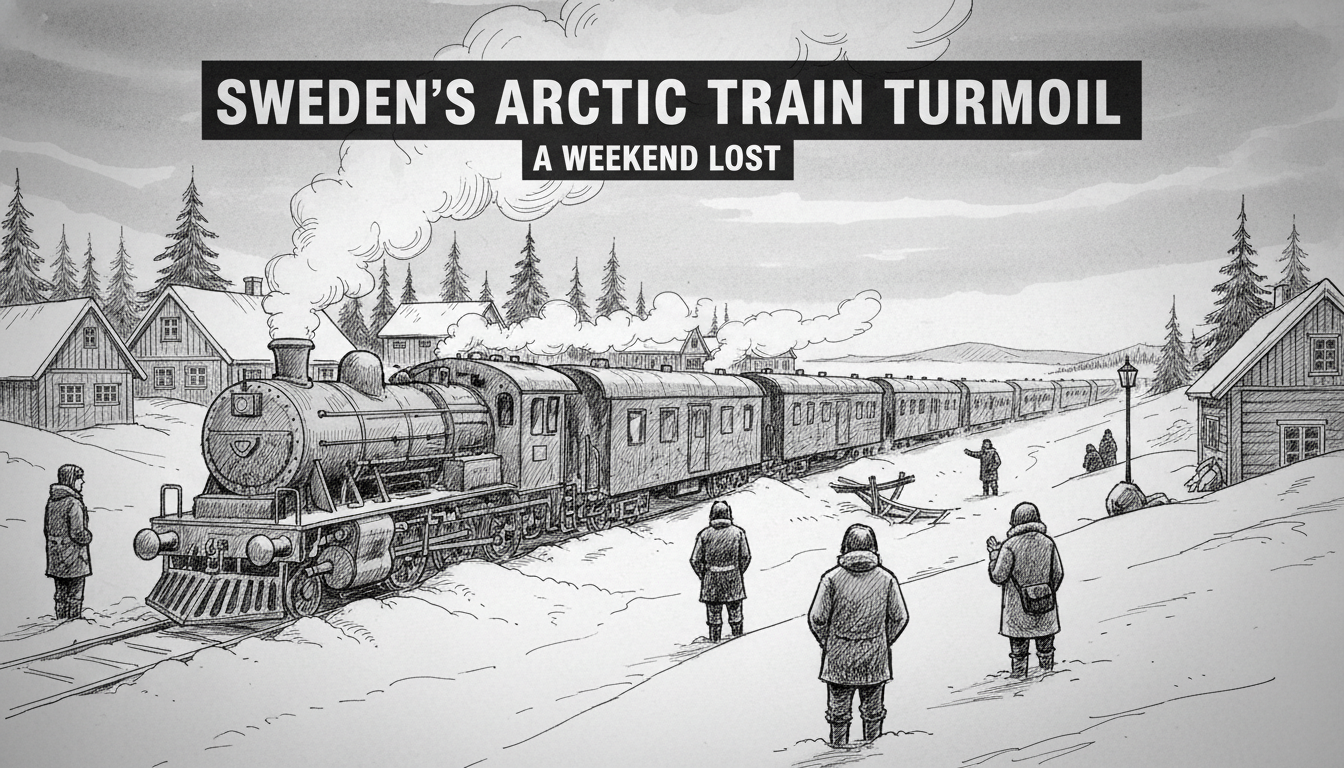
Sweden's northernmost rail network ground to a halt during a bitter cold snap, leaving visitors and locals stranded in a logistical ice maze. The technical failure of key trains in Norrbotten county over the weekend became a story of rerouted tourists, expensive last-minute flights, and crowded replacement buses. It highlights a persistent conflict between modern travel ambitions and the formidable Arctic climate.
For a group of French-speaking tourists in Kiruna, the plan was simple: a day trip to the world-renowned Abisko National Park. Instead, they found themselves rebooking flights, paying unexpected costs, and searching for activities in the town centre. Their carefully planned Arctic adventure was unceremoniously rewritten by a failed train.
“It got quite expensive,” said Jacob von Welhout, part of the stranded group. “Some of us were supposed to continue from Stockholm and all those travel plans are a tangled mess.” The group was forced to stay an extra night and book a flight ticket to reach Stockholm, their next destination, turning a scenic train journey into an expensive scramble.
When Infrastructure Meets Arctic Winter
The operator, Norrtåg, was forced to replace its faulty motor coaches with buses on the morning of January 5th. The buses were cramped, but according to driver Hannu Härmä, most passengers were simply relieved to be moving. This scene is a recurring challenge in a county larger than many European countries but with a population density of only five people per square kilometer.
Here, the train is not just a convenience; it is a vital artery. Norrtåg operates on roughly 700 kilometers of track in the north, connecting remote communities, miners, and the thriving winter tourism industry. When it fails, alternatives are scarce and distances are vast. A road trip from Kiruna to Stockholm, for instance, spans over 1,200 kilometers.
“The reliability of this transport link is critical for the entire region’s economy,” says Lars Mogren, a transport analyst based in Umeå who studies northern infrastructure. “Tourists plan international trips around these schedules, and locals depend on it for work and healthcare access. A disruption isn't just a delay; it can mean missing a crucial doctor's appointment or a connecting flight home.”
The Tourist Economy on Thin Ice
Kiruna, a town literally being moved due to subsidence from the world’s largest iron ore mine, is also a hub for Arctic experiences. From the iconic Icehotel in Jukkasjärvi to the aurora tours in Abisko, the region sells a dream of pristine wilderness and reliable adventure. This weekend’s disruption cuts to the core of that promise.
At the Kiruna Lapland tourist office, staff were busy helping visitors like the French group replan. The office, usually a source of information on northern lights sightings and dog-sledding tours, became a crisis centre for contingency travel. This incident exposes a fragile link in the tourism chain that stretches from online bookings in Paris to a snowy platform in the Arctic Circle.
“We see this pattern when extreme cold hits,” Mogren adds. “The infrastructure, while modern, faces conditions it was not always designed for. The investment needed to make it truly resilient is enormous, and the cost-benefit is always debated because of the sparse population. Yet, the reputational cost to tourism when things go wrong is immediate and significant.”
A Community Used to Adapting
The reaction from many locals, however, leaned toward pragmatic acceptance. In Norrbotten, harsh weather is a fact of life. While inconvenient, disruptions are met with a degree of preparedness less common in the south. The bus driver’s observation that passengers were “happy to get going” speaks to this northern resilience.
Yet, this adaptability shouldn't excuse systemic problems, argue some community leaders. They point to the need for better communication between rail operators, regional tourism agencies, and municipal services. Clear, real-time information in multiple languages is crucial when international visitors are affected.
Could this also be an opportunity? Some entrepreneurs suggest that promoting Kiruna itself as a destination, rather than just a transit point, could mitigate the impact of such disruptions. The town offers its own unique history, the mine tour, and local Sami culture—assets that were a weekend lifesaver for those stranded.
Looking Down the Track
This weekend’s events are a microcosm of a larger Scandinavian challenge: maintaining twentieth-century infrastructure in a twenty-first-century climate that is becoming more extreme. Experts consistently note that investment must target not just repair, but climate adaptation—using materials and technology suited for deeper cold and heavier snow loads.
For the visitors who left with a story different from the one they booked, the memory of Sweden may be mixed. They experienced both legendary Arctic winter and a frustrating vulnerability. As the north continues to market itself as an accessible frontier, the pressure to ensure the journey matches the brochure will only grow.
The question remains: In a region defined by its formidable nature, can the systems built to connect it ever be as reliable as the winter is harsh? The answer will determine the future of travel in Swedish Lapland.